When designing a layout, I like to incorporate tools that help operators emulate the actions of real railroaders. I think it helps immerse visitors in the story I’m trying to present.
On my Port Rowan layout, one of the most successful examples of this was my method of controlling turnouts, using garden scale switch stands:
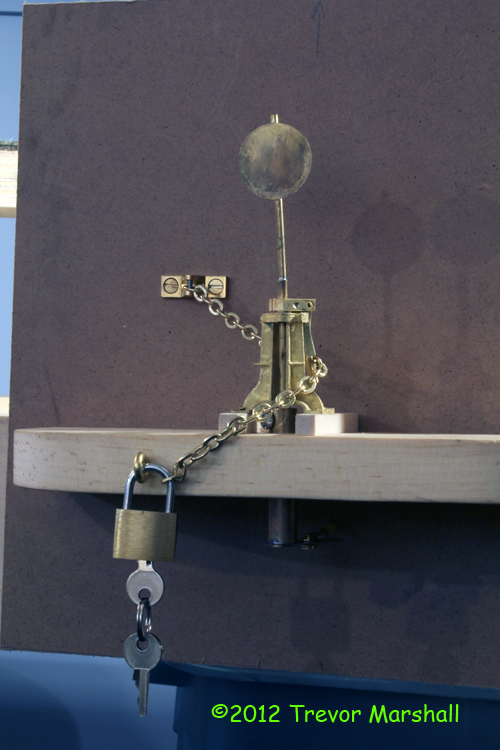
Each track switch had one of these mounted on a shelf on the fascia, below track height. Here’s the background:
A couple of years ago I purchased a dozen of these switch stands from Sunset Valley Railroad. I planned to use them as I am here, on an indoor layout. But these are actually built to throw the points on outdoor, live steam layouts – which means they’re designed to withstand the elements as well as knocks from woodland critters, multi-pound locomotives that derail, and over-enthusiastic live steam enthusiasts. At more than US$20 each, they were not cheap – but given their construction and detail they represented tremendous value.
These stand work just like the real thing: To throw the points, one lifts the lever to unlock the mechanism, turns it through 90 degrees, then drops the lever to lock the mechanism in the new position.
My friend Chris Abbott and I figured out how to modify the stands and make them suitable for bending the iron on an indoor layout. Chris also built the lovely shelves on which they’re mounted.
Chris and I have thrown real switches while working on the train crew at a museum and we agreed this solution nicely replicated the feel of bending the iron. Our mechanical linkage is smooth, but with just enough resistance that it’s not sloppy. And the locking lever on the Sunset Valley stand holds the points securely in both directions.
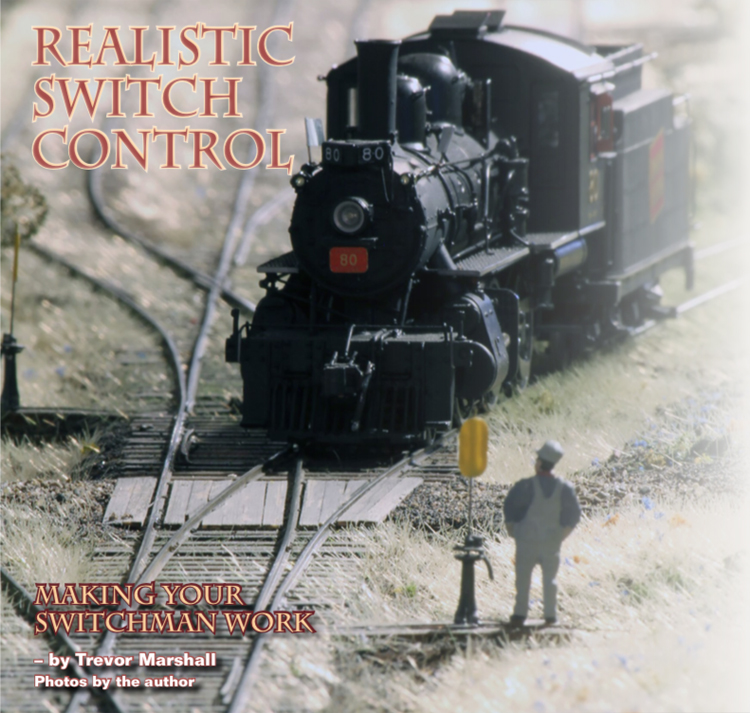
If you want to know more, I wrote an article about this design in the August 2014 issue of Model Railway Hobbyist magazine:
 The Model Railway Show