I continue to explore ideas for my layout space – and while my current focus is on the potential to model a segment of the Niagara St. Catharines & Toronto Railway in S Scale, I have lots of other options.
One of the most unorthodox candidates is from across the pond: Specifically, a Great Western Railway branch line in 7mm (British O scale).
I’ve long been a fan of British modelling.
When I was a wee kid, my first train sets came from the toy shops in the big department stores and were British outline. I had a Hornby clockwork set in 00 scale, followed by a succession of battery-powered Hornby-Meccano trains in 0.
My connection with British railroading was further entrenched through the magazines that were available to me. At the time, finding a North American modelling publication such as Railroad Model Craftsman or Model Railroader required a trip to the hobby shop – something that took most of a day via public transit and therefore only happened a few times per year. By contrast, I could find British magazines in smoke shops and bookstores – and there seemed to be one of those every few blocks in my neighbourhood.
My hobby hunger was fed a steady diet of UK railway modelling. Buffers, three-link couplings, carriages, goods wagons, W irons, solebars, and bogies – all those terms were more familiar to me than AB Brakes, trucks, boxcars, or Kadees.
Obviously, North American railroading eventually won me over and I have enjoyed several decades of modelling and operating layouts based on Canadian or American prototypes. While UK railway models always fill me with nostalgia, I’ve been happy to admire them from a distance.
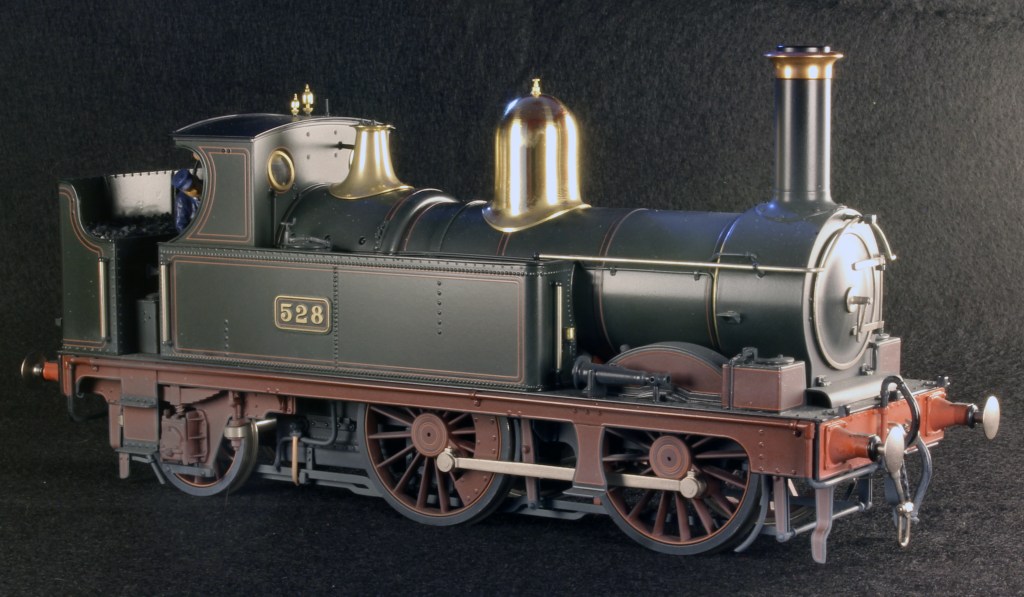
But then a few years ago, I was fortunate to be invited to help my friend Brian Dickey exhibit his 7mm (British 0 scale) layout, Roweham. I thoroughly enjoyed the experience and decided to acquire some 7mm equipment of my own. Since Brian models the GWR, I selected that as my prototype. I was especially attracted to the Edwardian era of open-cabbed locomotives with three-colour paint schemes and polished brass fittings.
I bought a 517 Class 0-4-2T (also shown above) to run on his Brian’s layout on occasion, and I finished four four-wheeled passenger cars for it to haul in time for our next appearance, the Great British Train Show … in April 2020.


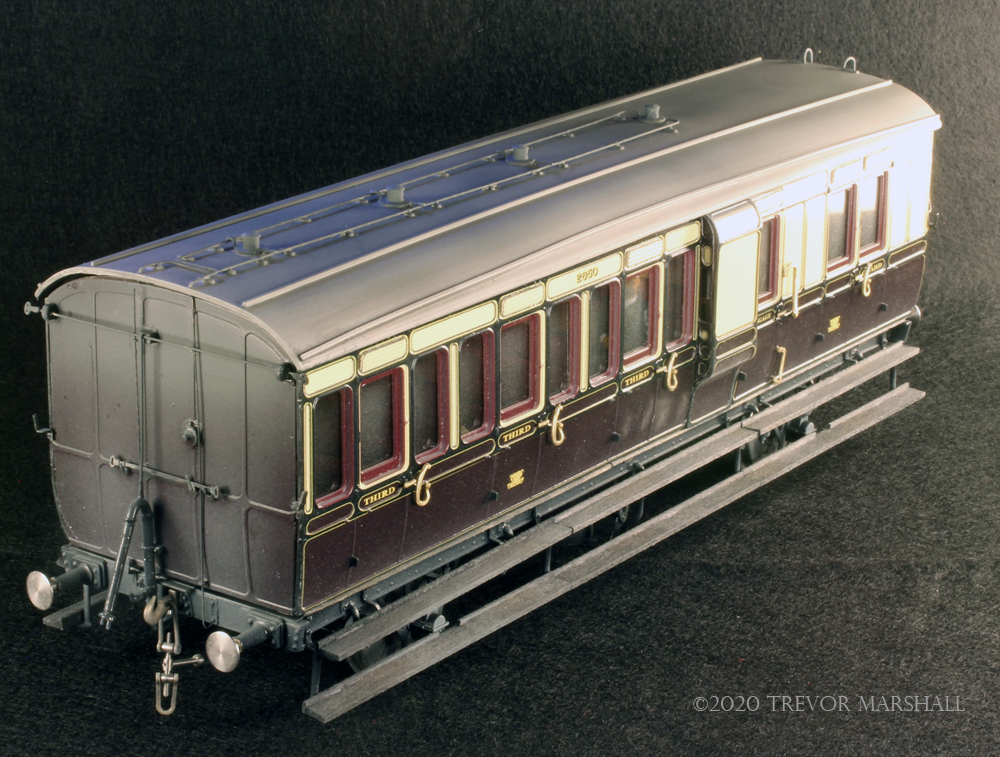
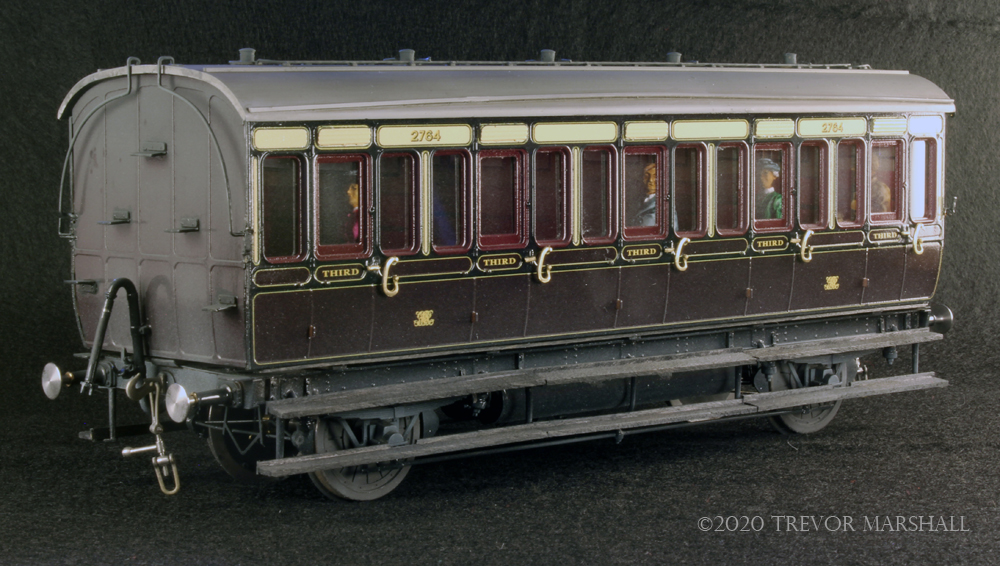
Obviously, that didn’t happen as Covid suspended all train show activity. And then my wife and I moved 3,000 km west.
My GWR equipment was among the first boxes I unpacked in my new layout space and I’ve enjoyed looking at it for several months now. Could I embrace the nostalgia of my early days in the hobby with a British 7mm layout?
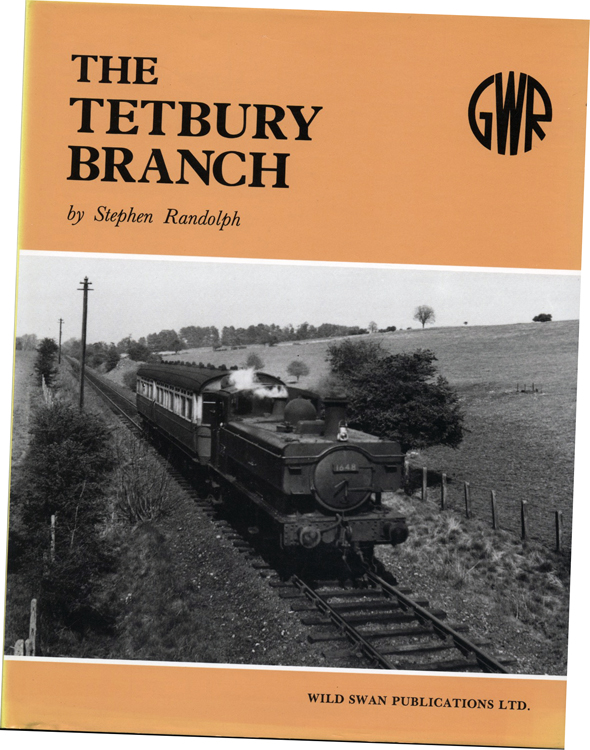
An expansion of the tried and true “branch line terminal to staging” configuration would certainly fit, even providing space for the next station up the line. I have doodled layouts based on several prototypes, described in detail in my library of Wild Swan books. Of all the sketches, the Tetbury Branch feels the most promising.

I won’t go into too much detail about this branch, because I probably will not model it at this time and the accompanying layout plan and photos should be fairly self-explanatory. What’s not obvious is that branches like this often supported several passenger trains per day, plus one or two round trips of a mixed train or goods train to handle freight traffic. So a layout such as this could be quite busy while still supporting solo operation.
In addition, an online search turned up an impressive collection of laser cut kits for Tetbury structures in 7mm.
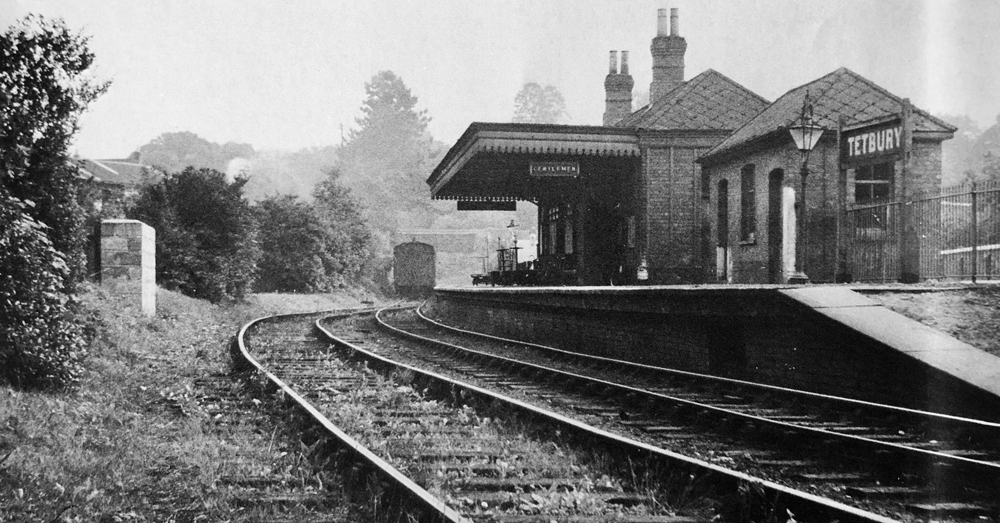

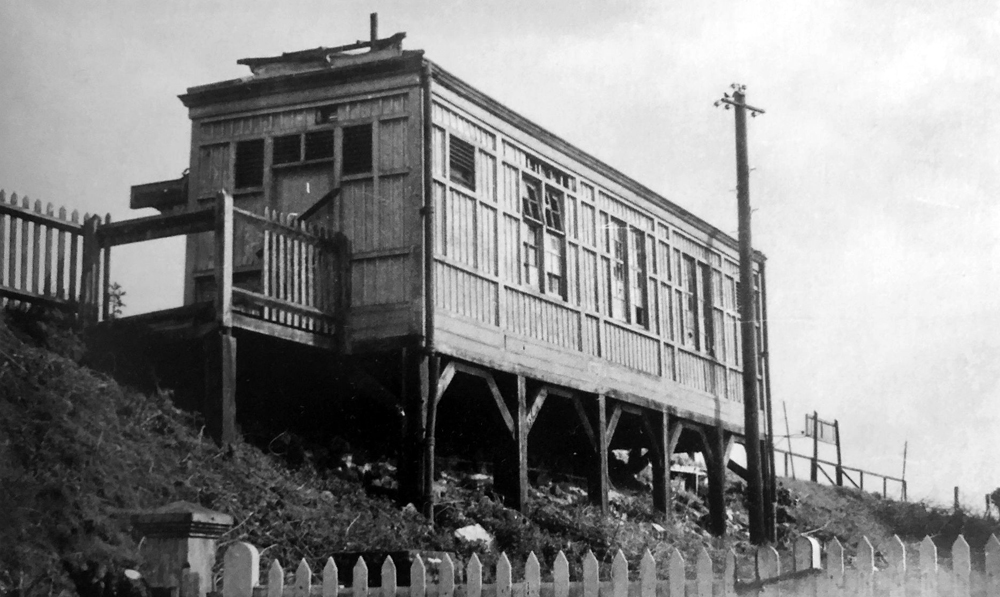
For a while over the winter, I was certain that this was my next project – and I decided at a minimum I could build a small shelf to try my hand at UK-style trackwork and provide a place to test some equipment.
But then I ran into roadblocks. Many UK suppliers are literally “one man in a shed” operations and dealing with some of them can be trying at the best of times. But add in shipping issues and supply chain shortages brought on by counter-Covid measures and it became incredibly frustrating. I had some excellent experiences – for example, Walsall Model Industries supplied me with a half-dozen kits for goods wagons that I look forward to building and I’ll definitely buy more from them at some point. But I also had challenges – from other suppliers – with acquiring basic needs such as turnout kits, three link couplings, and wheel sets.
I have not had such problems with model railway suppliers in other countries during Covid – and did not have problems with UK suppliers catering to other hobbies I enjoy. But I decided that at this time, I could not commit to a large layout that depended on a supply chain that was, overall, unreliable. So I’ve shelved Tetbury for the time being.
What does that mean for the UK equipment I have?
Well, my friend Brian’s Roweham layout proved that even in 7mm, a fun layout can be built in a modest space. I’m sure that at some point I can find a length of wall in the layout room that could support an Edwardian interlude – perhaps along the line of David Stone’s 7mm scale Sherton Abbas layout. (If you are unfamiliar with it, Google is your friend.)
Or, perhaps, the supply situation will resolve itself as countries come to grips with Covid as a virus that’s here to stay and the supply of essential components will improve. We’ll see.
Meantime, I have S scale electric freight motors to build and prototypes closer to home to ponder…
 The Model Railway Show