
I blame* Stephen Gardiner.
I know that’s unfair – especially since I’ve turned off commenting on my website so he can’t defend himself publicly. But who said life is fair?
Stephen, Chris Mears, and I were messaging back and forth a few weeks ago and Stephen reminded me that his local library system is a terrific way to access digital versions of hobby magazines. (You can read Stephen’s thoughts on this on his own, excellent website.)
I checked my city’s public library and it offers plenty of titles one can read for free via an app called Libby. All one needs is a library card and a suitable device: A tablet is ideal, although a phone will do in a pinch.
Among other things, Libby and the Library is a great way to explore unfamiliar titles or broaden one’s hobby horizons – all at no cost. (One can also use this as a way to preview several issues of a hobby magazine – most seem to go back two to three years – before deciding whether one wants to subscribe in the traditional manner.)
I’ve found many, many interesting magazines to read – not only for railway modelling, but many others including prototype railways (current and preservation), table top gaming, science fiction, modern home design, and woodworking and other shop skills, to name a few.
But my personal kryptonite seems to be Australian Model Railway Magazine.
For me, this magazine is a great way to sneak a peek at my fellow modellers on the other side of the world – and I found it interesting to discover how their prototype influences are similar yet different from my own.
Like Canada, Australia is a big yet relatively sparsely populated country. Our two nations also engage in economic activities that produce products ideal for modern roading – such as mining and agriculture. Whether potash, grain, coal, metals, minerals, or other commodities grown or hauled out of the ground, trains are an ideal way to transport these products across vast distances to market.
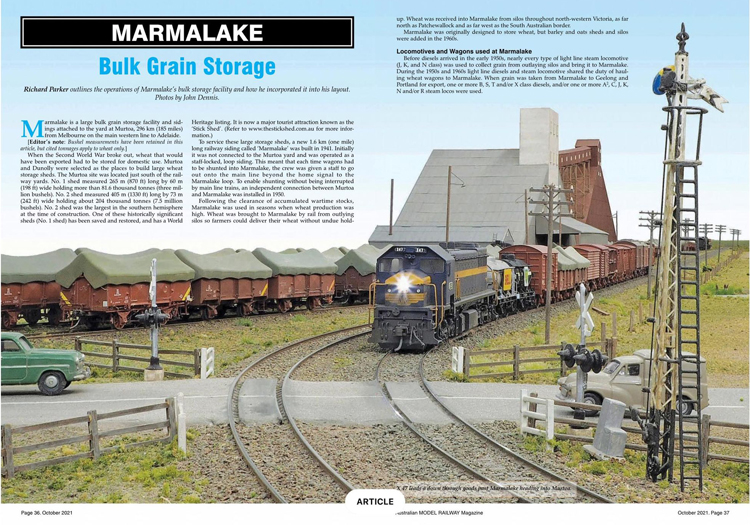
The modelling scene is similar too – with a mix of shows and home layouts (including larger layouts that one wouldn’t typically find in more crowded countries like the UK). I’ve spent several enjoyable hours over the past few weeks catching up on this.
As a bonus, an Australian friend – Trevor Hodges – writes a column for AMRM and it’s been wonderful to catch up with what he’s been doing.
In reading through the magazine, I was pleased to see a number of ads for kits by Steam Era Models. As mentioned in a previous post, I bought and built an SEM kit a couple of decades ago and really enjoyed the experience. Given my current stalled state, I thought it would be fun to try something new, so I ordered a few wagon kits.

This is, I’ll admit, an attempt to freshen up my hobby by learning about something new (Australian modelling) while building kits that are:
1 – complete (they include wheelsets and decals so I need only Kadee #58 couplers and some paint to finish them)
2 – modern (they include injection molded plastic and photoetch)
3 – surprisingly affordable (the small wagons for grain, like those seen to the left on Marmalake, are about CAD$21 or USD$16 – and even less once the Australian GST is removed), and
4 – easily replaceable (if I mess up something, which is happening a lot these days).
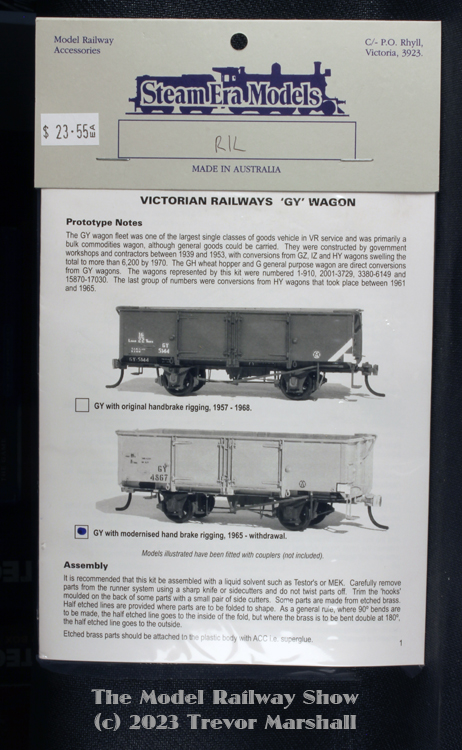

If all goes well, I’ll let the factory air out of these packages over the end of year holidays. I don’t plan to turn these into a new layout project – I already have plenty of layouts on the go or in planning stages. But I think a short rake of these, on a length of track, will look great in my display case.
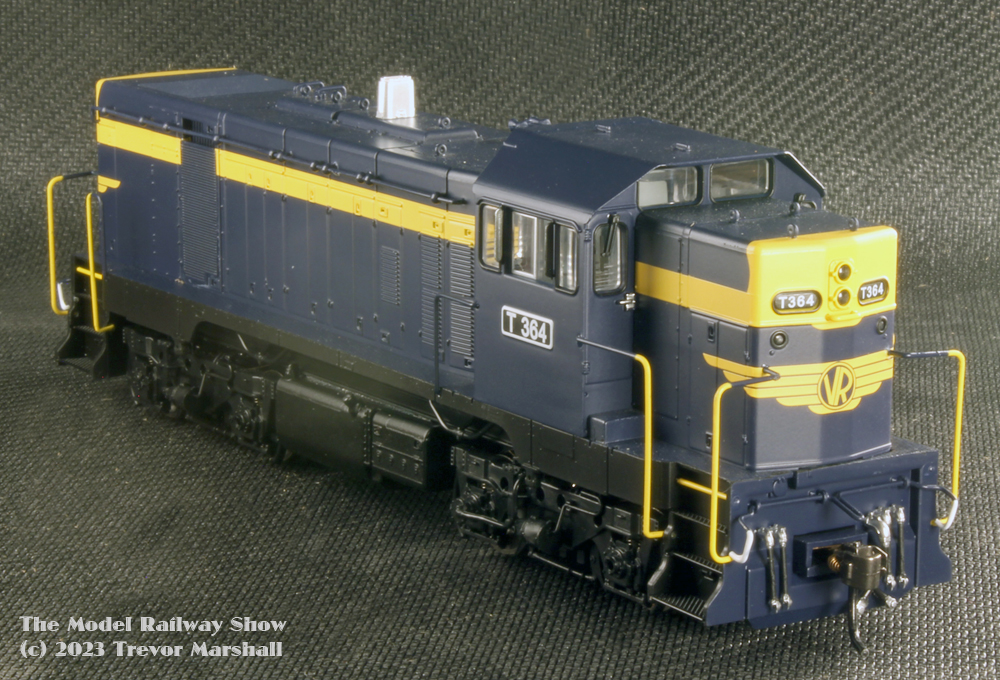
And because some wagons and a caboose do not a train make, I also picked up a T Class diesel. But more about that another time…
(*In all seriousness, it’s not Stephen’s fault. Thanks for the tip – look where it’s taken me!)
 The Model Railway Show