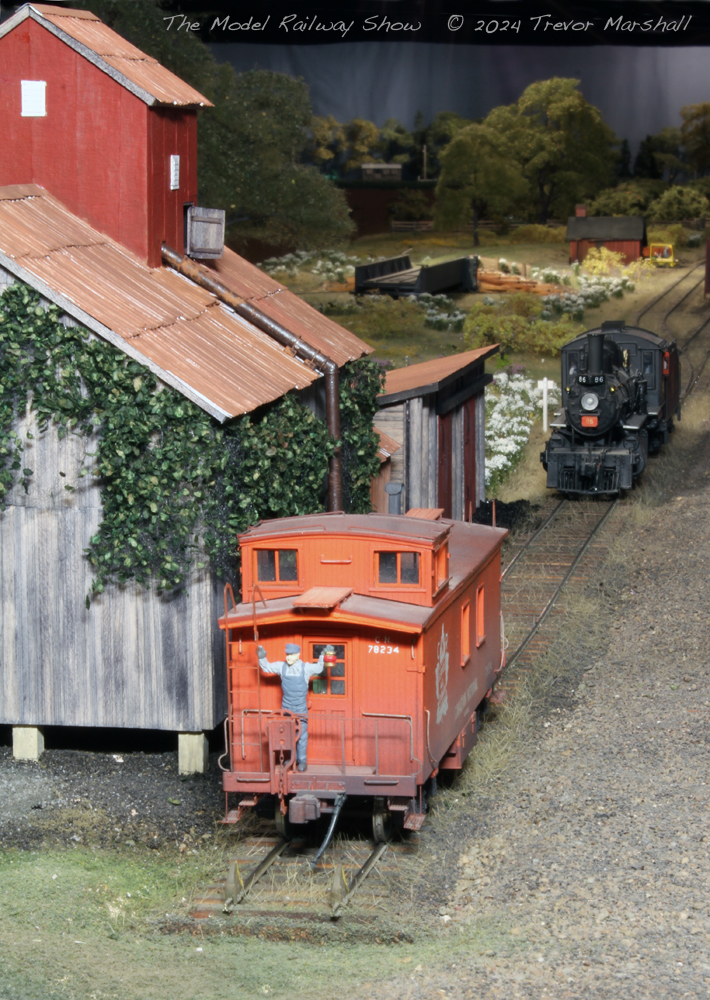
Unfortunately, I didn’t finish the mill until early in the pandemic, so nobody ever saw it in person.
When guests entered the room to visit my now-abandoned Port Rowan model railway, the first scene they encountered was the Leedham Mill. This important customer of the railway – a collection of buildings of various vintages – stood adjacent to the main track at the very end of the branch. As such, it formed part of the establishing shot – the first impression that conveyed what my layout was all about.
Unfortunately, none of my friends ever saw it in person: Leedham Mill was one of the last structures I completed on the layout. I didn’t start it until the early days of the Covid-19 pandemic, and finished it just a few months before my wife and I moved in 2020. So for most of Port Rowan’s existence, crews spotted boxcars of grain and hoppers of coal at a cardboard mockup.
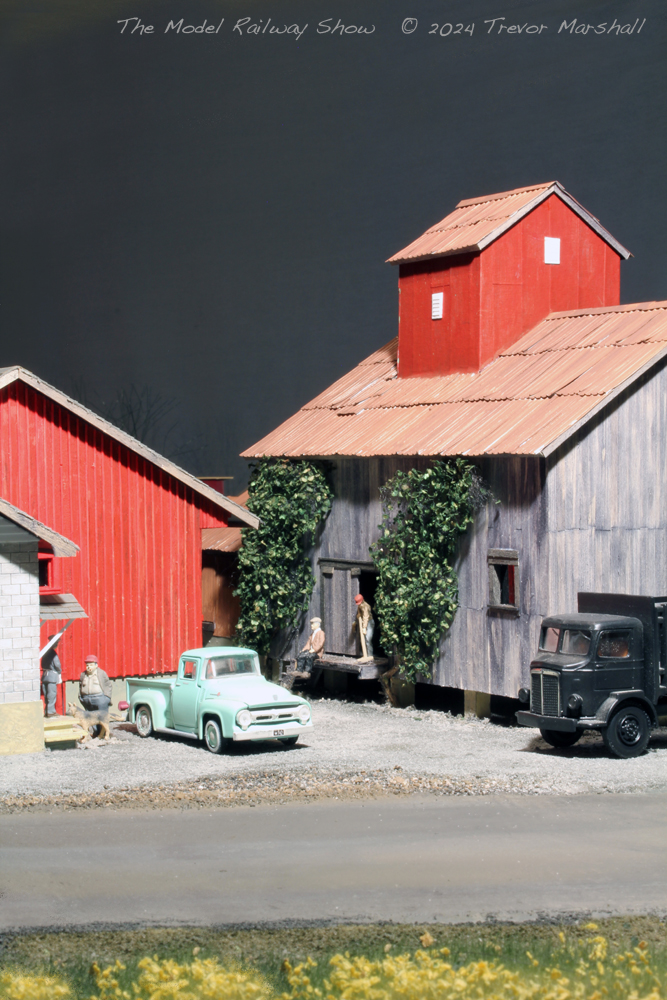
The mill’s structures are still in a banker’s box somewhere in our new basement, waiting for the chance to grace another layout. While it likely will not be a new version of Port Rowan, this mill would fit into almost any location in southern Ontario in the steam-diesel transition era so I’m sure it’ll find a good home.
You can read a lot more about the Leedham Mill in the June, 2024 issue of Railroad Model Craftsman magazine. Instead of walking readers through a step-by-step process, I describe the many challenges scratch-building this mill presented – from the requirement to make convincing cinder block to the problems associated with mounting a structure set on 20 pilings into an existing scenic base. While I worked in 1:64, I wrote this piece to be as universal as possible: Techniques are applicable regardless of the scale in which one works.
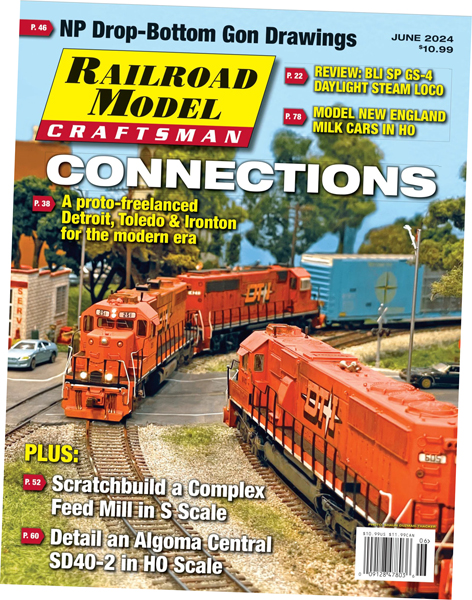
Thanks as always to RMC editor Otto Vondrak for sharing my efforts.
 The Model Railway Show