A planned get-together with friends inspired me to make big progress on my Great Western Railway layout – and, having finished the track and wiring, the next question was, “Would it run?”
More specifically, “Would it be fun to operate?”
I’m pleased to report that yes, it is!
Yesterday I set out some wagons in various locations, assembled a train on the main track (I have not yet built the staging area), and got down to business. I did not make up a formal switch list: I simply picked some wagons that made an interesting-looking train, pulled into the station, and then decided what the work would be.
I paused regularly to photograph the session. Here’s a run report…
This overview of the layout shows the situation at the start of the session. Not visible is a pair of private owner coal wagons at the end of the elevated goods yard / headshunt at right – but I ended up not moving them during the session. The Cordon gas car at the station ramp track also stayed put.
The first task was to dispatch the local passenger train behind GWR 0-4-2T 528, sitting at the station in this view. Once that was run, I removed the train from the layout and built my goods train.

For this session, I chose GWR 2537, my Dean Goods 0-6-0, with a train consisting of four cars: An open wagon, two vans, and a brake van. Here it is, arriving at the station:
The first challenge is, there’s a cattle wagon spotted at the cattle dock – which is right on the turnout at the far end of the run-around loop!

Fortunately, it was emptied yesterday and is ready to leave.
The crew of GWR 2537 uncoupled from its train and pulled ahead to collect the cattle wagon. Having shoved clear of the loop, they threw the turnout and backed down the loop, passing their in-bound train:

Finishing the run-around move, the engine crew noses up to their train to collect the brake van:

The cattle wagon and brake van have been spotted across from the station on the loop and the Dean Goods has returned to the main track. The red van – an “Iron Mink” in GWR parlance – is headed for the goods shed so the crew tackles that job next:

There’s a grey Iron Mink to be lifted from the goods shed:
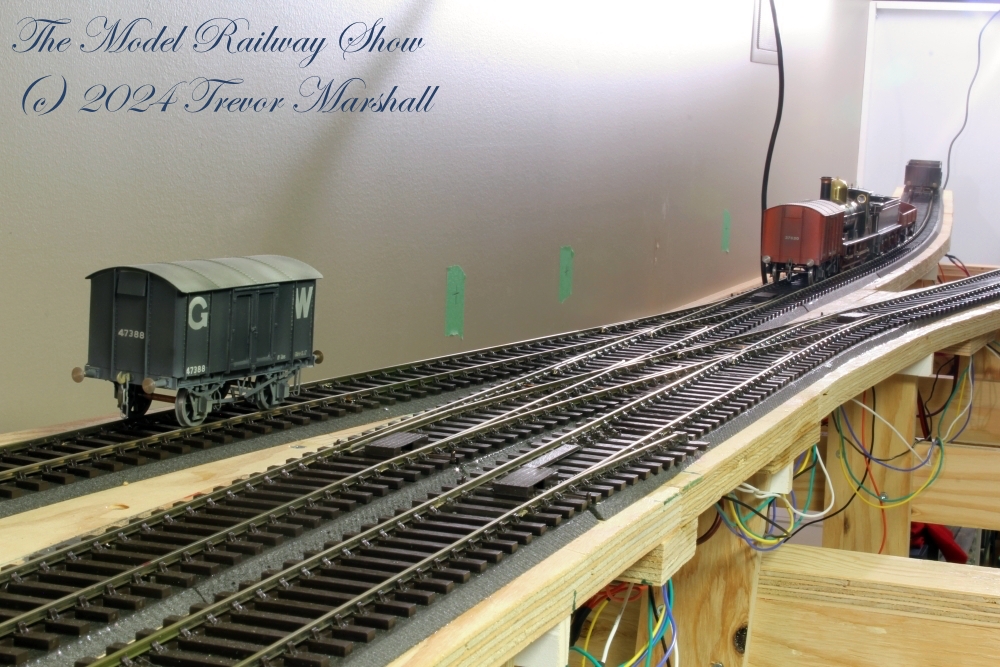
The crew has lifted the grey Iron Mink from the goods shed and is spotting the red Iron Mink in its place. Note the crew has also collected the three-plank open wagon from the goods yard:

With the wagon-swap accomplished, the crew see-saws through the throat to the run-around loop:
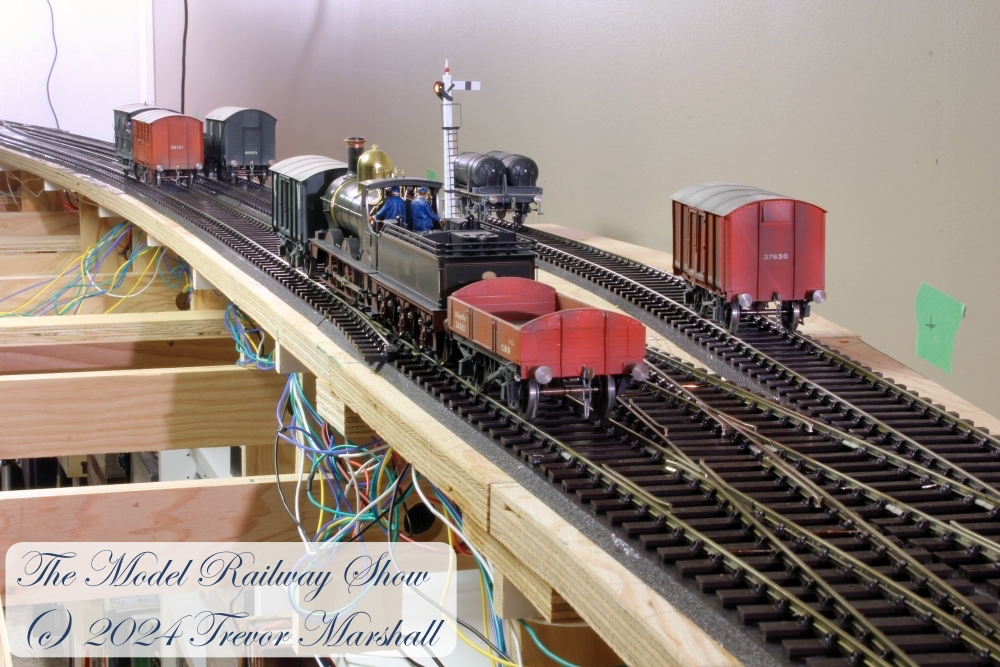
The crew drops the three-plank open in the loop, then couples up to the brake van and cattle wagon and shoves all three vehicles up to the end of track:

The outgoing train will be dropped here for now, while the crew tackles the next job. There are still two wagons to spot in the goods yard, and that red three-plank open from the yard must be added to the train:

The Dean Goods crew has coupled up to the two remaining wagons and shoved them into the goods yard:

With that, the three in-bound wagons have been spotted and it’s time to prepare the outbound goods train for departure. The crew see-saws through the yard throat one more time to reach the loop:
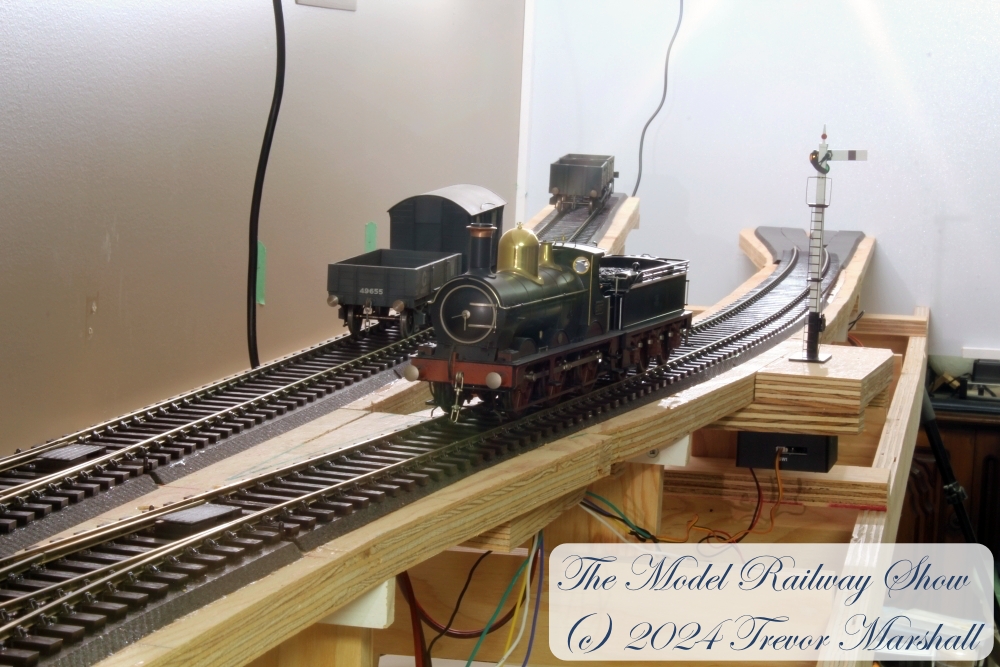
The crew pauses in the loop to couple up to the three-plank open:
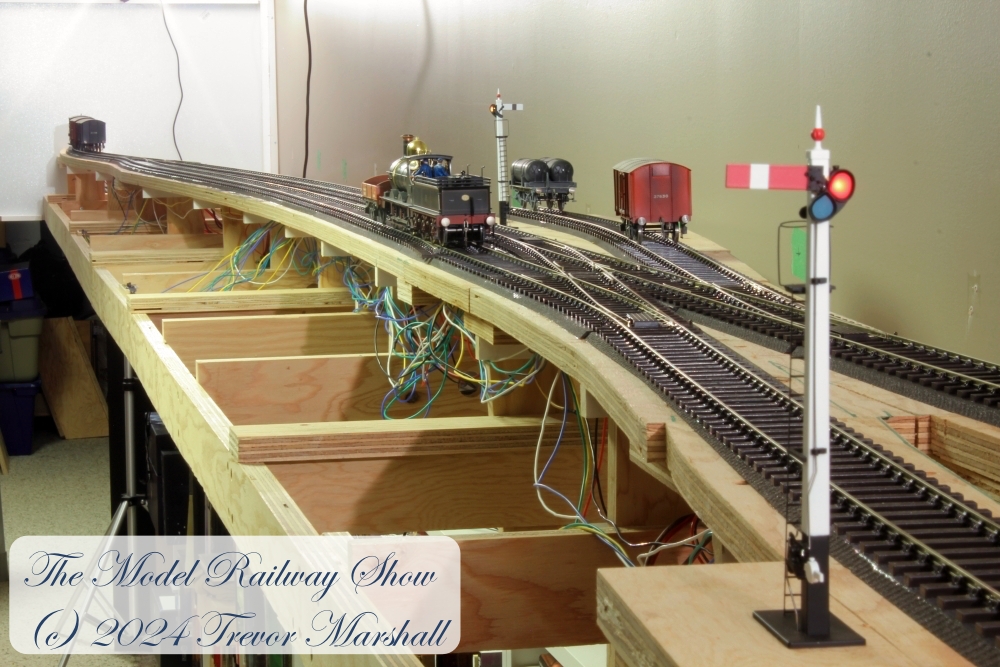
Continuing through the loop to the end of track, the crew collects the rest of its train:

The Dean Goods crew pulls its train onto the station track. Switches have been properly aligned, catch points have been set to protect the main track, and the Home Signal has been dropped. This short goods train is ready to head for home.
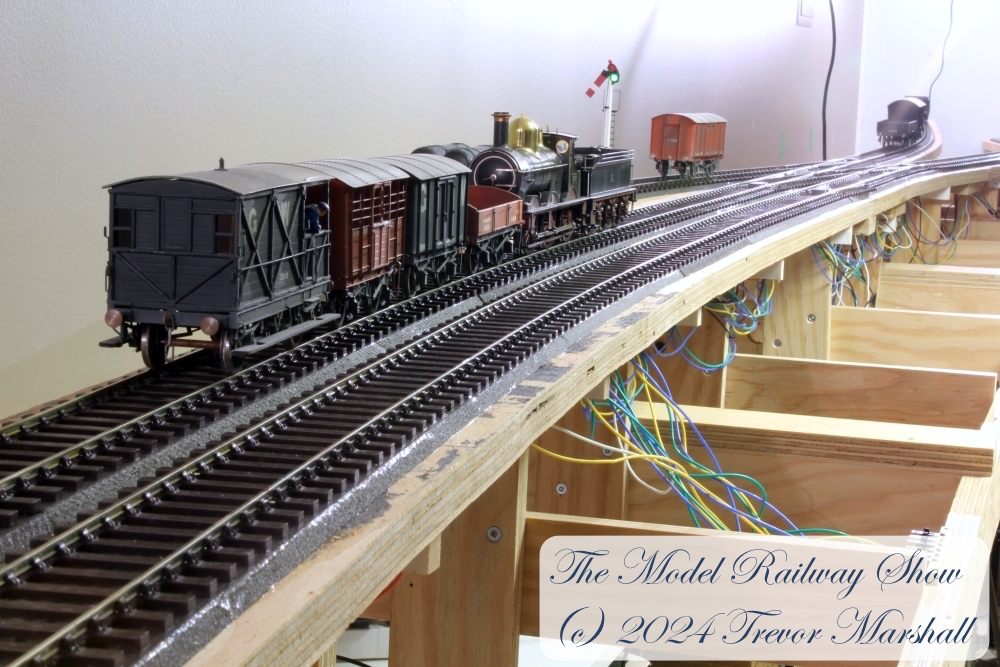
I’m pleased with my first operating session on this new layout. The locomotive worked flawlessly, as did the turnouts and signals. I had no derailments – a huge relief, given that I have no terrain to stop derailed equipment from hitting the floor. And while my first few moves required some practice to hook up the three link couplings between wagons, this got easier as the session went on until I was consistently coupling up on the first try.
Operating this layout is very different from my experience with North American-themed layouts. Using three-link couplings instead of knuckle couplers is a definite change, as is having the switches and signals controlled from a ground frame (which, for now, is temporary and doesn’t feature the full interlocking that it will eventually).
At the same time, this small terminal with minimal trackage would feel very familiar to anyone who has operated on my Port Rowan layout. There’s just enough trackage to get the job done, with no extra trackage to make things easier for the operators.
All in all, an excellent first ops session!
 The Model Railway Show