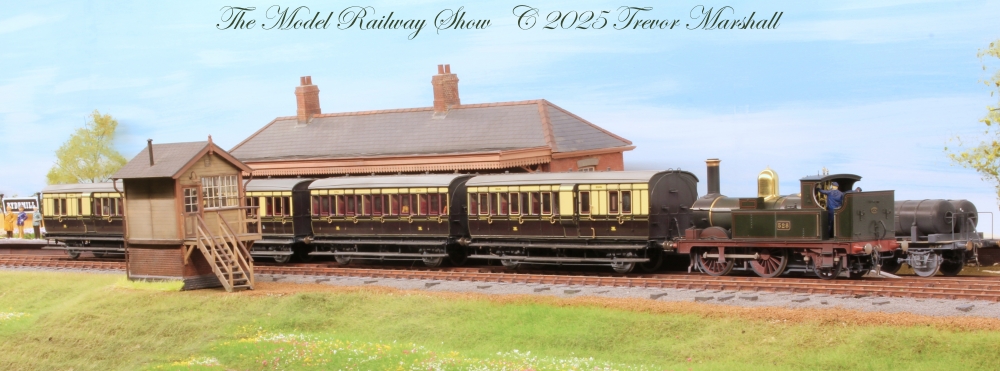
The station at Bydemill would eventually be hooked up to municipal services like water, sewer, and electricity. But in 1905, the Great Western Railway had to deliver gas for station lighting by rail, using a specialized car known as a Cordon wagon. These wagons were equipped with vacuum brakes so they could be safely transported by a passenger train, and could also top up the storage cylinders on gas-lit coaches at rural terminals. Today, the afternoon passenger service from Swindon included a Cordon in its consist…
The train arrives at the platform behind GWR 528 – a 517 Class 0-4-2T. The Cordon is tucked onto the tail.

There’s a wagon (an Iron Mink) in the Goods Shed that must be moved before the Cordon can be positioned in the bay beside the depot. The crew rolls GWR 528 onto the shed track.
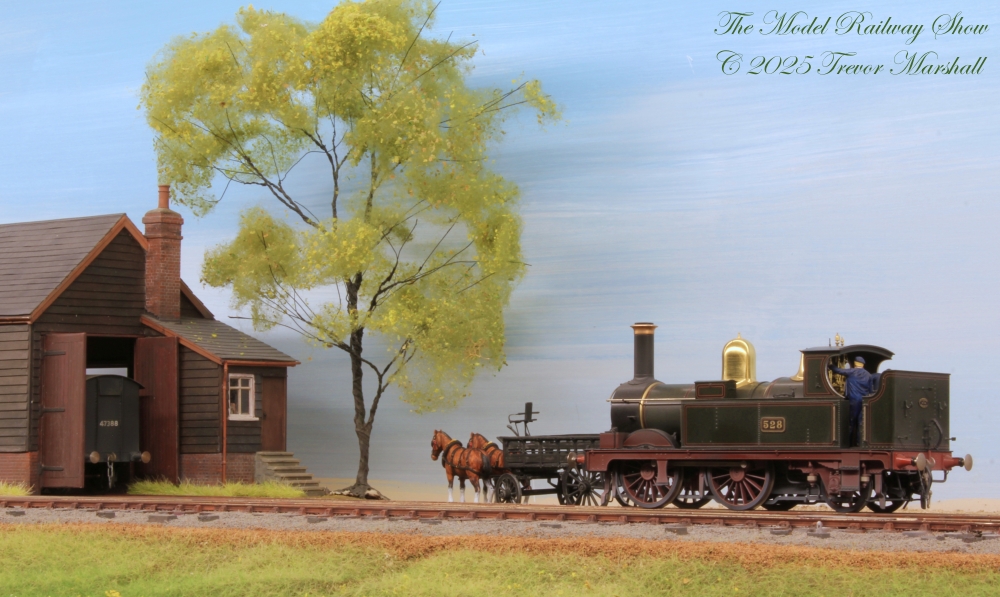
With the Iron Mink in hand, the crew returns to the platform track. Once confirming that all passengers have detrained, the crew nudges up to the Cordon.
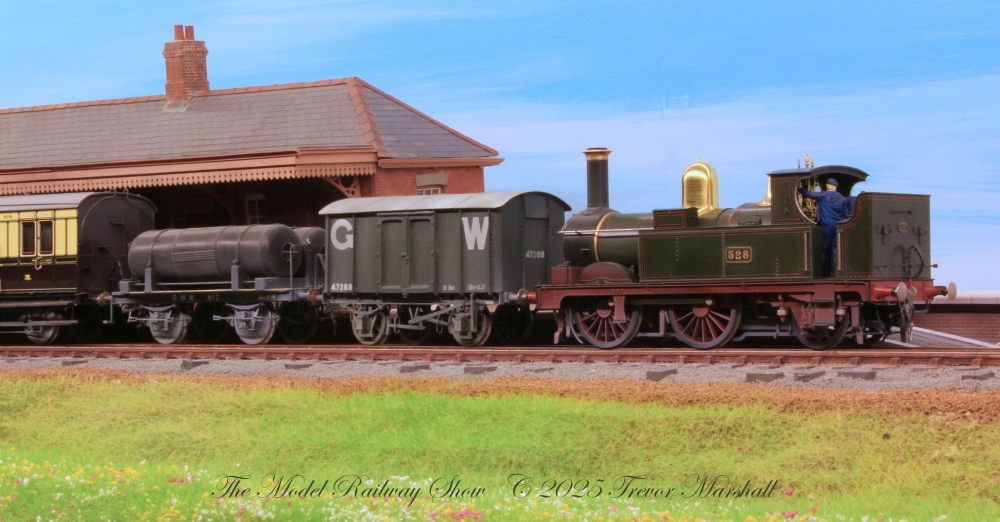
With the coaches uncoupled, the crew hauls the Cordon into the goods yard.
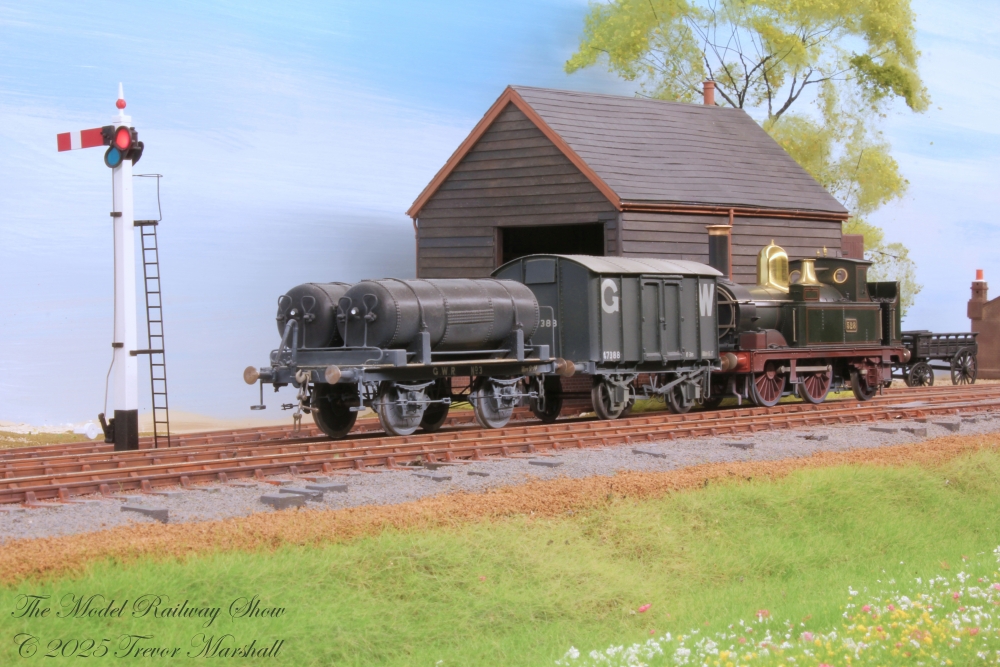
The Cordon is propelled through the goods shed and carefully spotted in the bay.
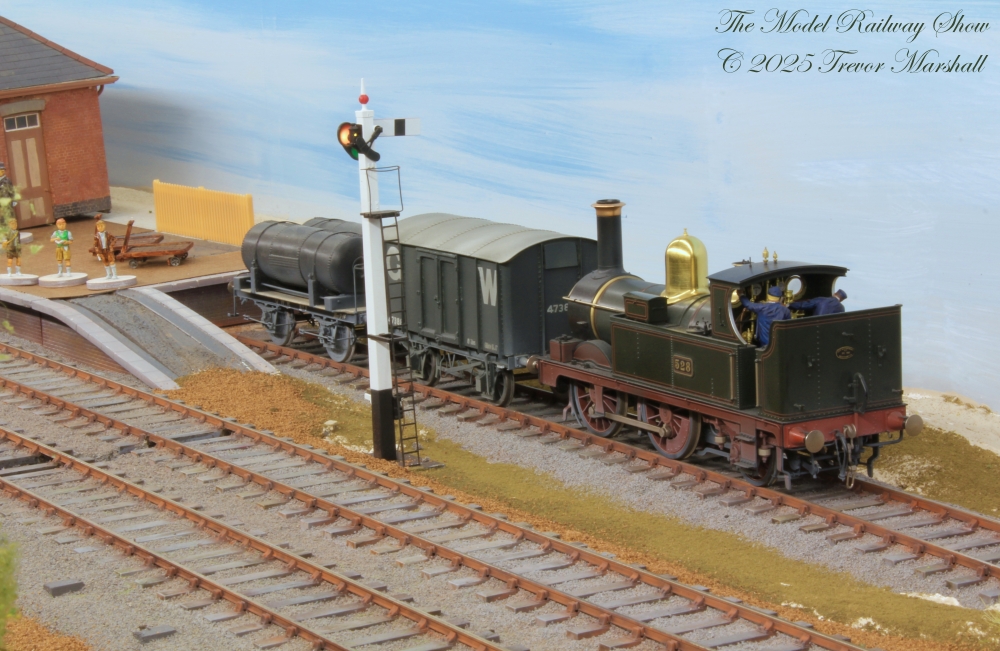
With the Cordon in place, the crew re-spots the Iron Mink in the shed so the staff can continue to unload it.

This minor bit of shunting complete, the crew returns GWR 528 to its train. The screw link couplings are tightened, the vacuum brakes hooked up, and the starter signal is set to green. The return train to Swindon is ready to depart.
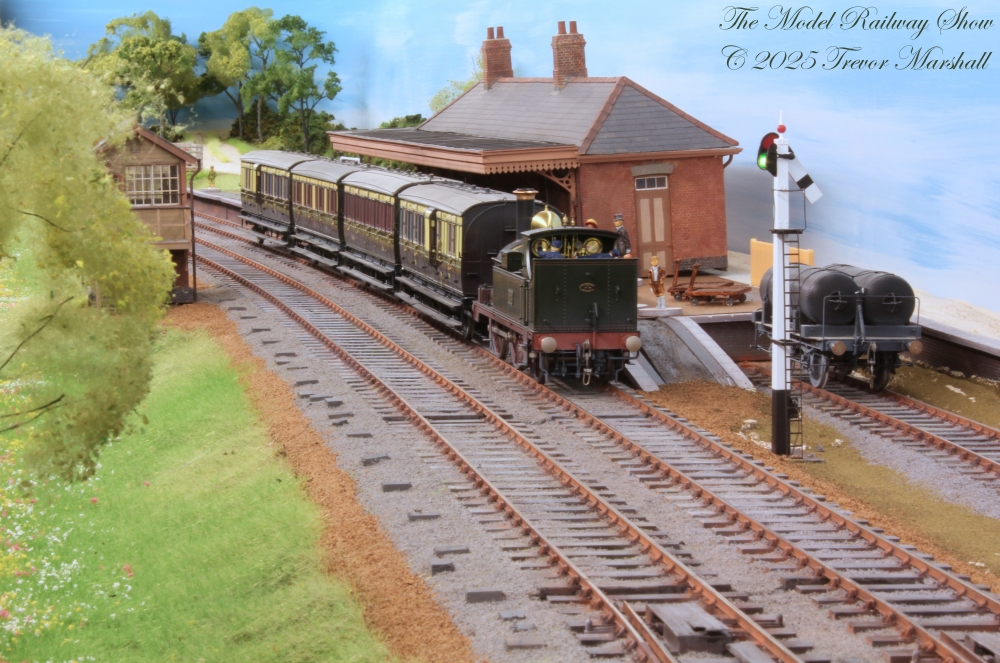
This operations sequence took just 30 minutes to complete – about 10 minutes of which was taken up with photography. This was a perfect, quick session over the second mug of coffee on a Sunday morning.
 The Model Railway Show