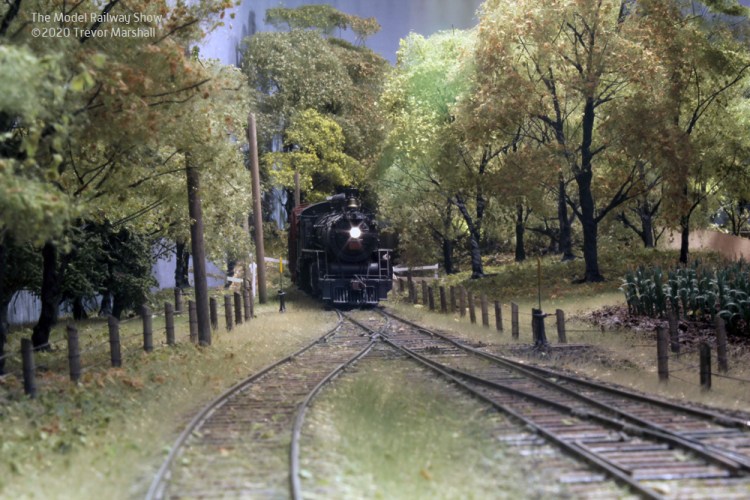
I had an interesting experience this week, as a friend alerted me to an article in a hobby publication that included six pages on my (now dismantled) Port Rowan layout. The author analyzed several layout designs and was quite complimentary about Port Rowan – and for that, I’m grateful.
That said, I didn’t write the article. I didn’t even have any input on it. Nor did I even know it was being prepared. If I had seen a proof of the section on my layout, I would happily have supplied additional information and corrected a few mis-interpretations of the plan.
For example, the article states the layout featured four switching districts, when in fact there were only two: St. Williams and Port Rowan. It described (at some length) the uniqueness of the street running section in St. Williams – which is odd because there wasn’t any. It suggested the tobacco kilns in St. Williams were rail-served, whereas they were not. And so on.
Curiously, the author also raised a couple of “concerns” that puzzle me.
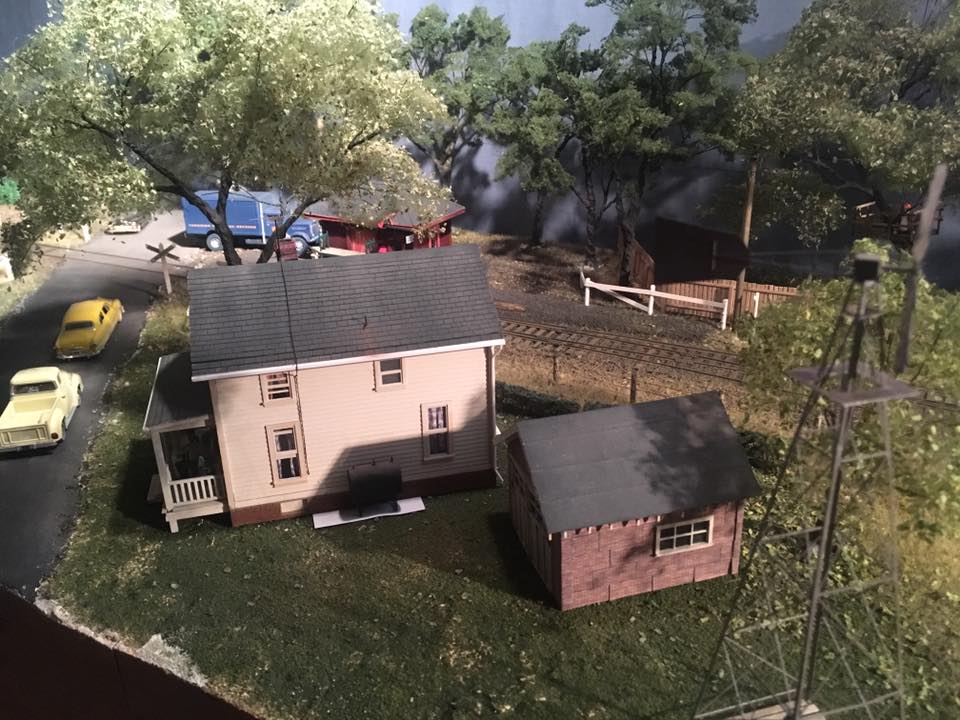
He cited a lack of space for “sprawling town scenes”. The reality is, the stations were not located in town centres, but at town edges. They were literally surrounded by fields or bracketed by tree lines, so there was no need for town scenes. I actually moved some residential structures into the scenes to suggest to viewers that the towns existed:
The author also cited “narrow scenery depth” and while that’s true in some places, the majority of the layout was built on very deep benchwork. For example, the Port Rowan terminal – with just four parallel tracks plus a turntable – occupied a 42″ deep peninsula:
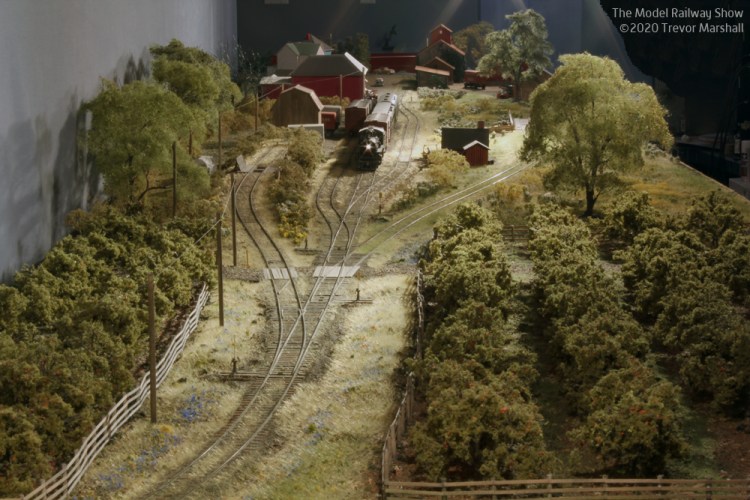
I would love to reproduce this kind of narrow scenery depth on every layout (and think I’ll write more about this in a future post).
I’m grateful for the shout out. But here’s an important takeaway:
When one is writing about something with authority, one should try to contact the source instead of assuming. It’s not like I’m hard to find online… and I’m happy to provide the information.
 The Model Railway Show