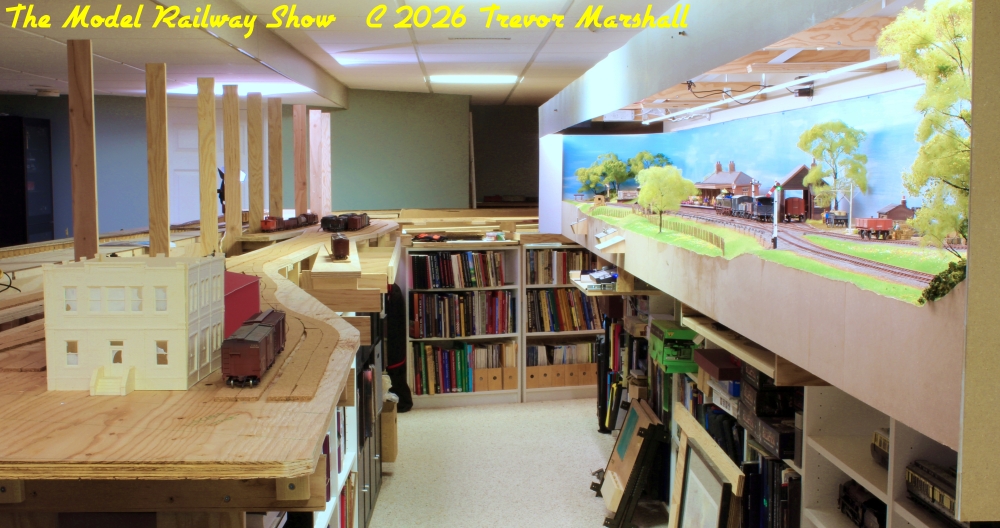
I’m making swift progress on the next phase of my S scale interpretation of the Niagara St. Catharines & Toronto Railway. Less than two weeks ago, I finished building the basic benchwork, followed shortly by plywood surfaces to support the track and pole lines. As the photos in this post show, I’ve now transferred the layout plan from kraft paper to the plywood, and glued down cork roadbed.
I’ve ordered track-laying supplies and while I wait, I thought I would celebrate by hauling out some S scale equipment and posing it on the roadbed. This was not only fun but helped me visualize where the layout is headed (as well as confirming clearances and track capacities).
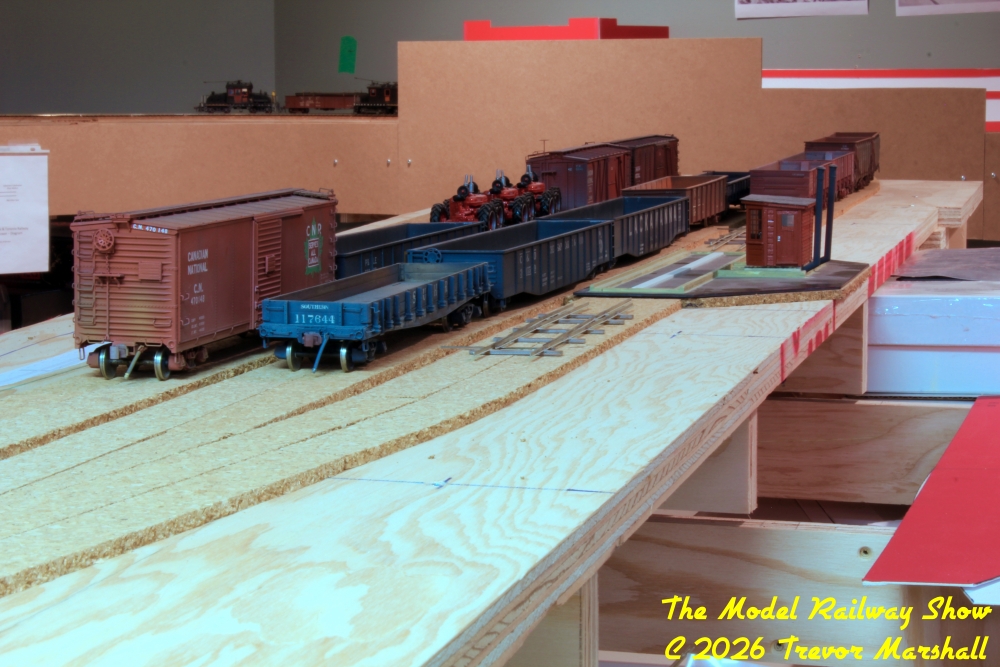
The interchange yard
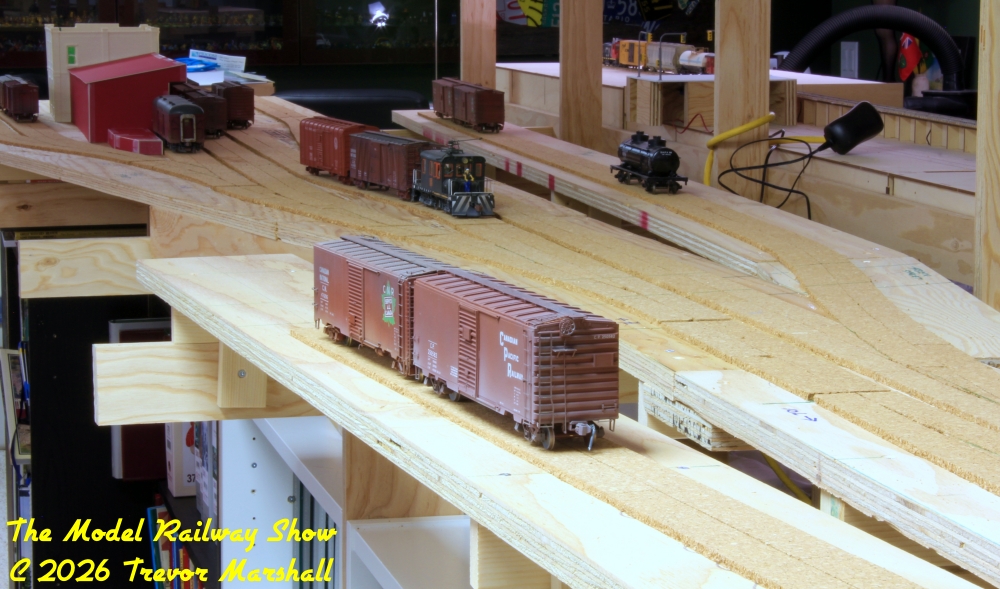
This small yard will be an important location as it’s the source for most of the freight traffic entering the NS&T off the CNR. I did not have space to model the big interchange yard at Merritton in south St. Catharines, so my representation of it has been pared to the bone. As the photo shows, my interchange yard consists of three single-ended spurs, one of which includes a scale on a gauntlet track.
Eastchester Avenue yard
A short distance north from Merritton, the NS&T had a small double-ended yard near Eastchester Avenue. Here, cars were sorted into cuts for various subdivisions that radiated out from the centre of the city. These included the Port Dalhousie Sub to Port Dalhousie west via Ontario Street, the Grantham Sub to Port Dalhousie east, the Lakeshore Sub to Port Weller, and the High Line to Thorold, Welland, and Port Colborne. In this photo, a train behind NS&T freight motor 18 is spotted on a staging track that will represent one of these subdivisions. I’ll hide this track in trees and/or behind a low backdrop.
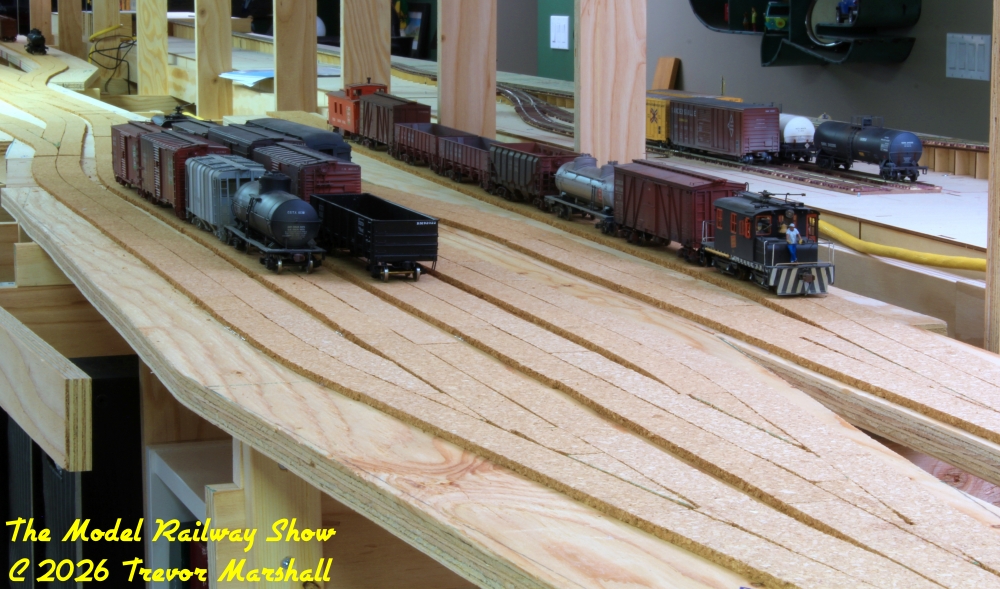
Here’s another view of the Eastchester Avenue yard. NS&T 8 is drilling cuts of cars to build switch jobs. The track in the foreground is a yard bypass enabling crews to reach the interchange yard (out of view to the right).
Industrial spurs
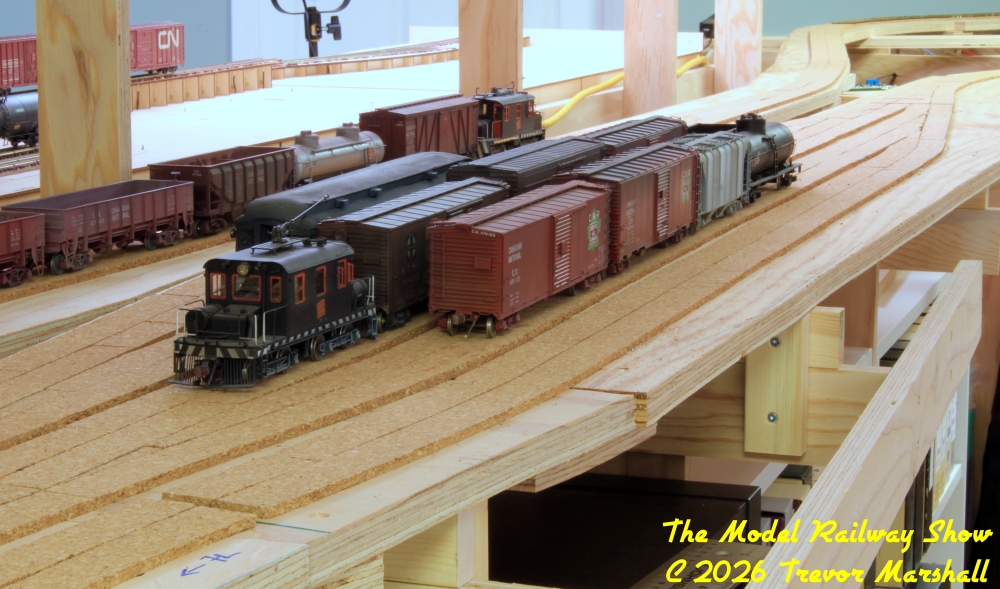
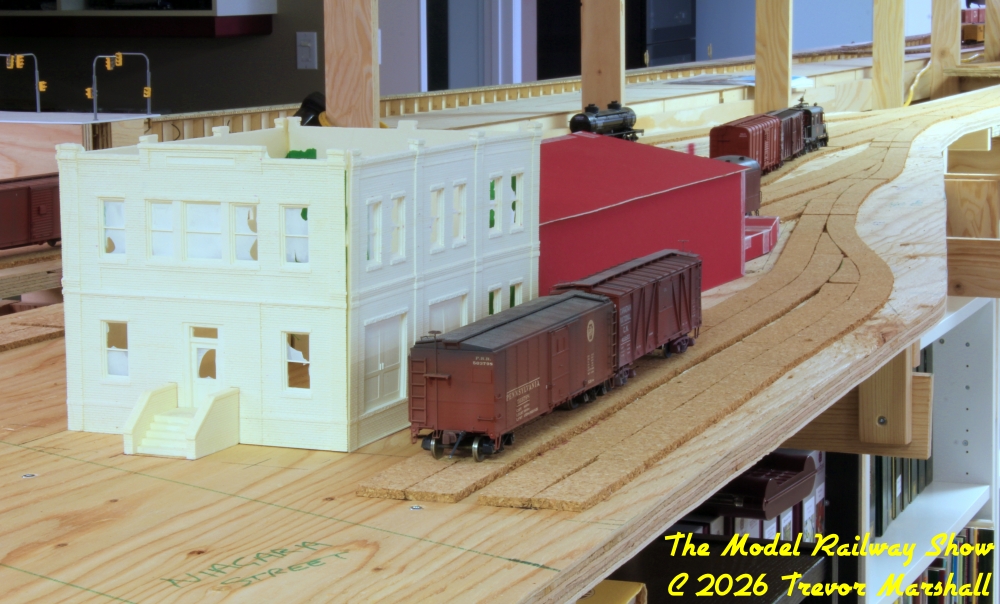
Between Eastchester Avenue and Niagara Street, a couple of spurs serve local customers. In this photo, two boxcars are spotted on the Monarch Knitting spur. In the distance, a tank car is spotted at a fuel dealer while a couple of boxcars further along the spur are at another customer (to be determined: I might pop a lumber yard here, or transplant Warren Pink from the Ontario Street spur because it’s a lovely structure). NS&T freight motor 19 is working the freight shed.
Niagara Street freight shed and team tracks
I knew from the start that I would only be able to model a few online customers. The freight shed and team tracks at Niagara Street were high on my list. The few prototype photos I have of this facility show it was fairly busy. What’s more, this area can accept a wide variety of freight car types. My version of this complex includes two shed tracks, a platform track, and one set of paired team tracks – so there’s plenty of capacity. I mocked up the freight shed using an S scale cast resin kit from the now-defunct Grand River Models for the office, and cardstock for the shed. The kit is close enough to what was there that I’m happy to use it as is, and will scratch-build the extension.
While it’s not obvious from these photos, I’m pleased that multiple crews will be able to work this part of the layout without getting in each other’s way. There are two main tracks that act as parallel switch leads, enabling one crew to classify cars at Eastchester while another works Niagara Street. What’s more, there’s plenty of space for these crews to get out of the way when a train arrives off a subdivision to drop cars headed for the CNR or collect their next assignment from Eastchester.
I’m also pretty pleased with the reach-in distances. The industry spur behind the freight shed ends up some distance from the aisle, but it’s a low-traffic piece of track and there’s good access to points where uncoupling will be done.
Monarch Knitting is a large three-storey building against the aisle, which will work as a nice view block to separate Eastchester and Niagara into two distinct scenes. Despite its size, it’s also well positioned to not interfere with access during operations.
Finally, I have space for some interesting commercial and residential structures. As on the prototype, there are several street crossings around the freight shed and I’ve been able to include four of them (Niagara, Page, Tasker, and Haynes) on the layout.
Progress will slow down considerably now, as I lay ties and fabricate turnouts. But I’ll have plenty to share as I make progress.
 The Model Railway Show