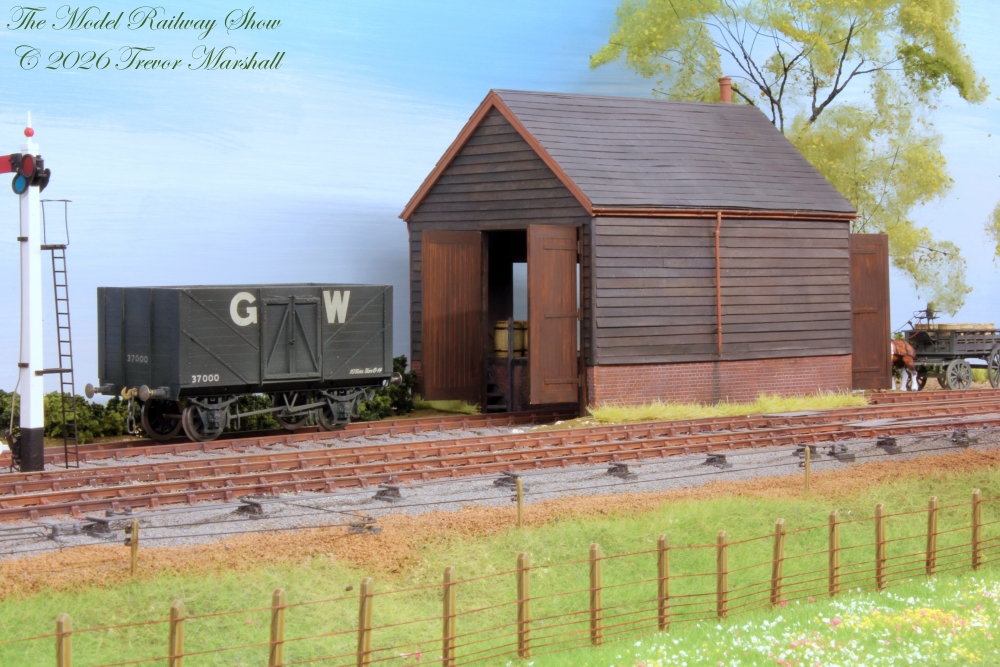
Just over a year ago, my plans for Bydemill took a tremendous leap forward thanks to the generosity of my friend John, who gave me three beautiful structures from his collection to use on my 7mm scale Edwardian era Great Western Railway layout.
They are all lovely, and expertly built. But the goods shed featured doors on only one end – the other was wide open – and I always thought that a bit odd. I assume this was done because the model was intended to sit in the corner of a layout, with the track passing through into a fiddle area where loads could be swapped in and out of wagons.
But on my layout, the shed is located centrally and the unguarded opening didn’t convey the sense of security that a shed should embody. Why have doors on one end, and not the other? Is the railway assuming burglars are so lazy they would not walk to the other end of the building?
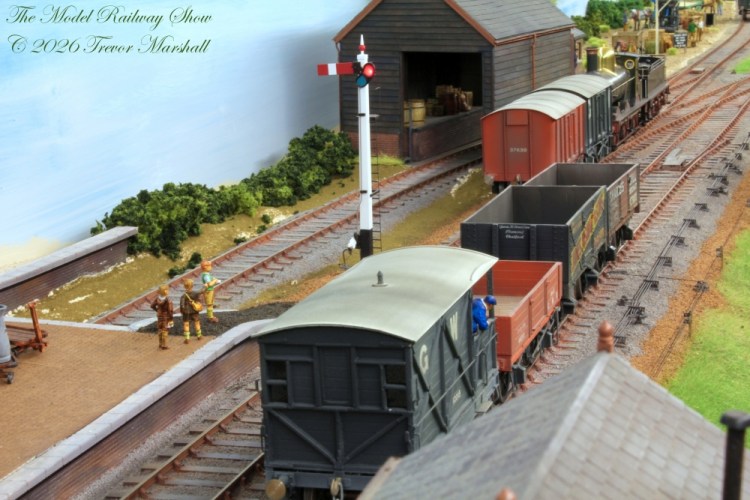
I decided to do something about this.
Instead of just adding one pair of doors, I decided to build two sets and replace the existing pair as well: It would be easier to match the colour and texture of four doors to each other than to try to match two new doors to the old ones.
At the same time, I wanted to widen the opening slightly as I had found a couple of my larger pieces of rolling stock would scrape the door edges as they passed through. Given that the track passes through the shed to a station platform bay (as it did at my prototype inspiration, Highworth), I wanted to make sure neither equipment nor structure would be damaged.
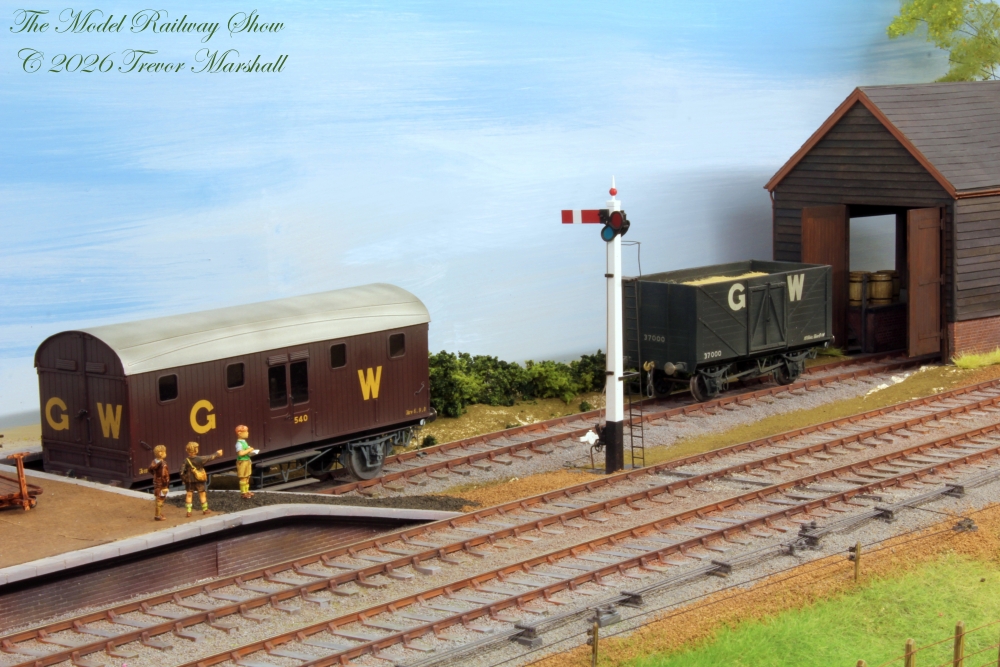
I carefully removed the existing doors and framing. I used the old doors as study models to make the new ones: I wanted them to look as close as possible to what had been there.
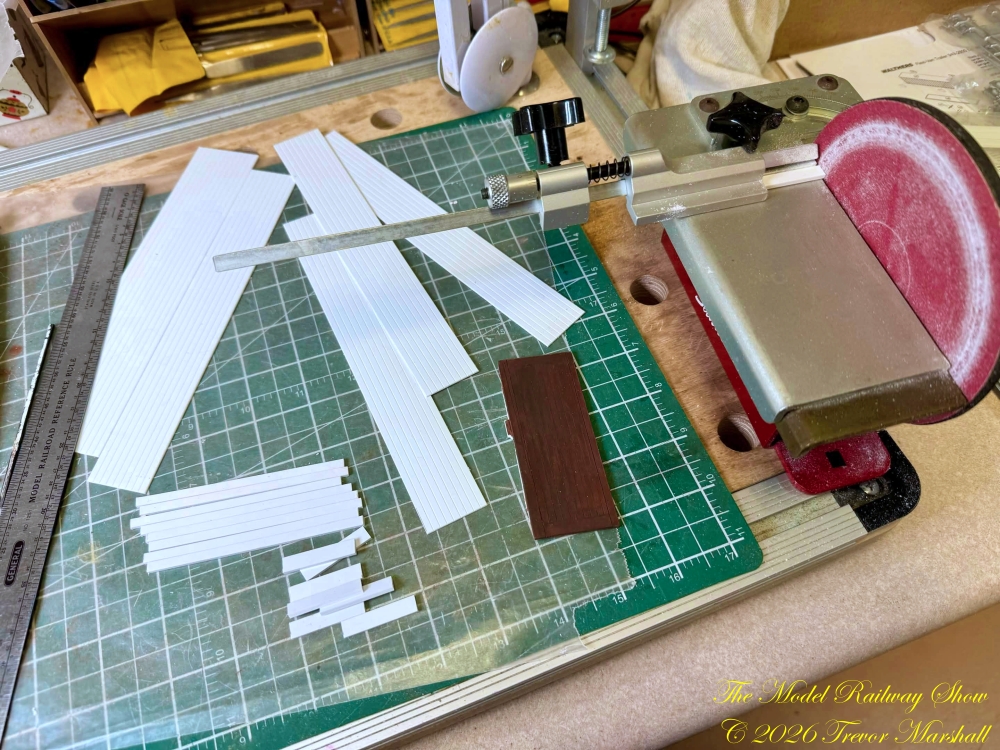
I started by collecting appropriate scribed styrene sheet and strip, which I cut and sanded to final size.
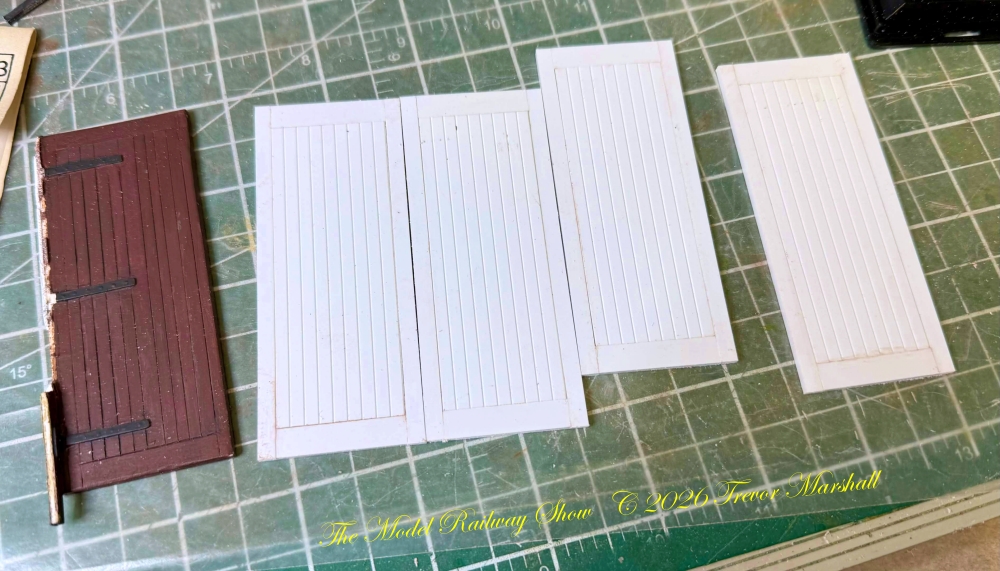
I used styrene strip and rod to build new strap hinges, which I glued in place. I then set these aside and built new door frames from thinner material. I didn’t need a lot of extra width: Adding .060″ to the opening was plenty. (I was in the “modelling zone” and forgot to take pictures: Sorry-not-sorry!)
I then mounted the new doors on the thinner framing and turned to painting them.
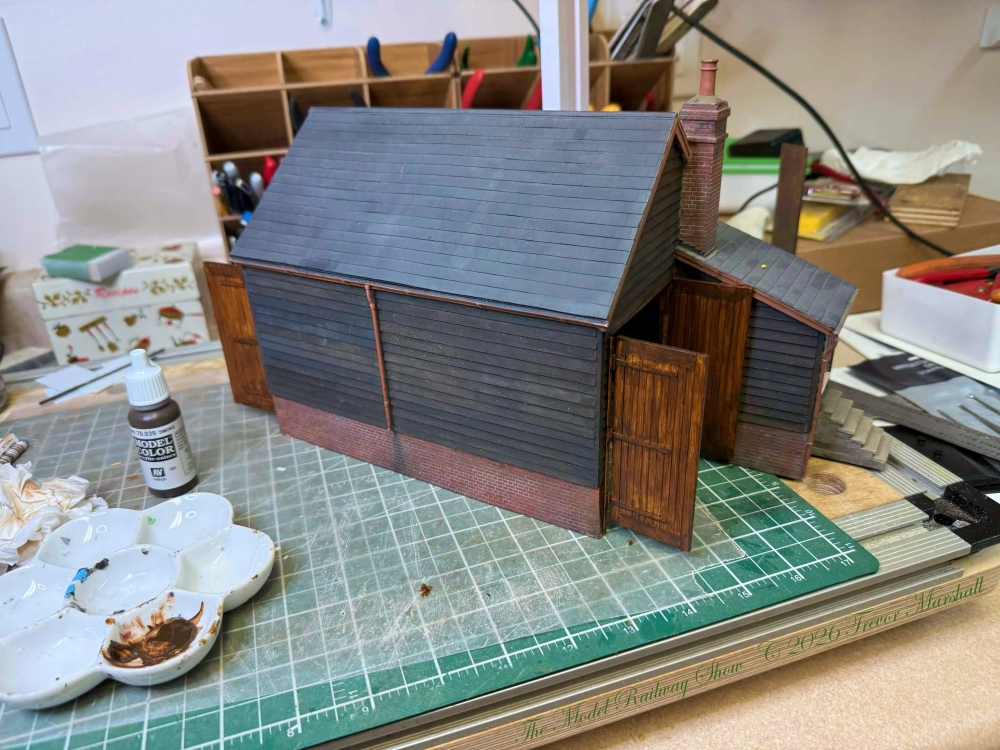
I must admit I was hesitant to take tools to this structure since it was so beautifully built by a well-known British modeller. But I’m glad I did.
The second set of doors makes more sense and makes the structure look more at home at Bydemill.
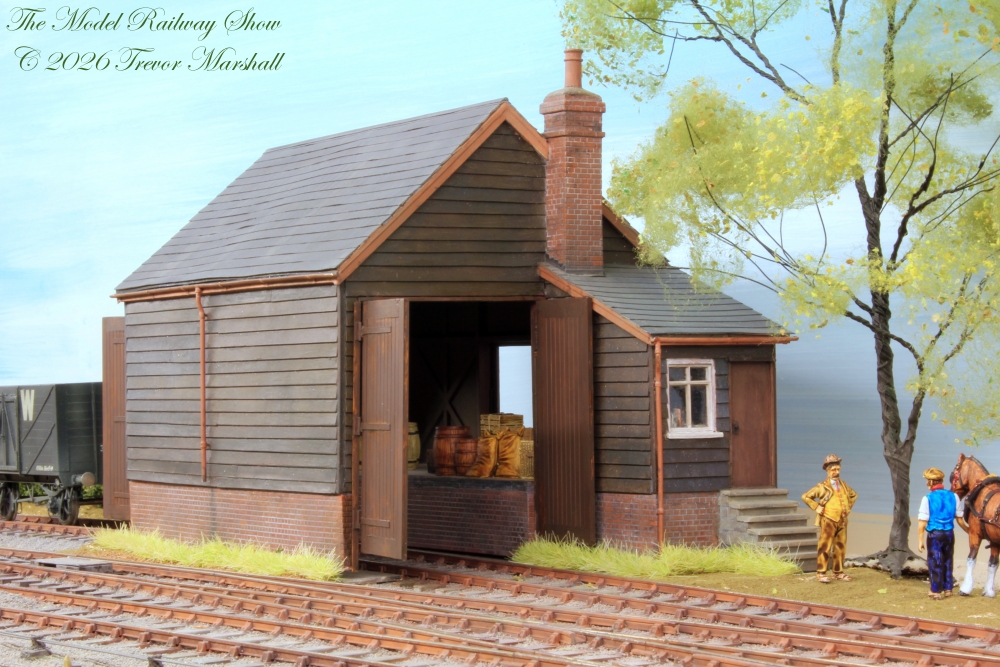
I’m really pleased with how this one-day project turned out.
 The Model Railway Show