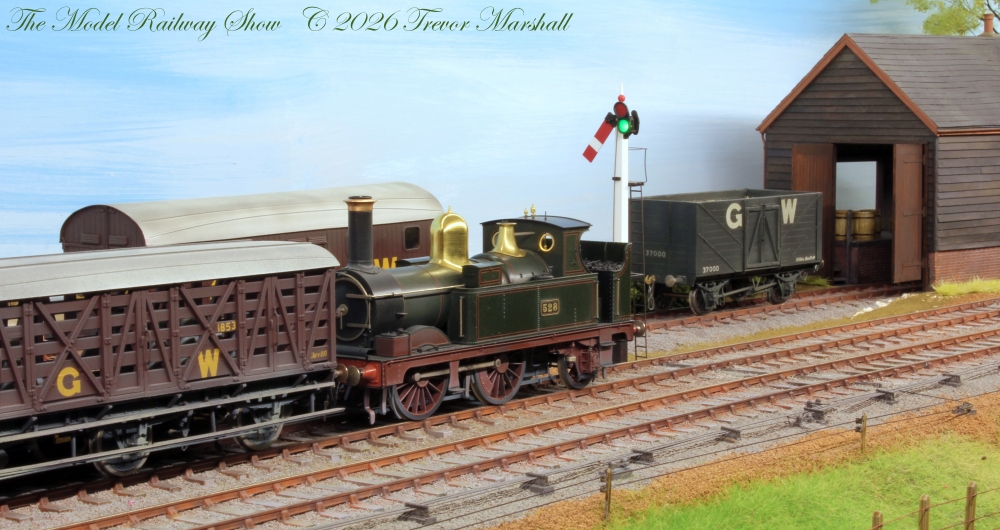
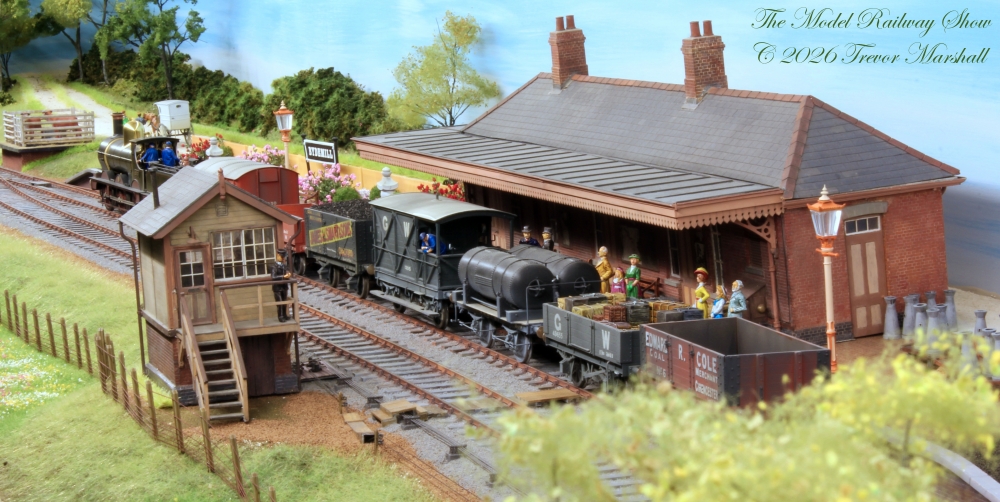
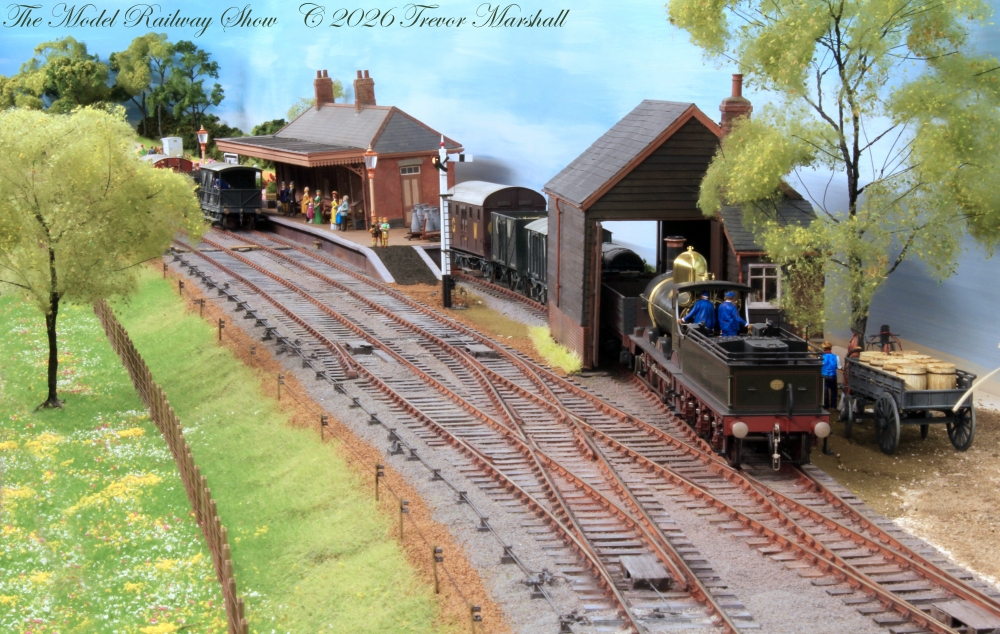
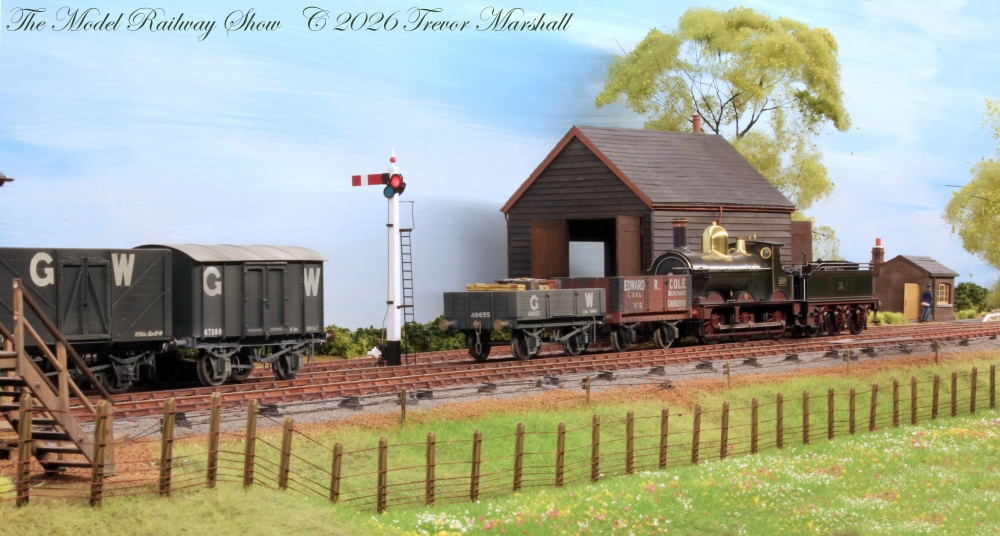
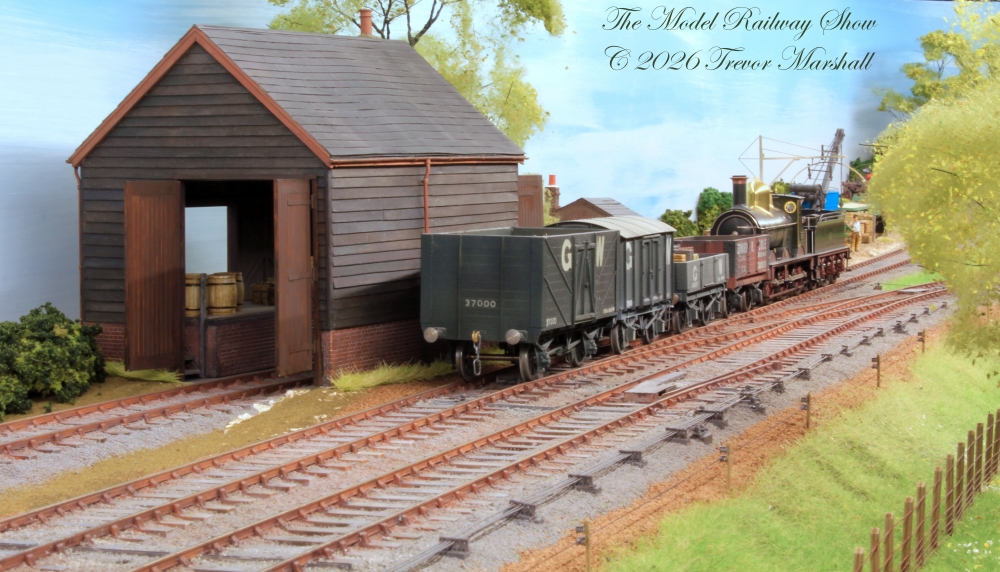
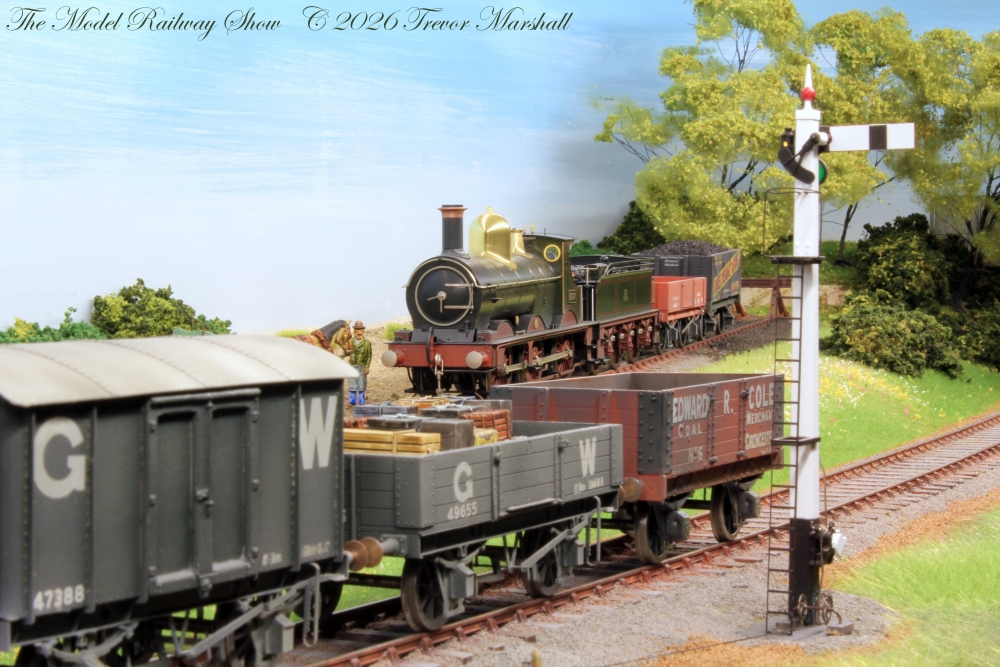
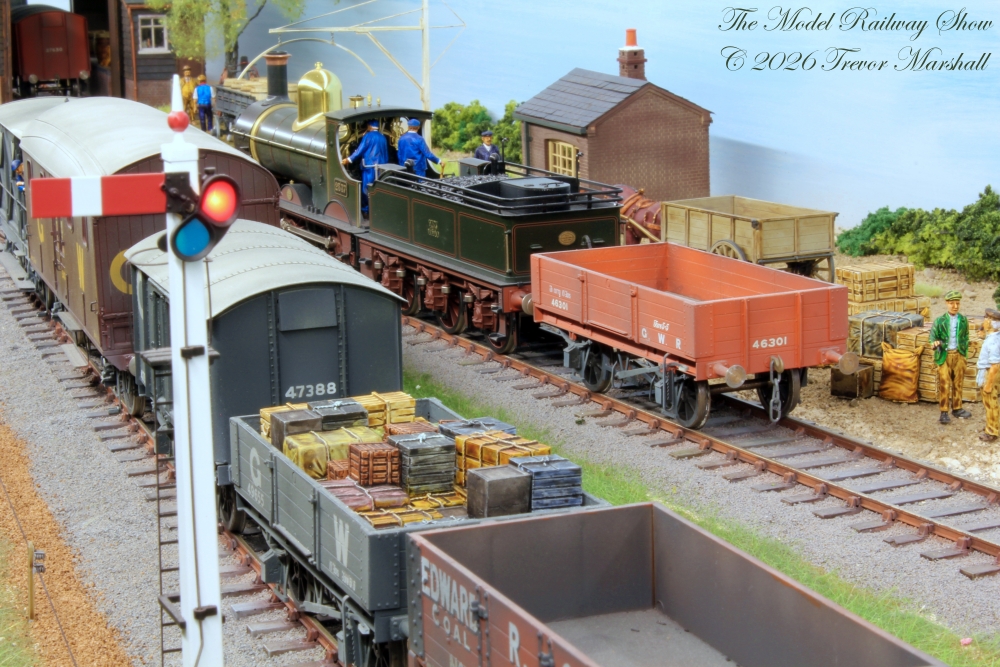
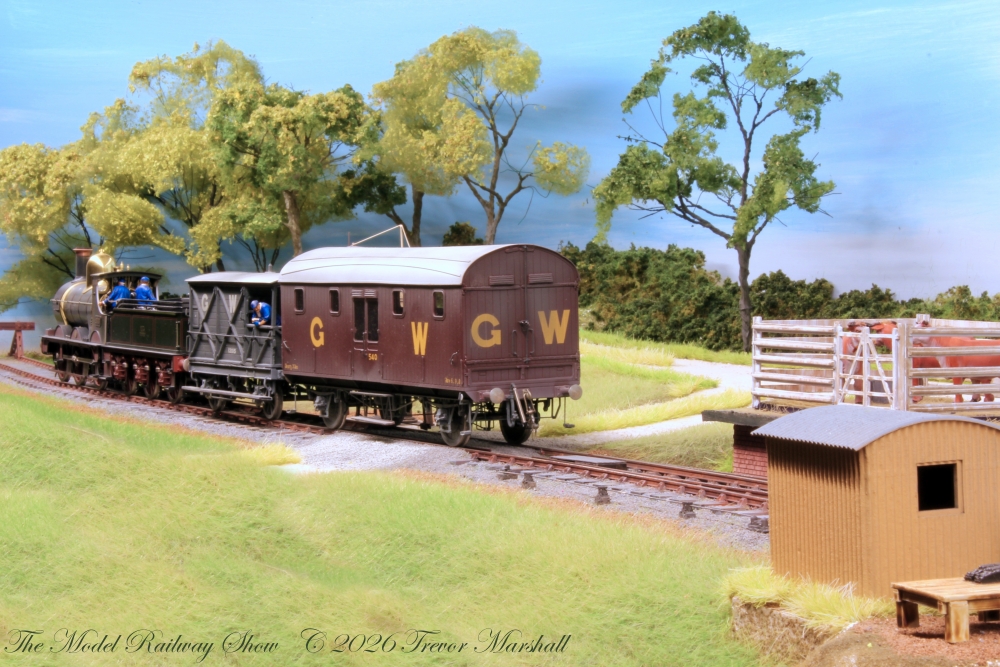
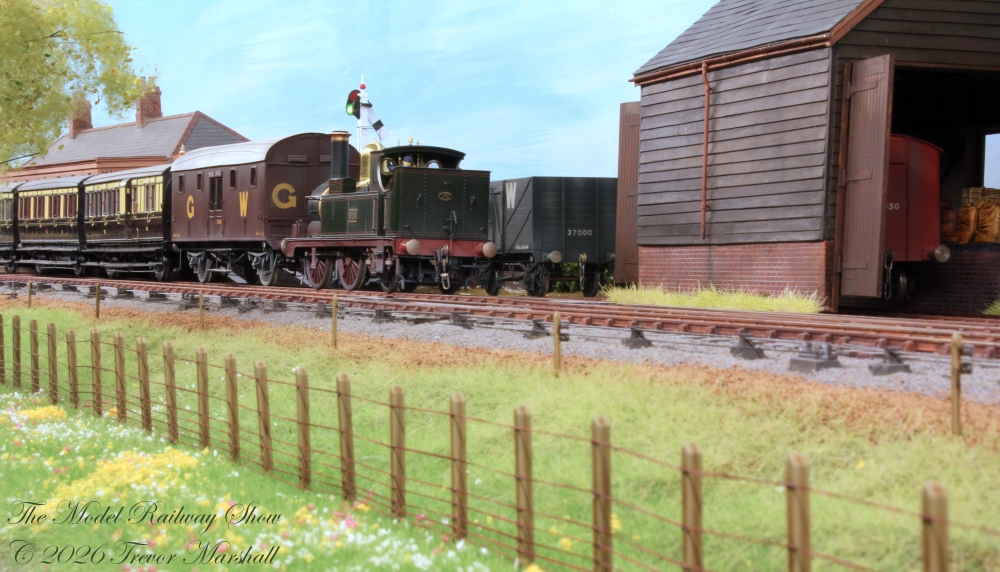
One of three trains I ran during a two-hour session on Bydemill this morning. The mid-day goods train sorts wagons in the goods yard.
I was in the mood to run trains this morning on Bydemill – my 7mm scale layout depicting a Great Western Railway branch line terminal in the Edwardian era. Having recently modified the goods shed at Bydemill, today seemed like an ideal opportunity to test the results.
In the end, I ran three trains (and shot 78 photos, most of which illustrate this post). It’s been a long time since I ran a train on Bydemill and I was pleased the layout behaved flawlessy: No stalls, no derailments, no other gremlins. This is as it should be.
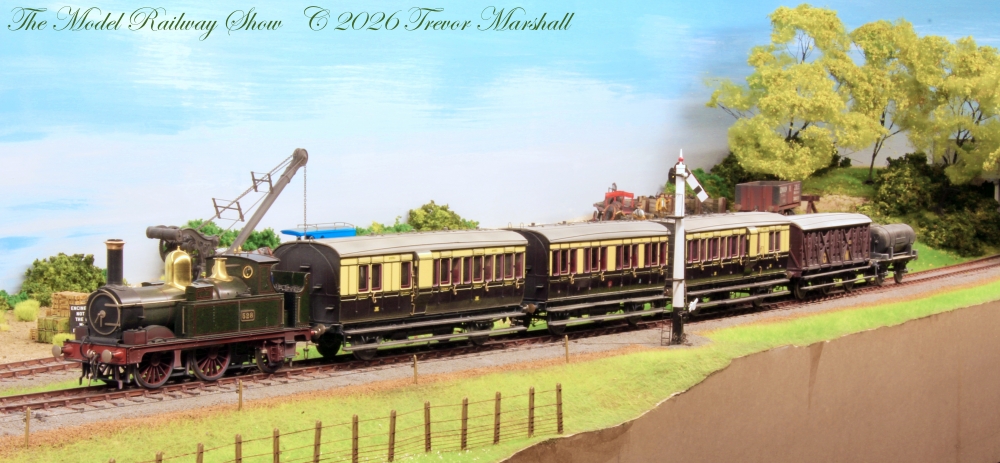
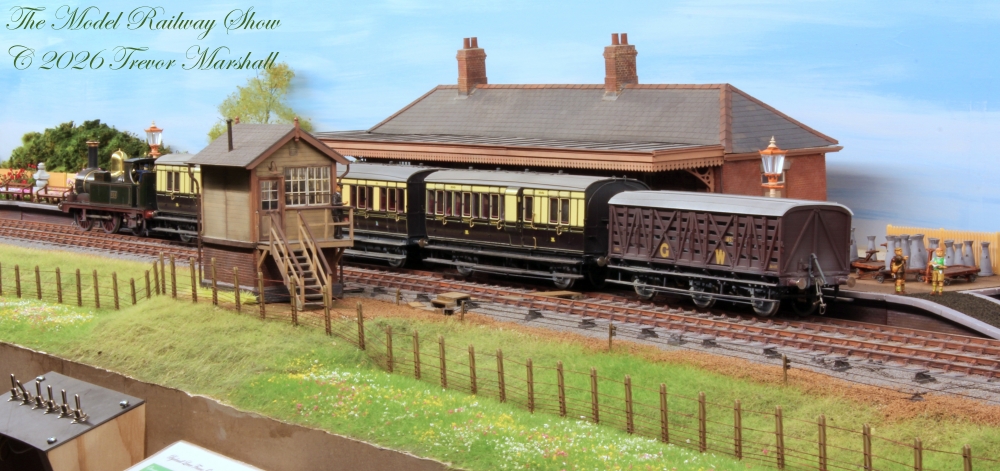
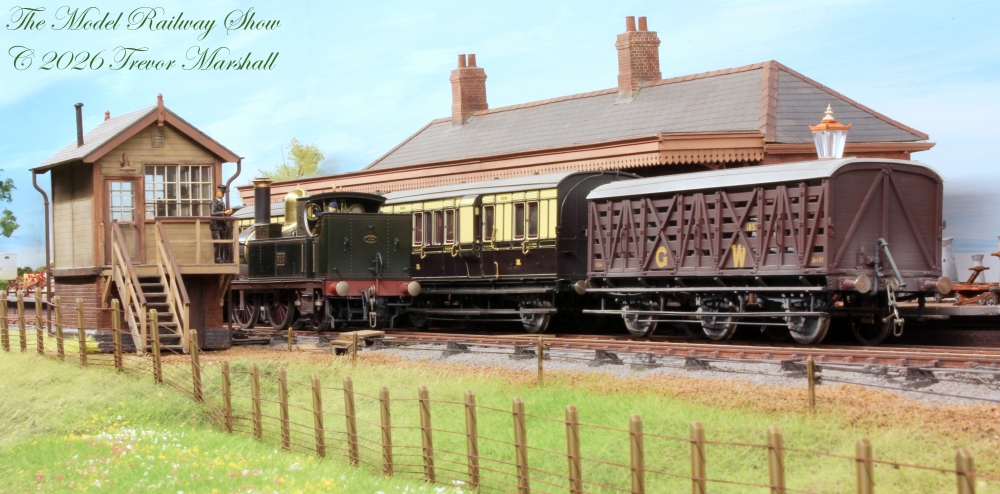
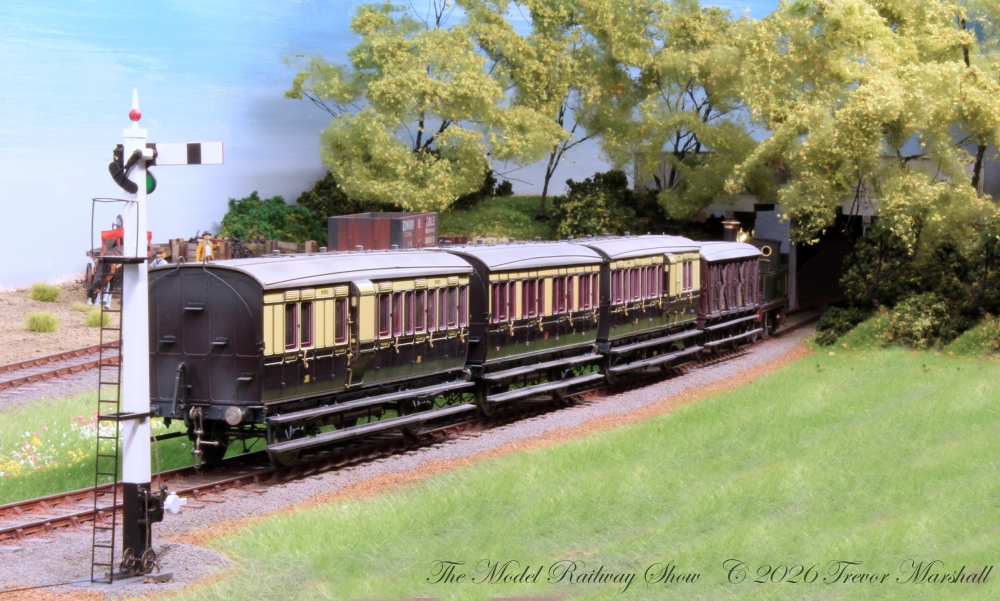
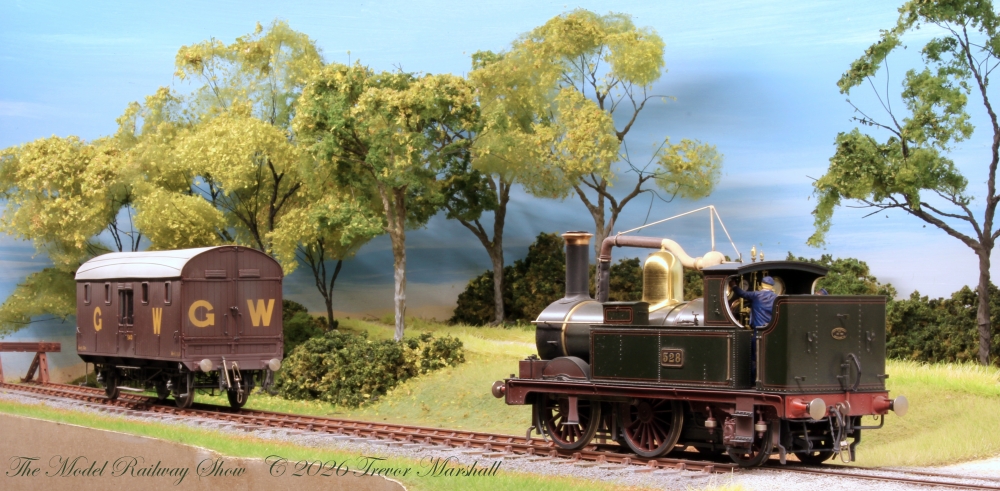
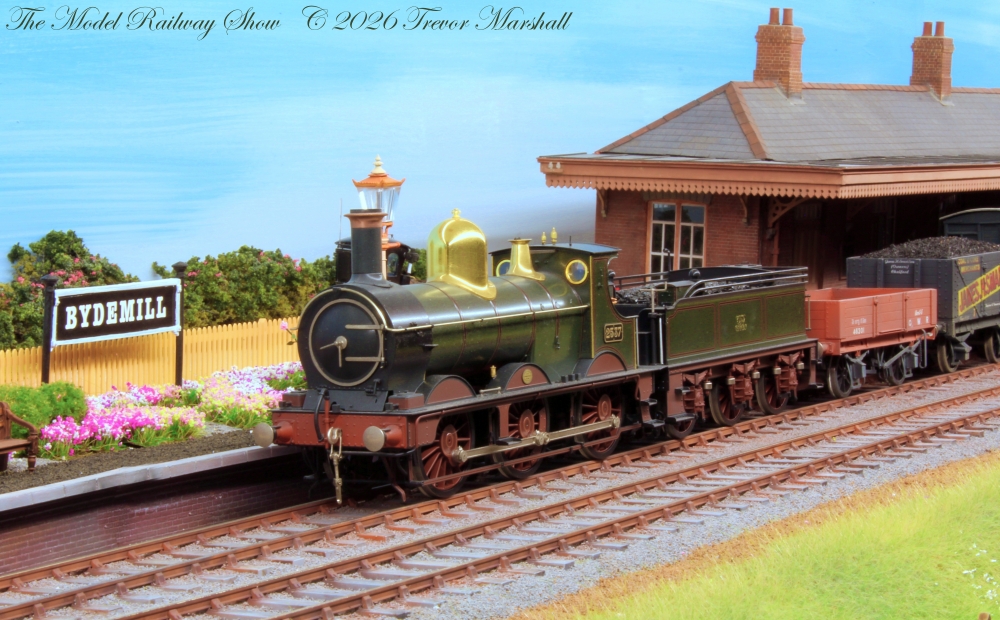
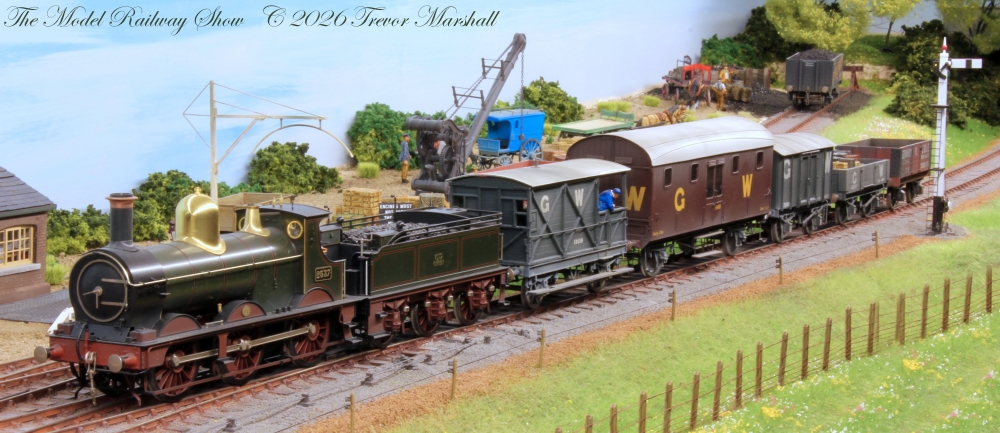
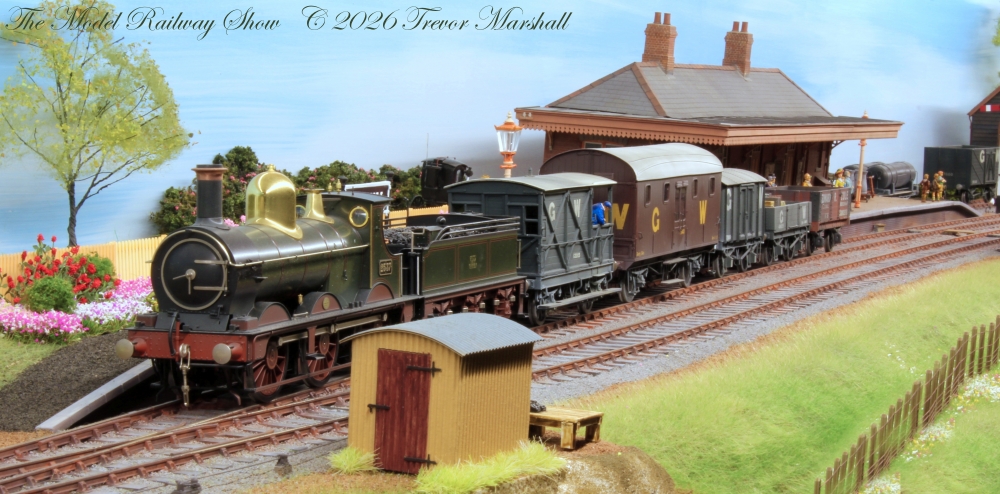
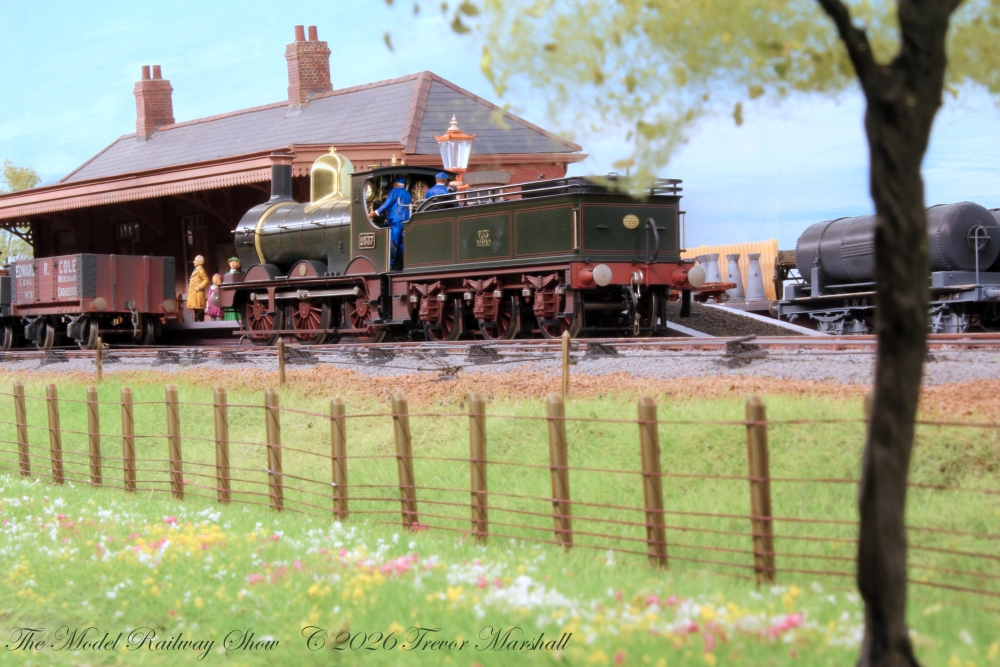
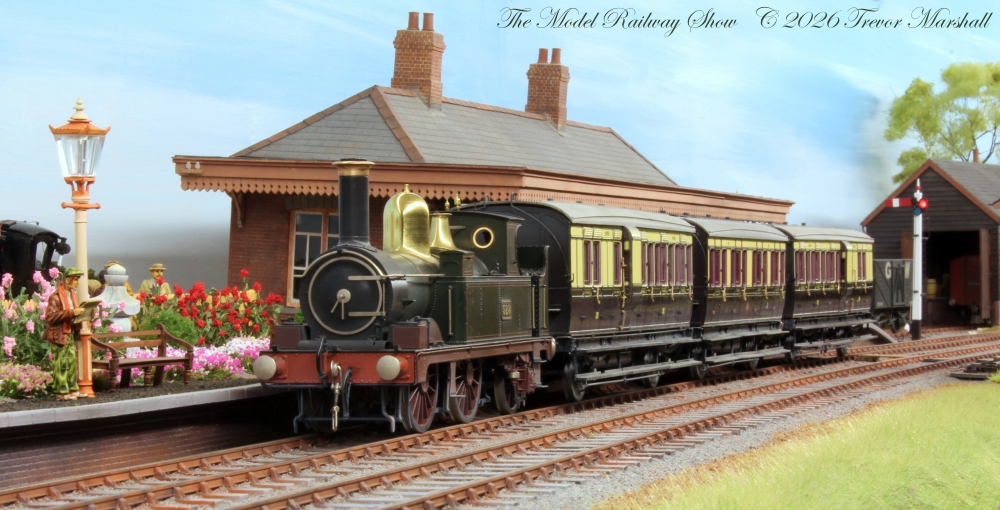
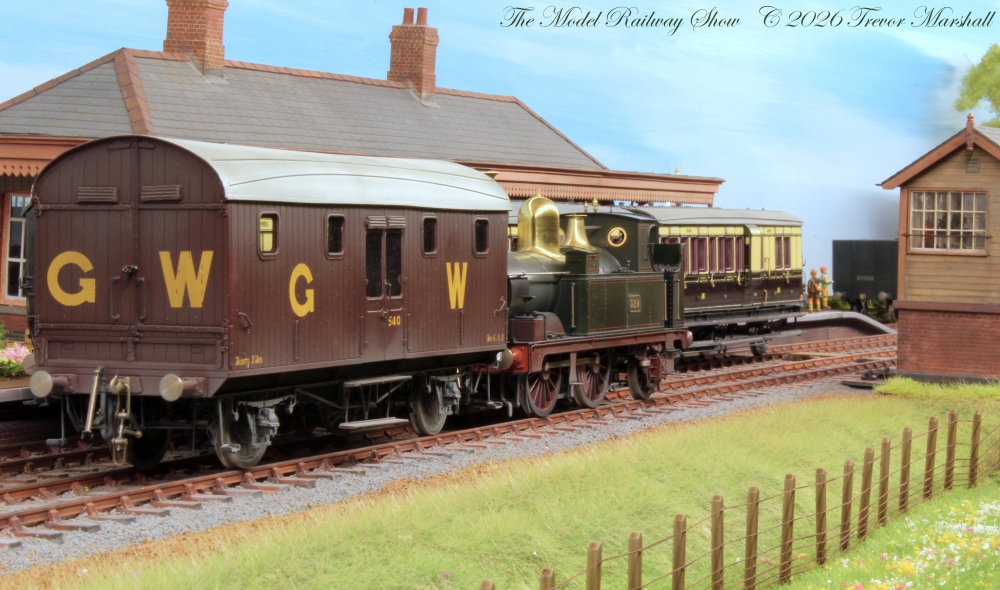
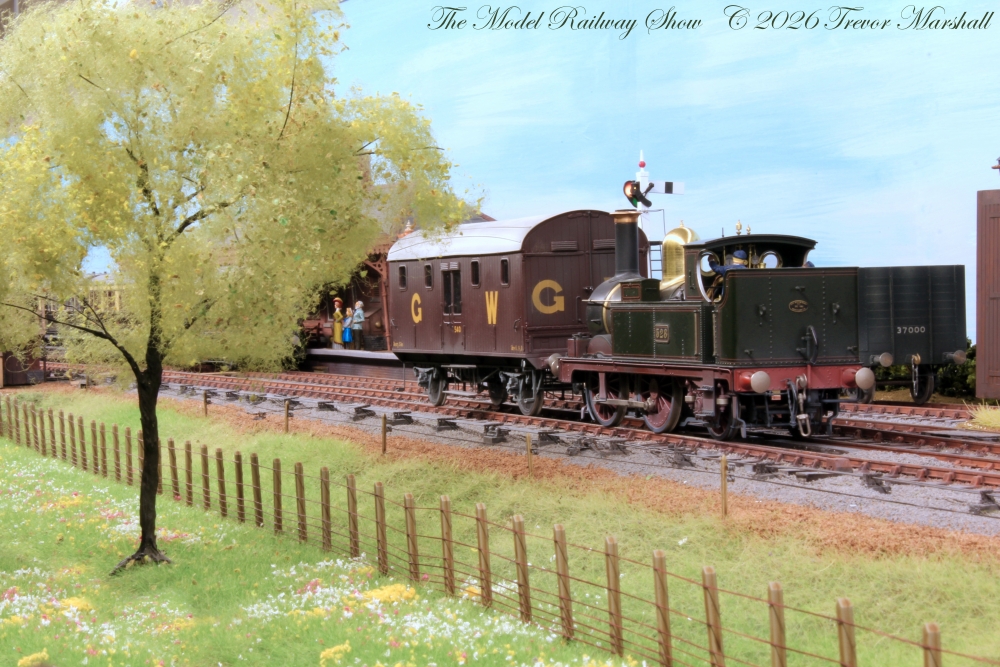
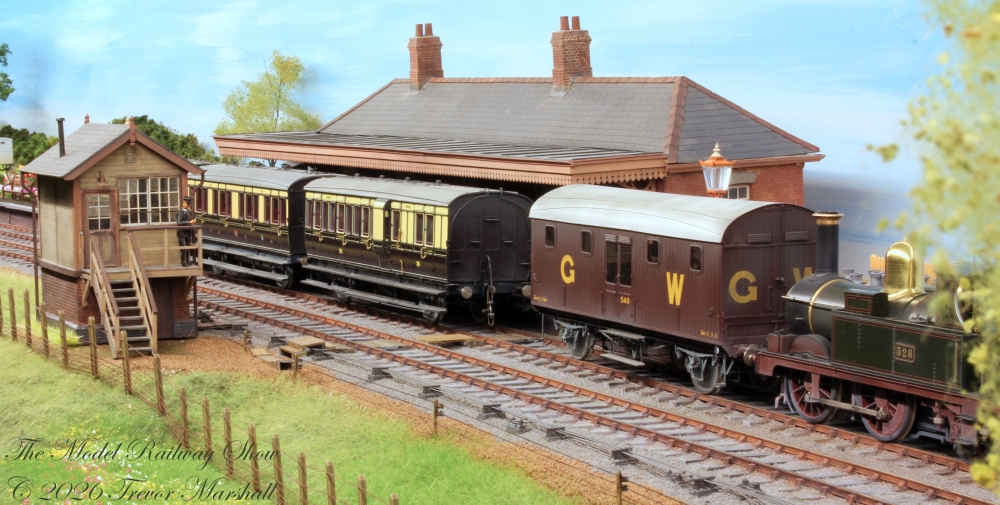
On this particular day, the early morning passenger train consists of a 517 Class locomotive hauling three coaches, a Siphon to collect milk churns, and a Cordon wagon used to deliver lighting gas to stations not on a municipal service. The gas wagon normally goes into the station bay located at the far end of the shed track at Bydemill, but this track is already crowded with equipment and the passenger train’s crew does not have time to muck about shunting wagons. So the decision is made to leave the Cordon for the mid-day goods train to shunt into place.
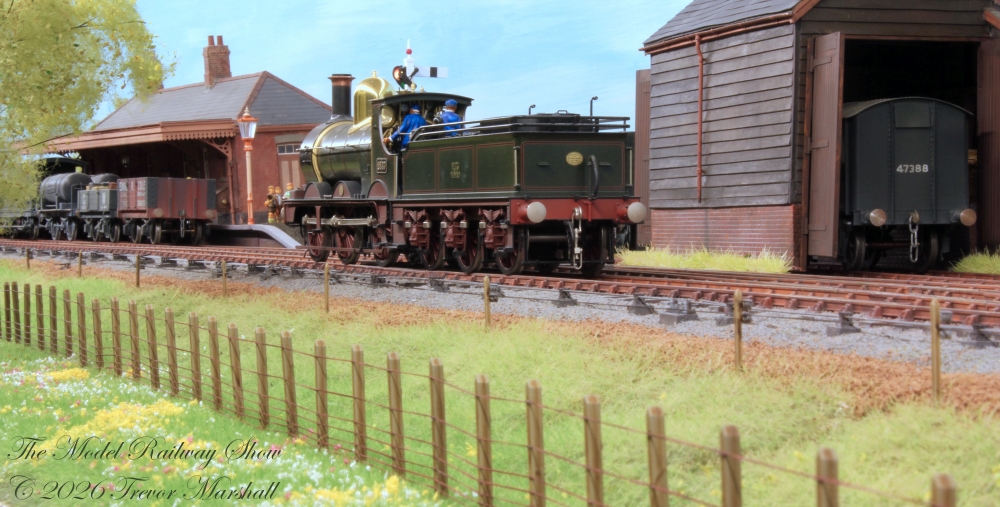
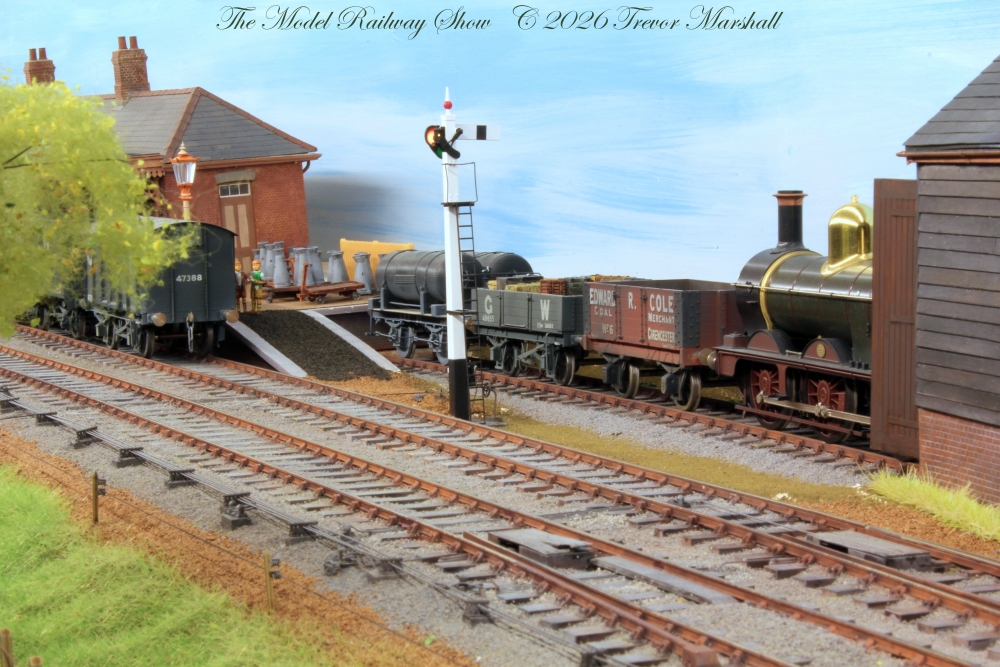
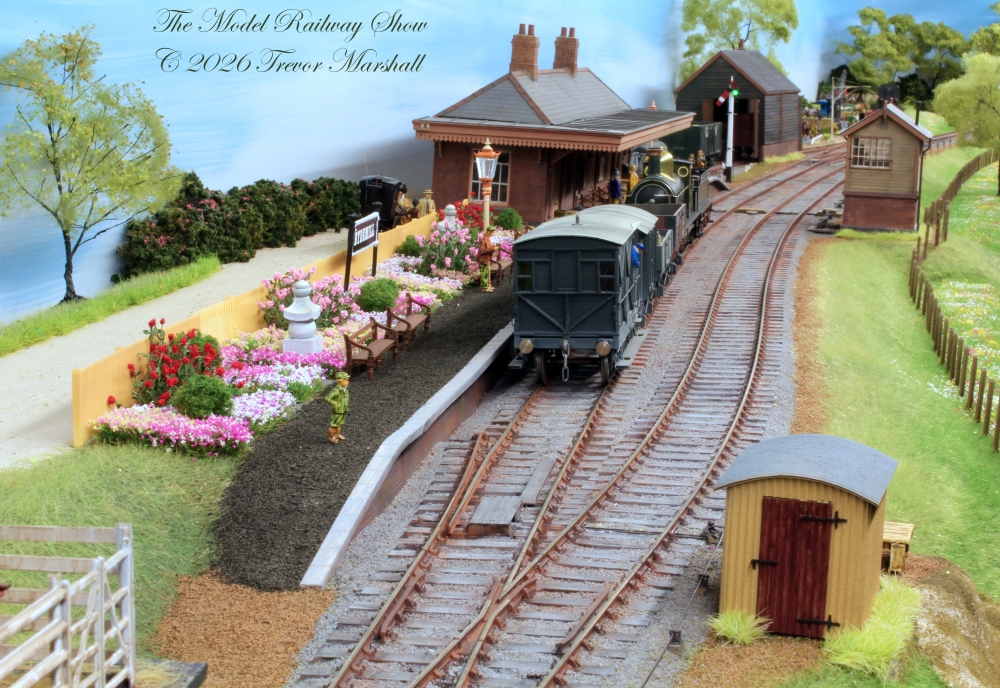
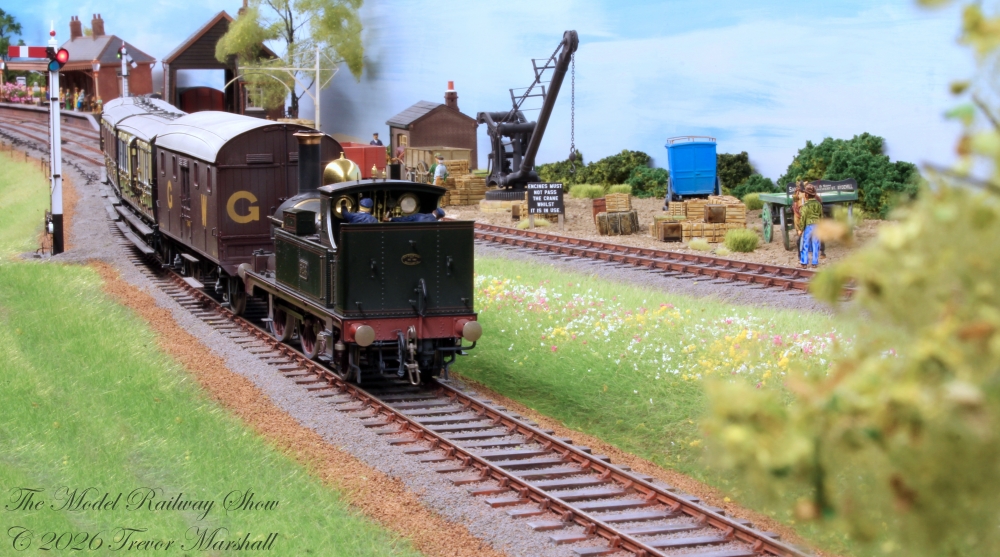
The early morning passenger train passes the home signal as it arrives at Bydemill.
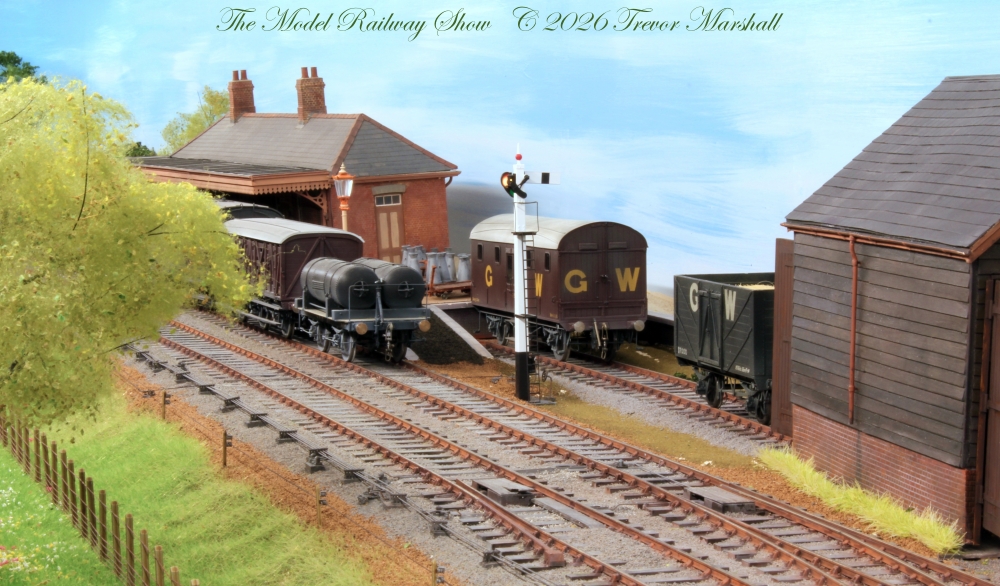
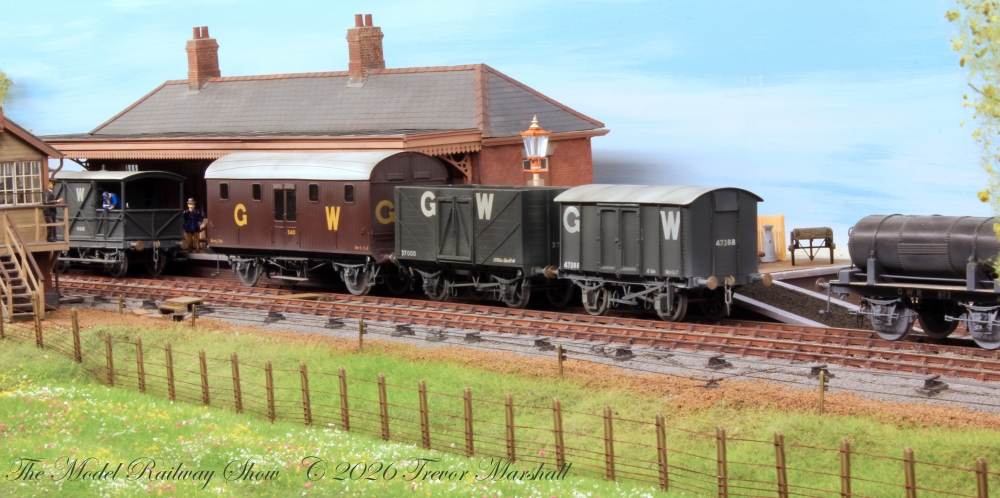
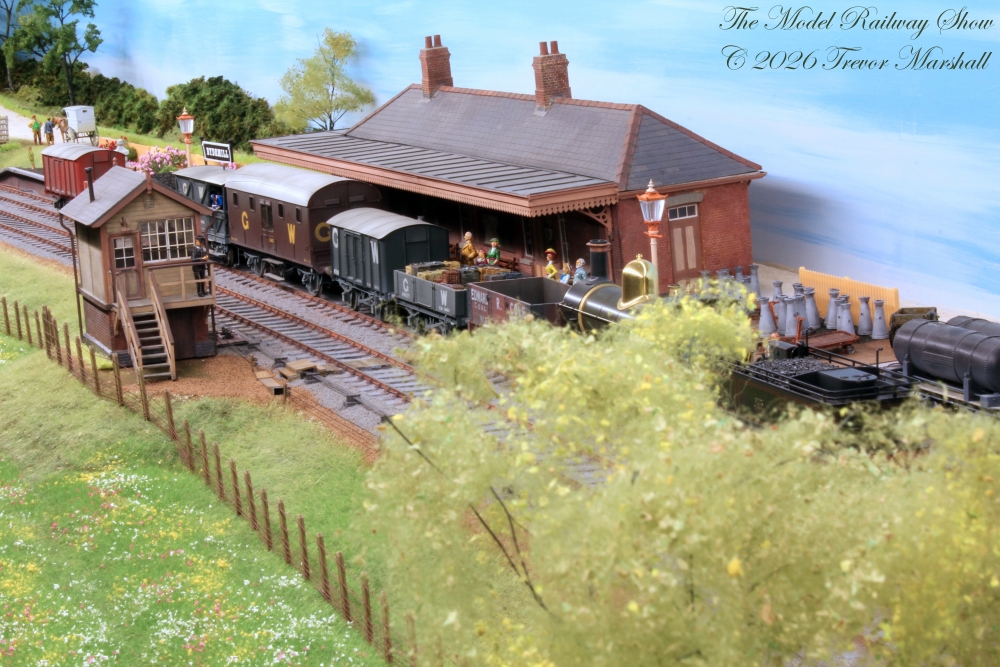
The Cordon gas wagon brings up the end of the train as it makes its station stop to let the few early bird passengers alight. The bay track is occupied by a Python enclosed carriage transporter and a provender wagon full of hay for the horses that haul the railway’s local delivery vehicles.
Its station stop complete, the train backs into the goods yard to drop the Cordon.
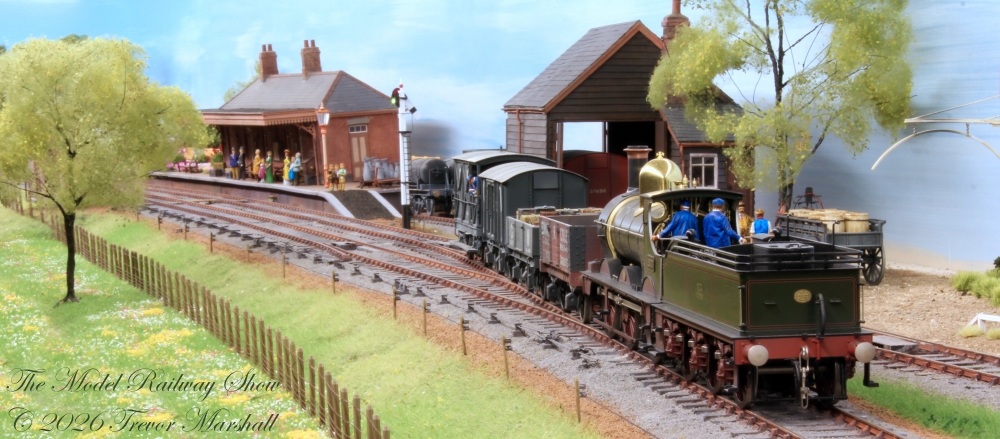
The crew then spots the train in front of the station so outbound passengers may clamber aboard. Meantime, farmers begin loading the Siphon with milk churns.
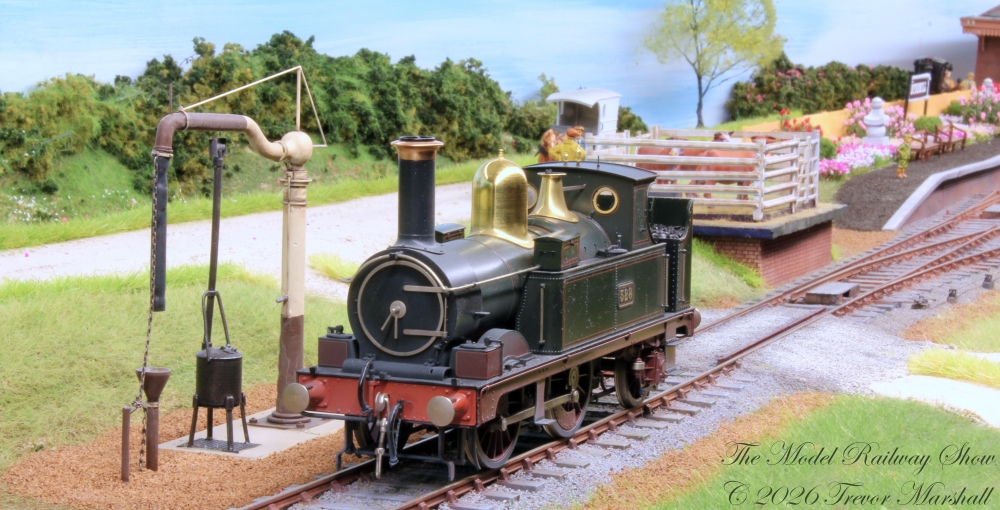
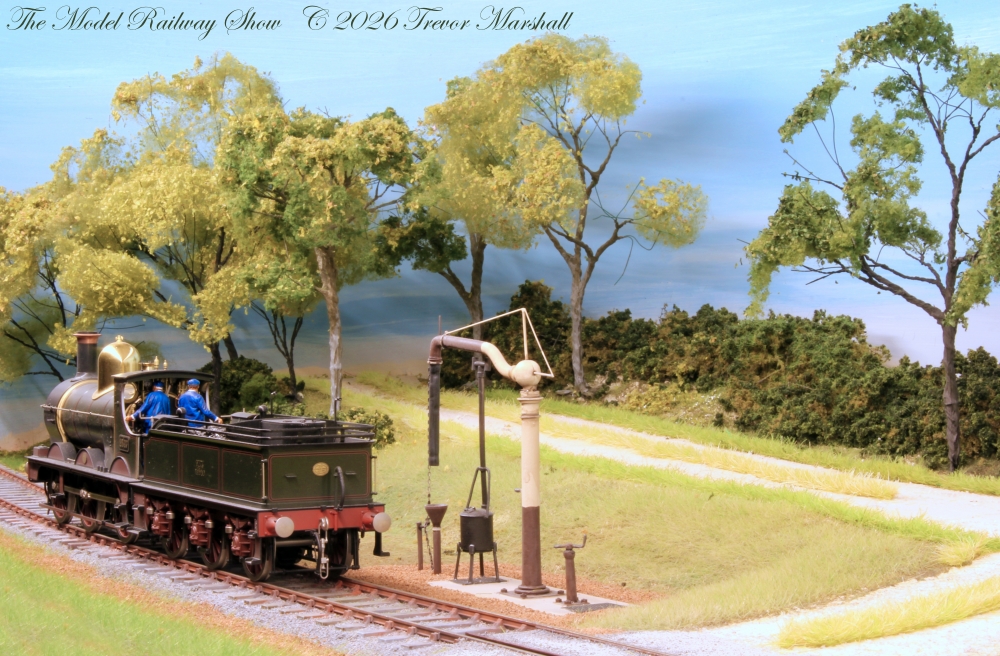
The crew uncouples and pulls ahead to the water crane to replenish the locomotive.
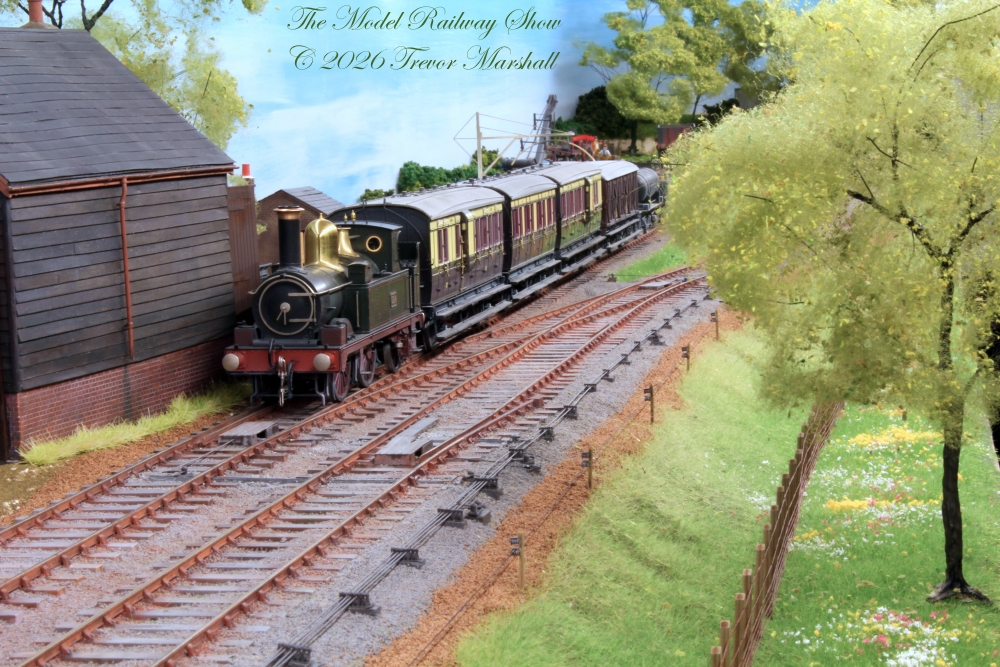
With watering complete, the 517 Class backs through the loop track to run around its train.
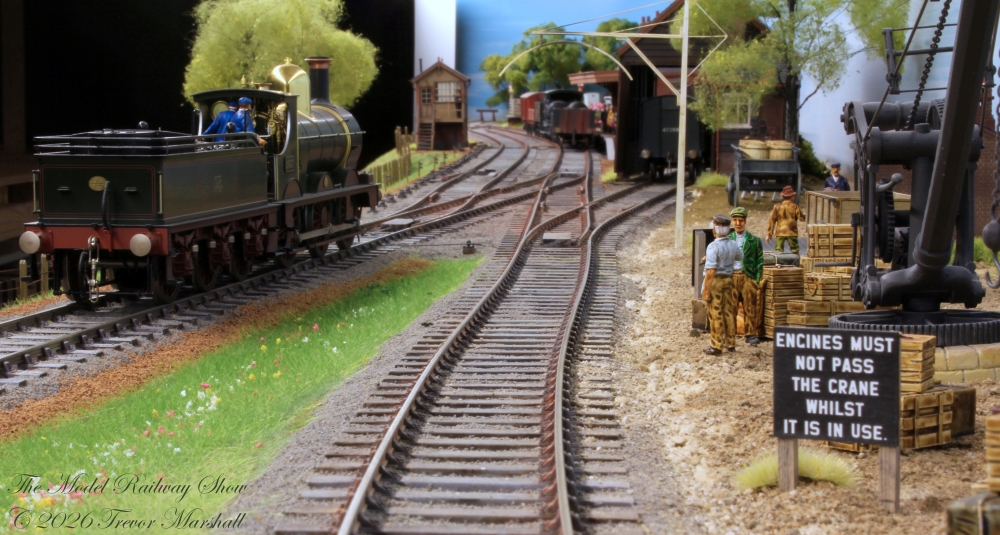
The signalman lines points in the station throat to allow the locomotive back onto the platform track. The Cordon wagon sits off-spot in the goods yard.
The train is reassembled and the signalman sets the starter signal to give the train permission to leave Bydemill and head up the branch.
Its work at Bydemill complete, the train hauls travellers and milk towards Swindon and points beyond.
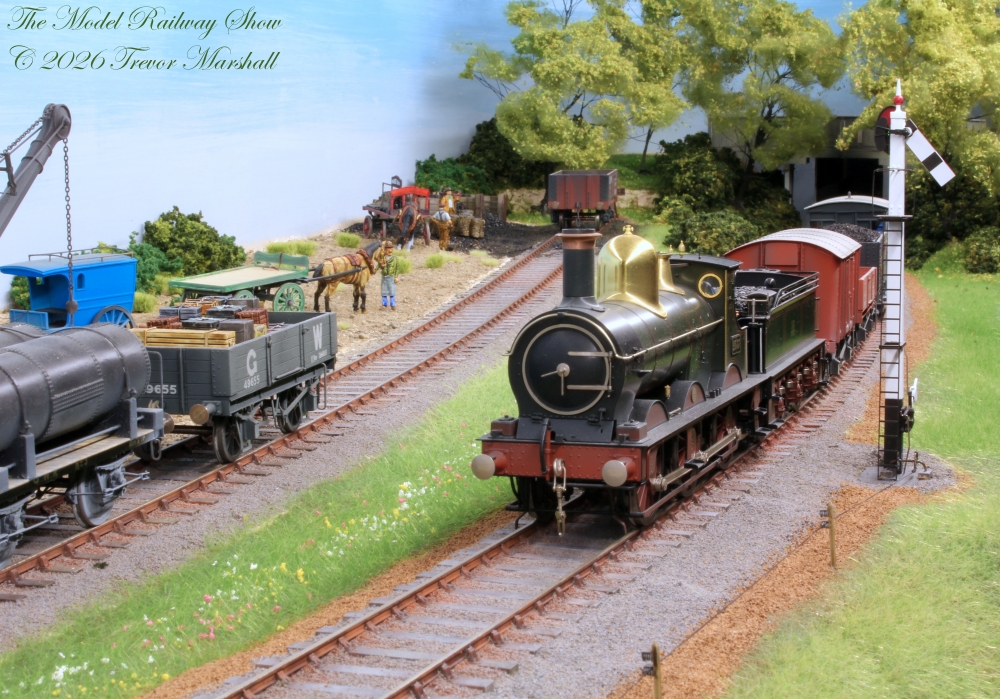
Just after lunchtime, the home signal drops to green and a distant whistle announces the imminent arrival of the daily goods train.
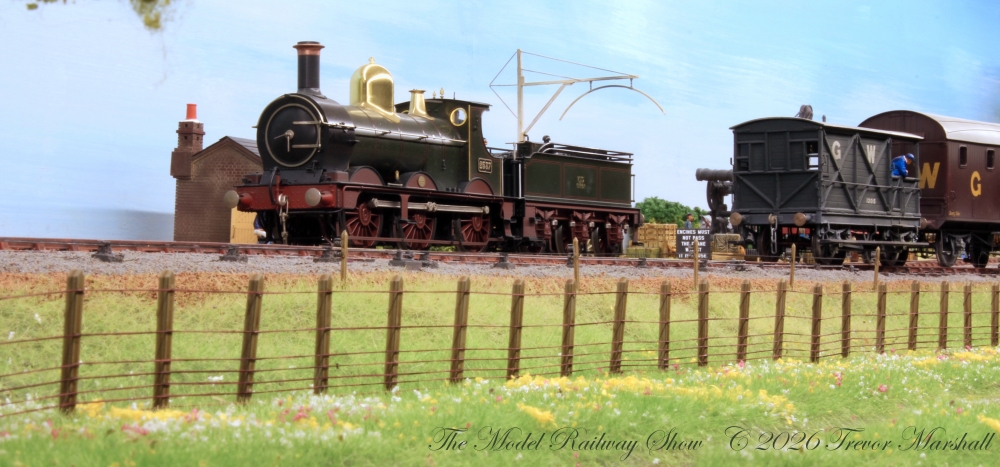
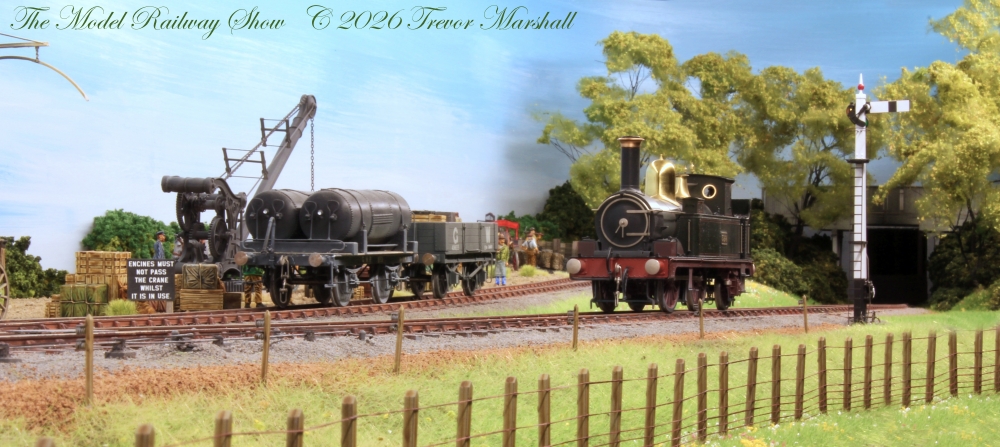
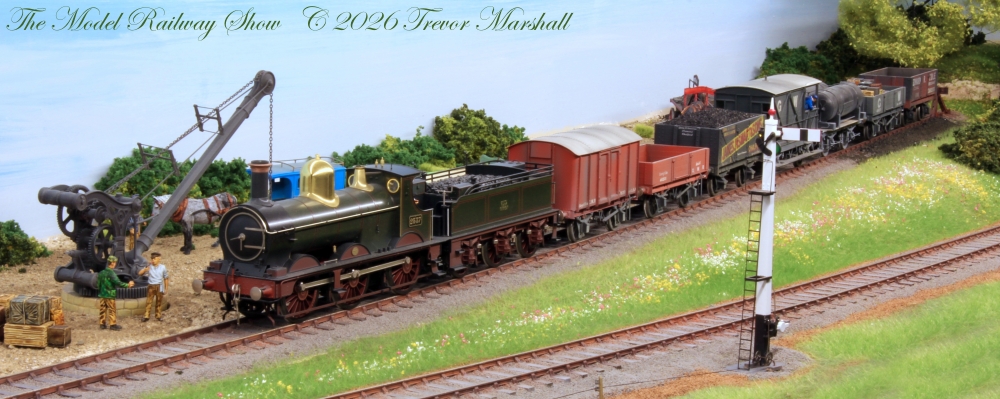
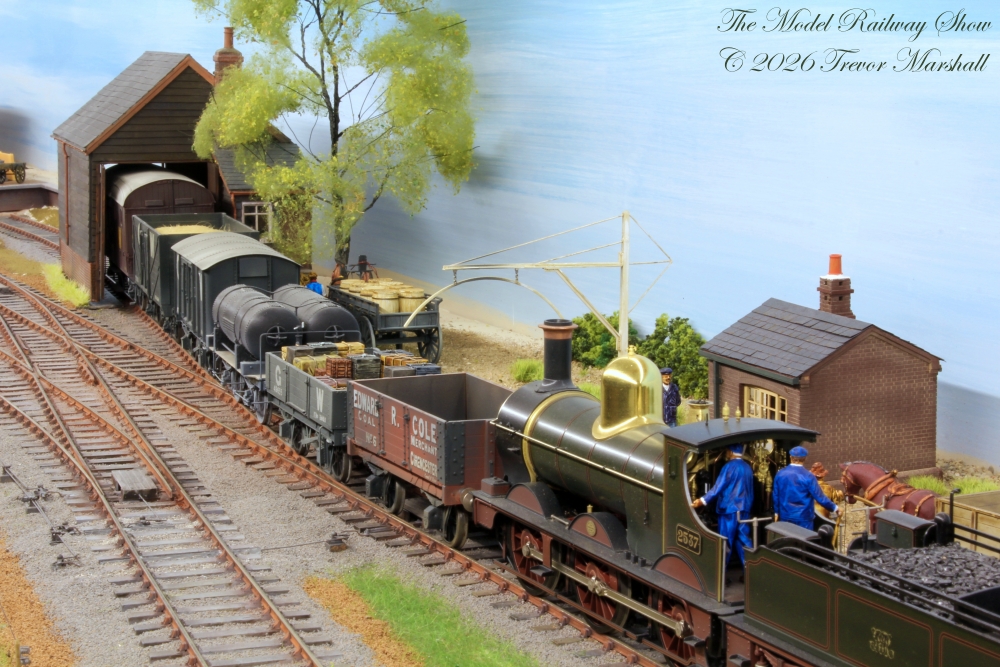
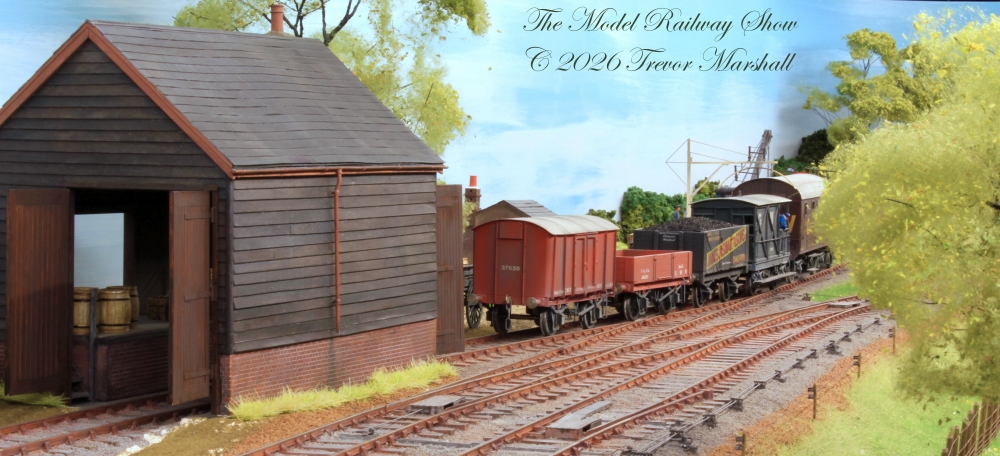
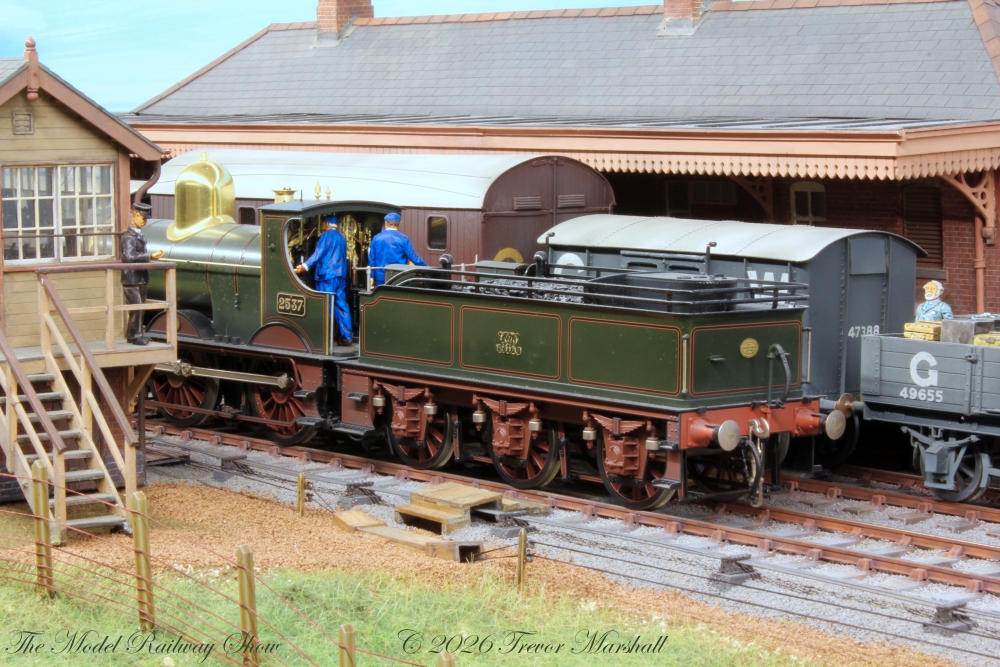
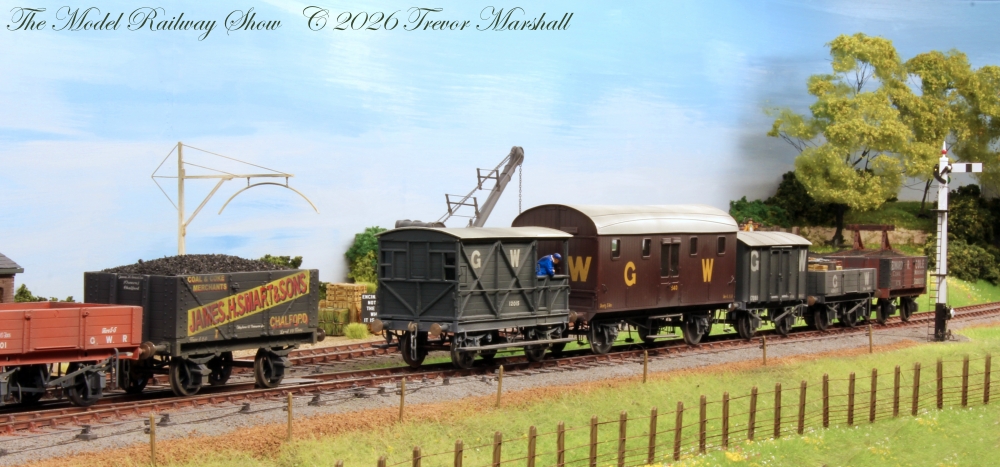
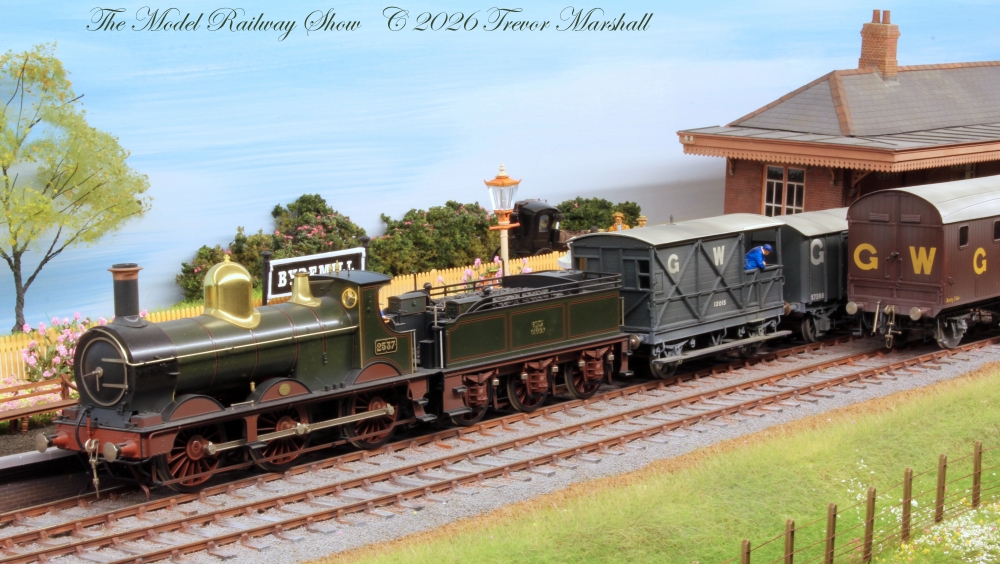
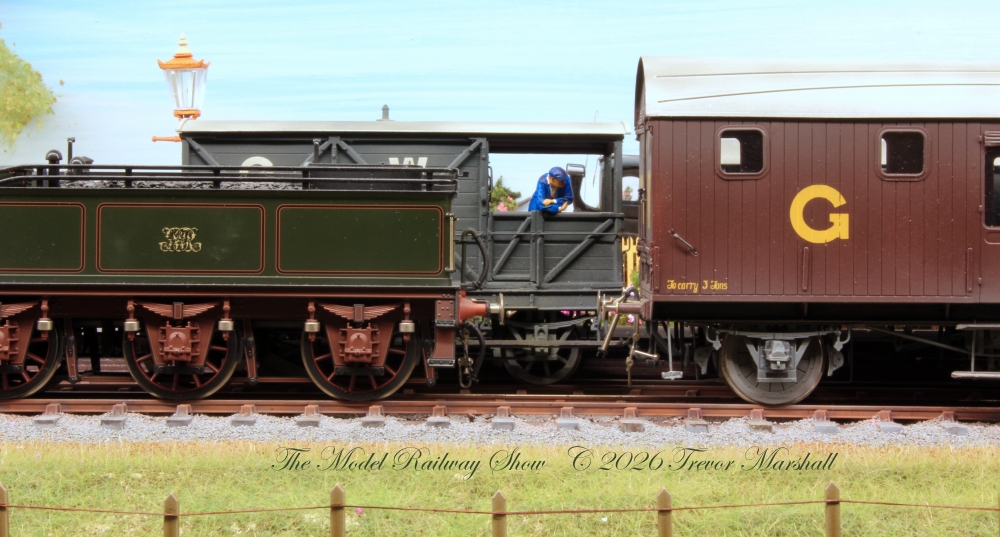
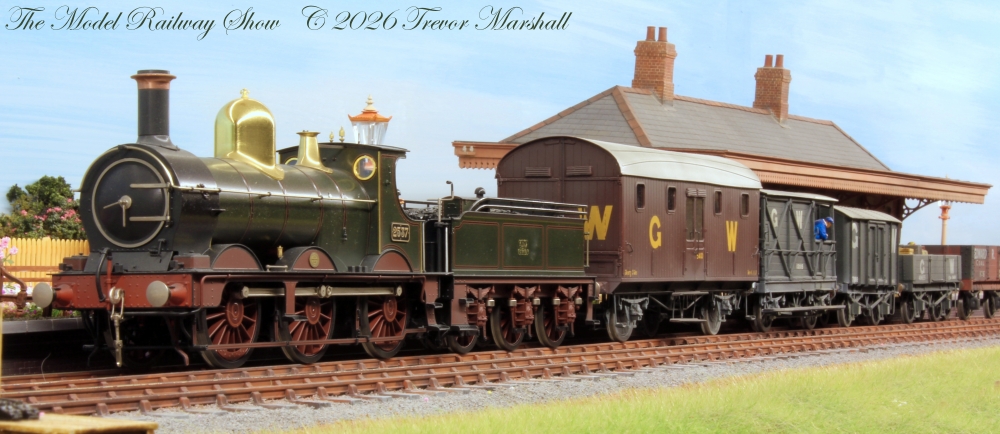
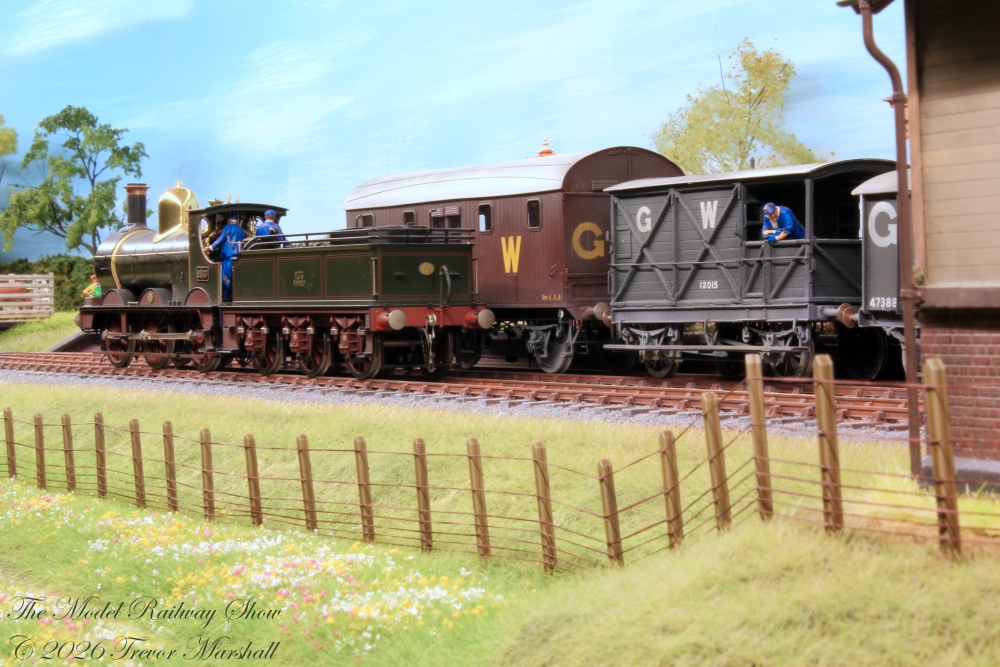
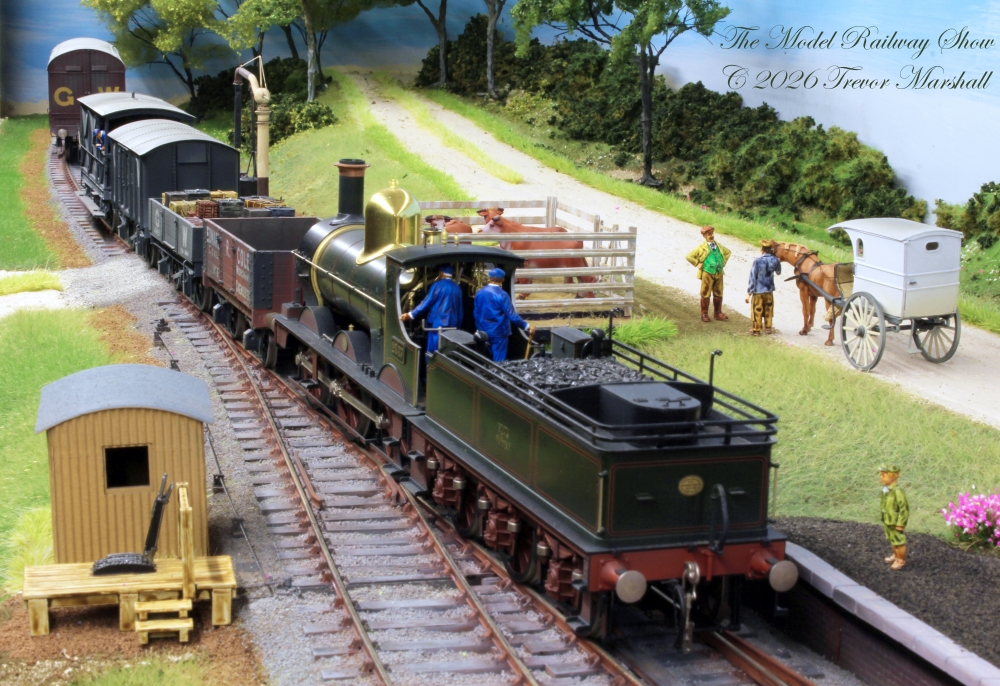
The crew’s Dean Goods is making easy work of today’s short train – consisting of wagons for the goods shed, yard crane, and coal merchant, plus a brake van. As soon as they spot the Cordon wagon, they know there’s some extra work in store.
After making a brief stop at the platform to discuss today’s work with the station master and signalman, the crew backs its train into the goods yard to collect the three wagons located there. In addition to the Cordon, there’s a loaded open wagon and an empty coal wagon, both headed out.
The entire train is pulled back to the platform track.
The crew then runs their Dean Goods up the loop track…
… and through the station throat. The crew will collect the three wagons it just lifted from the goods yard.
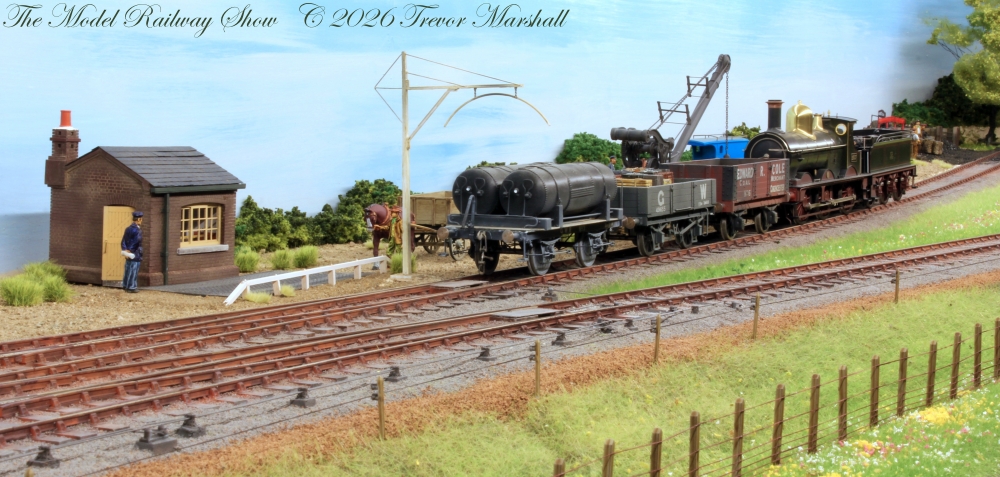
The crew pulls these wagons back into the goods yard.
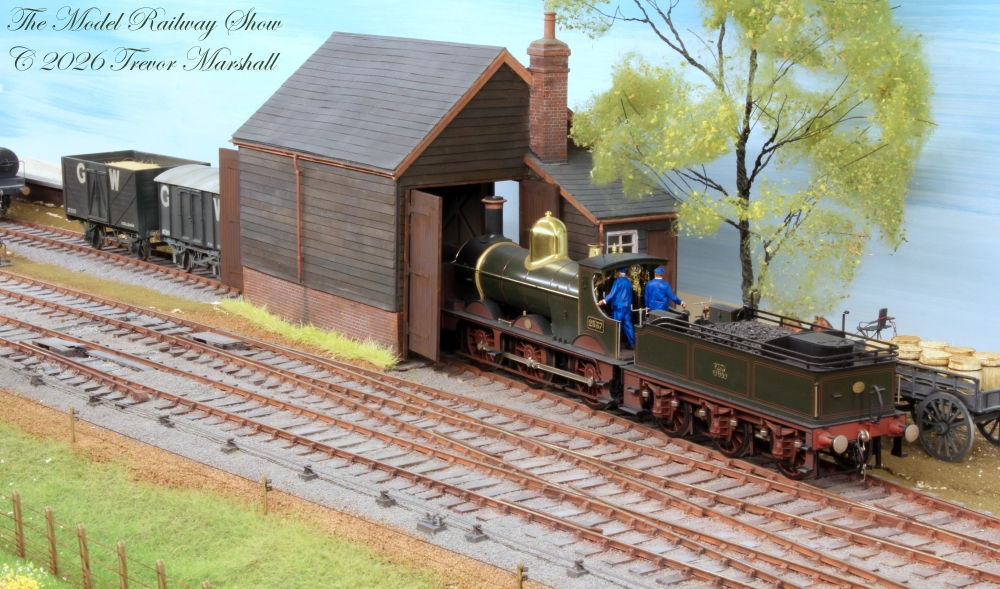
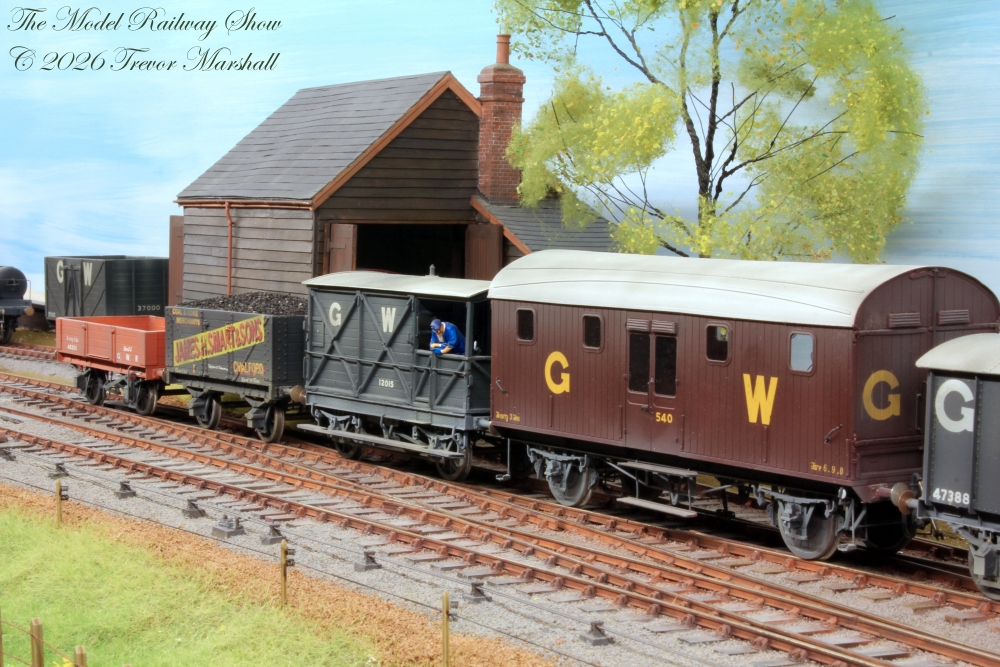
Once the signalman lines the points, the crew propels its consist forward to collect three wagons from the shed track: A Mink van in the goods shed, the provender wagon, and the Python.
The Pythons are designed to take full advantage of the railway’s loading gauge – and it’s clear the wagon barely makes it unscathed through the shed doors as the crew hauls everything back into the goods yard.
The three wagons from the shed track are left on the platform track as the crew backs into the goods yard with the Cordon…
… then propels it through the shed to position it in the bay.
The Mink from the shed is also outbound, but the provender wagon is staying put so the crew returns for it…
… hauls it back into the goods yard…
Then shoves through the goods shed to place it in front of the Cordon.
With the provender wagon re-spotted, the crew heads back to the platform track and plans its next tasks.
The crew will pause at the water crane to top up – never pass up an opportunity to replenish the supply! – and then couple up to the Python.
The first order of business is to drop a Mink in the shed. (If you think that sounds rude, well, that’s on you.)
The rest of the train is propelled back to the platform track. The crew will spot the empty open wagon and loaded coal wagon in the goods yard next, which requires another run-around move.
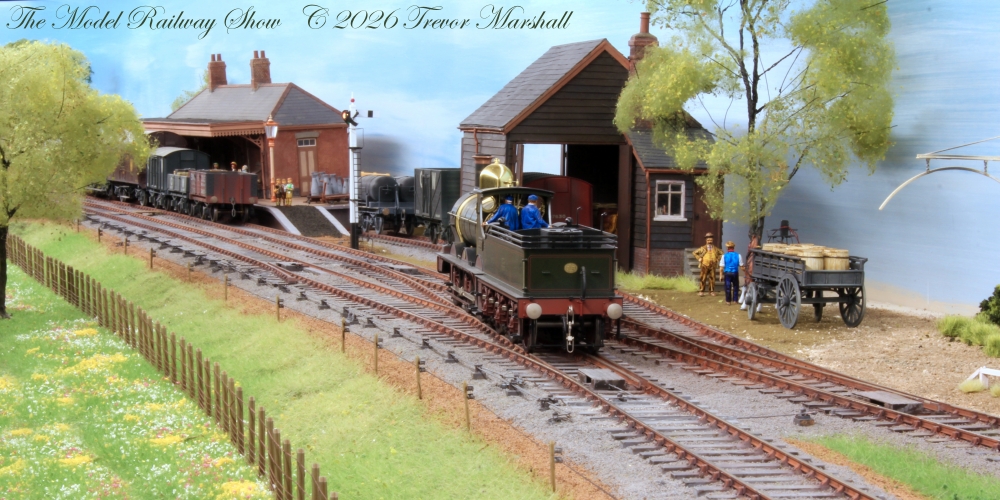
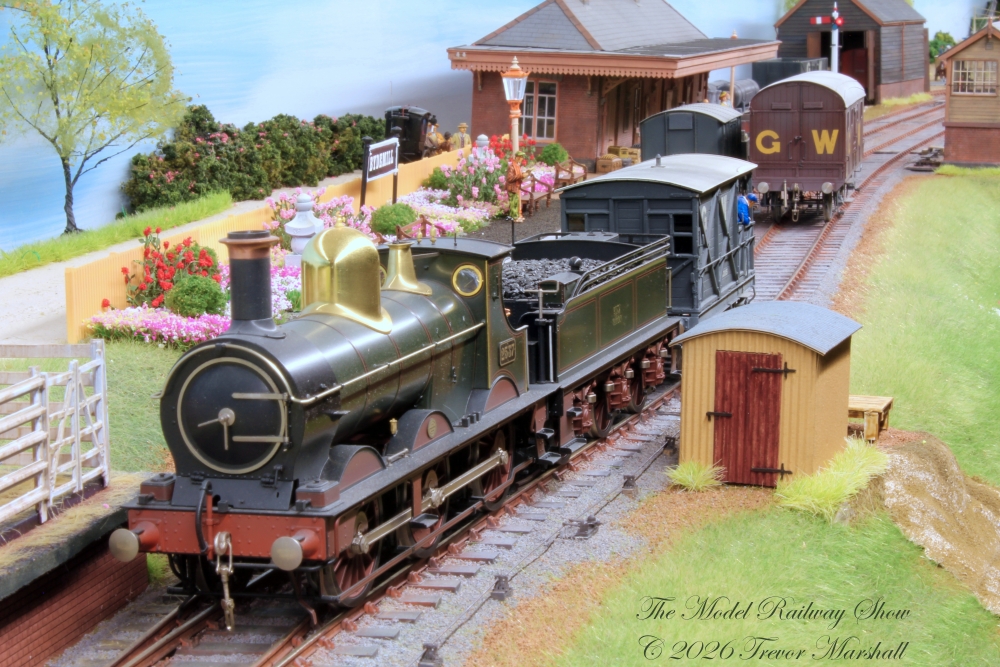
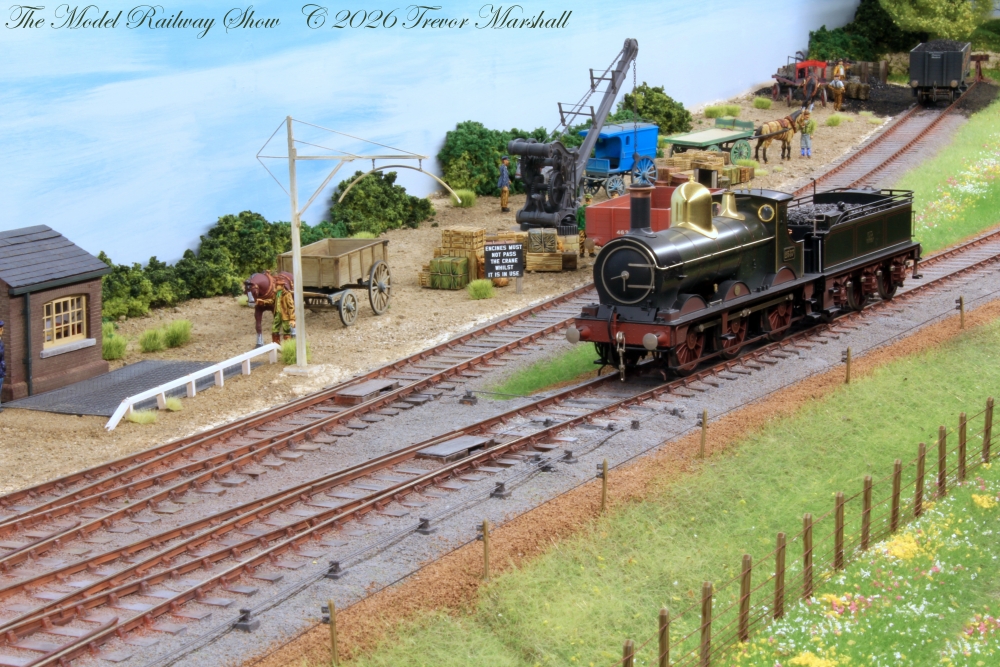
The Dean Goods backs light through the station throat.
Having lined the points, the signalman emerges from his box to watch as the Dean Goods drifts past on the loop.
Upon reaching the far end of the terminal, the crew pauses to water their locomotive…
… then backs up the platform track.
The crew drops five wagons on the main track. The brake van demonstrates its usefulness here, holding this short consist on the grade that descends out of Bydemill. (On the prototype, goods workings to Highworth could include a second brake van that would be left on this grade as the train arrived. Wagons could then be shunted onto the up-grade side of the brake van as needed. I have only built one brake van but have more in my stash so I can replicate this – eventually.)
First the coal wagon is spotted…
… then the crew pulls forward and drops the empty open near the yard crane.
With all set-outs completed, the last order of business is to leave the Python somewhere out of the way but convenient for the afternoon passenger train to collect, then assemble the outbound goods train. The crew collects the wagons off the main track…
.. and hauls them back onto the platform track.
The Python is uncoupled from the other wagons and hauled into the tail track…
… then dropped in the loop while the brake van is pulled ahead…
… then propelled back onto its train.
The guard watches as the crew heads back into the loop to retrieve the Python…
… which is then tucked behind the outbound wagons on the platform track.
Once again, the crew uses the loop to run around its train…
.. then crosses through the station throat…
… and onto the platform track.
The consist is shoved into the tail track, where the Python is dropped clear of the farm crossing and water crane.
Should the Python’s brakes come off and it starts to roll, the catch point here will prevent it from fouling the platform track or – worse – hitting a passenger train at the station. (This was a highly unusual position for the catch point and yes, it would derail a wagon right into the platform structure! But as I’ve explained elsewhere, that’s how it was located at Highworth, so that’s what I did here.) The starter signal displays green…
… so the goods train heads back up the branch to Swindon.
The final working is an afternoon passenger train, which will collect the Python. While described as a vehicle to transport road carriages, the Pythons were also used for a variety of oversized loads. One of their most interesting uses was to transport the sets for travelling theatre companies from engagement to engagement. Maybe the company’s run in Bydemill has just ended and the actors, crew, and their props and sets are heading out on the afternoon train, en route to their next stop.
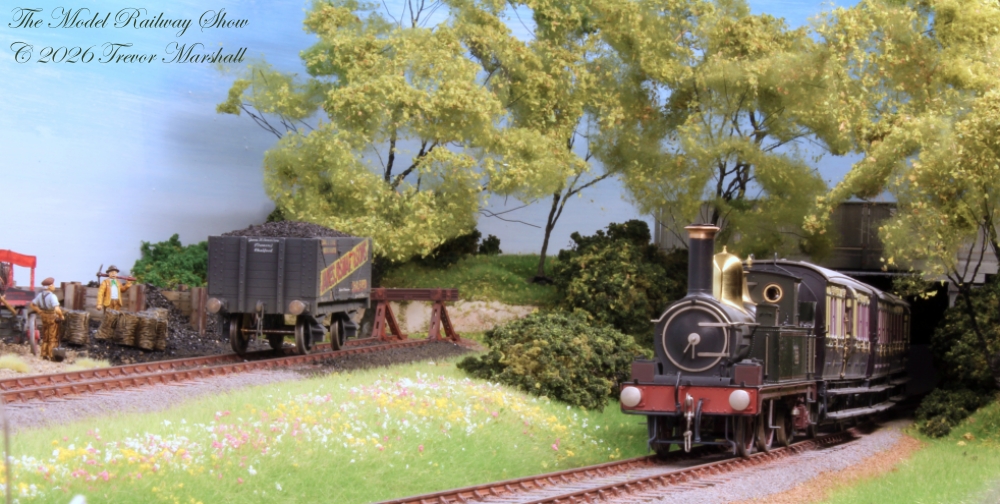
The afterroon passenger train emerges from under the overpass and tackles the short but steep grade into Bydemill.
The first order of business is a brief station stop to let arriving passengers disembark. Those headed out of Bydemill will have to wait until the crew has run around the train and re-coupled to it before boarding.
Locomotive and Python pass through the loop…
… and into the station throat.
The crew then nudges the Python up to the rest of its train. Once coupled up, passengers can start boarding while the brake pipes are connected.
Once the green starter signal is given, the train pulls away from the station…
… and heads up-branch to Swindon.
The sequence depicted here is implausible for a small place such as Highworth – the terminal that inspired my layout. But my goal was to test several large pieces of equipment through the goods shed and I had no issues.
Better yet – it was great fun! I plan to explore more opportunities for splitting the work between two or more trains.
And while I’ve said it before, I really do need to run this layout more often because it gives me such joy.
Lifelong model railway enthusiast and retired amateur shepherd who trained a border collie to work sheep. Professional writer and editor, with some podcasting and Internet TV presenting work thrown in for good measure.
View more posts
 The Model Railway Show