I’m trying to hold solo operating sessions on a regular basis on Bydemill – my 7mm Edwardian era Great Western Railway layout. I’m doing this to keep my interest up… to give me a break from work (my home office is in the same space as the layout)… and to make sure my trackwork, wiring, and rolling stock are all performing flawlessly before I start messing about with ballast, ground cover, and other scenery.
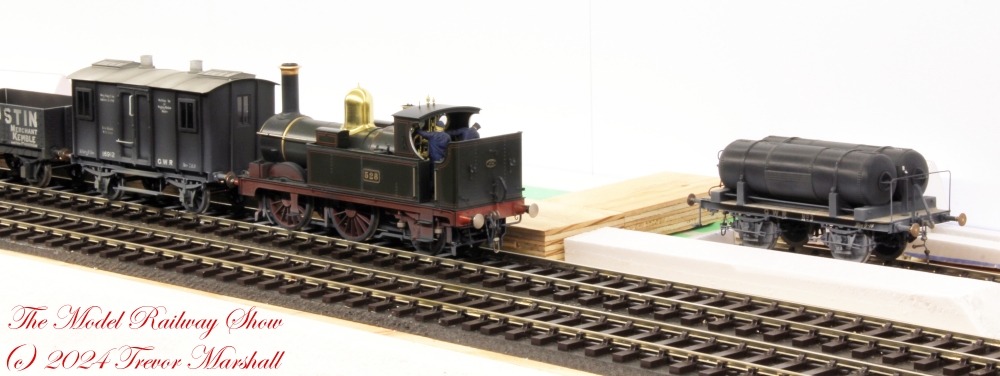
During a recent session I realized I had two pieces of equipment on the line that require extra careful handling, so I grabbed a quick photo to lead off this post.
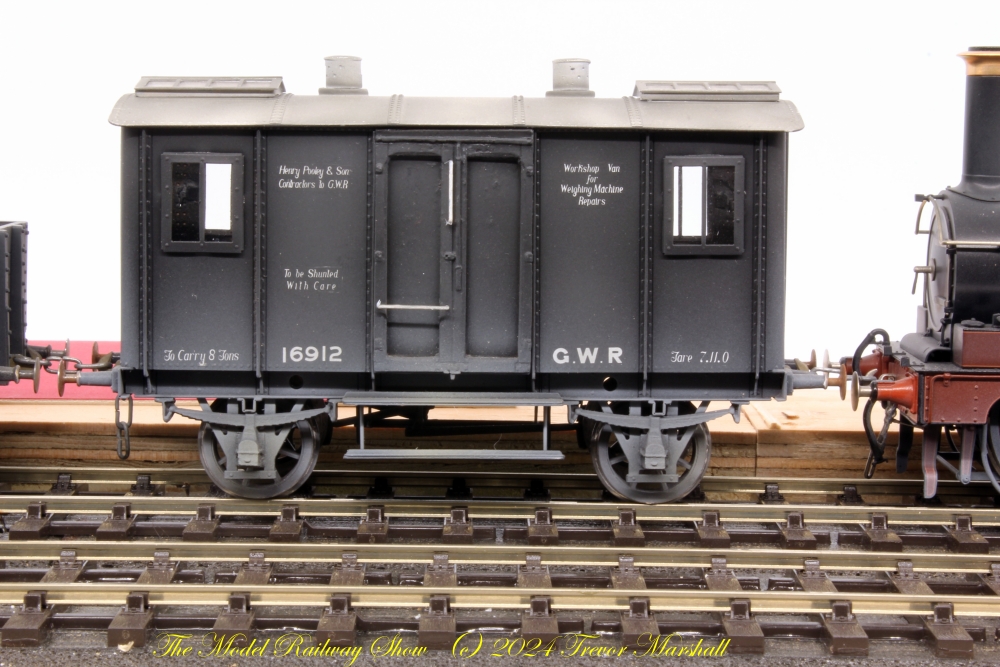
The first is the Pooley Tool Van – a mobile workshop used to maintain and calibrate the scales (manufactured by Pooley) that weighed road wagons entering and leaving goods yards to calculate load weight. (If you’ve ever bought landscaping material in bulk, you’ve probably had your vehicle weighed as you entered and left the yard to determine how much gravel / stone / soil you’re buying. This is the same deal.) This workshop would include lots of delicate (and expensive) instruments that could be damaged by harsh handling. The vans even included a warning about being gentle:
The second is a twin-tank Cordon gas wagon – a wagon designed to carry lighting gas stations in rural areas where a local supply did not exist. Obviously, harsh handling of this wagon could result in an explosion.

To help visiting operators understand these two wagons required special care, I wanted to use something different than the standard wagon tag I employed for most of my fleet. Fortunately, the real GWR provided a suitable solution:

I don’t know if this is the proper use for these forms – but it works for me.
In practice, I’ll encourage crews to minimize the amount of shunting they do with these wagons. I’ll also encourage them to marshal the Pooley directly behind the locomotive when building a train – much like full livestock wagons would be, to minimize rough handling of the cargo.
This is an easy way to add operating interest to a small layout with a relatively simple track arrangement.
 The Model Railway Show