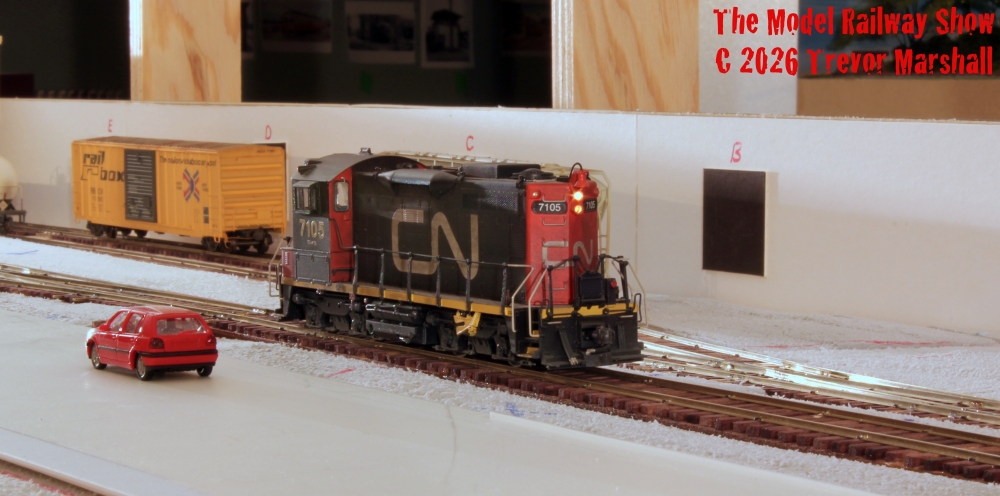
The spur on Pine Street in Thorold, Ontario – the subject of my HO scale exhibition layout – saw a variety of CNR diesel power over the years. In my narrow time window of mid-1980s to early 1990s, SW1200RS and remanufactured SW1200RM examples dominated. But I’ve also found photographs showing trains to and from the paper mill worked by remanufactured GMD1s and a SWEEP (CNR’s brief experiment with kitbashing).
So far, I’ve been running SWs on the layout – because they were my only models set up to take advantage of the Big Audio system I’ve developed. But I have had a model of a SWEEP for decades, and recently acquired an appropriate 1400-series remanufactured GMD1 – both by AJIN for Overland. The SWEEP required a decoder upgrade while the GMD1 needed a full installation – including PowerPack and speaker.
Decoders arrived this week and were installed within hours. The SWEEP was straightforward, as I was simply swapping a decoder.
The GMD1 required de-wiring and tossing the directional/constant intensity lighting board, which also made room for the speaker.
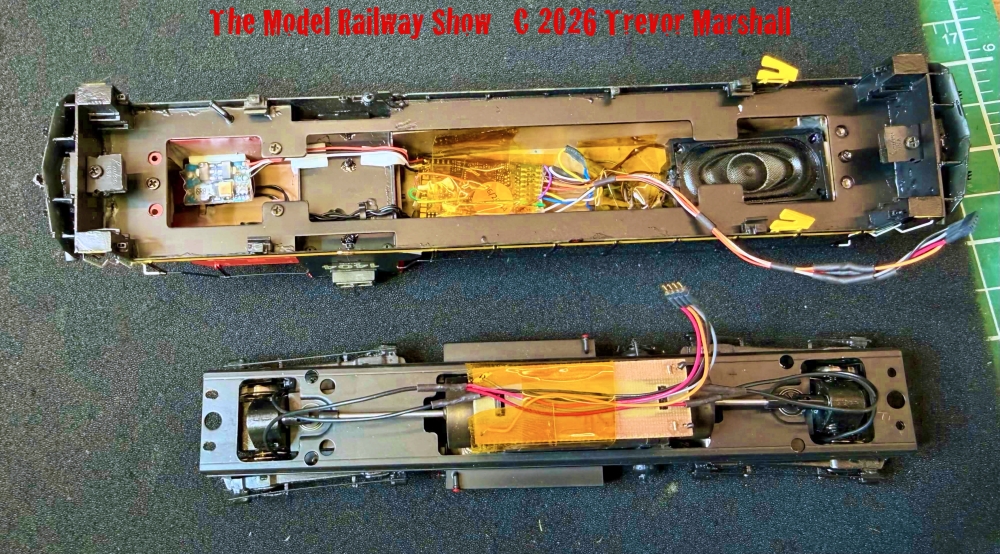
The work was simple enough, although I mistakenly installed overly aggressive resistors on the lighting leads to protect the bulbs: As a result, they wouldn’t light! I swapped out the resistors this morning and all is well. I then weathered the model and tested it on the layout.
I had to trim the sanding lines slightly – they were just long enough to brush the turnout frogs and cause the DCC system to short. Once I discovered the issue, the diesel ran flawlessly.
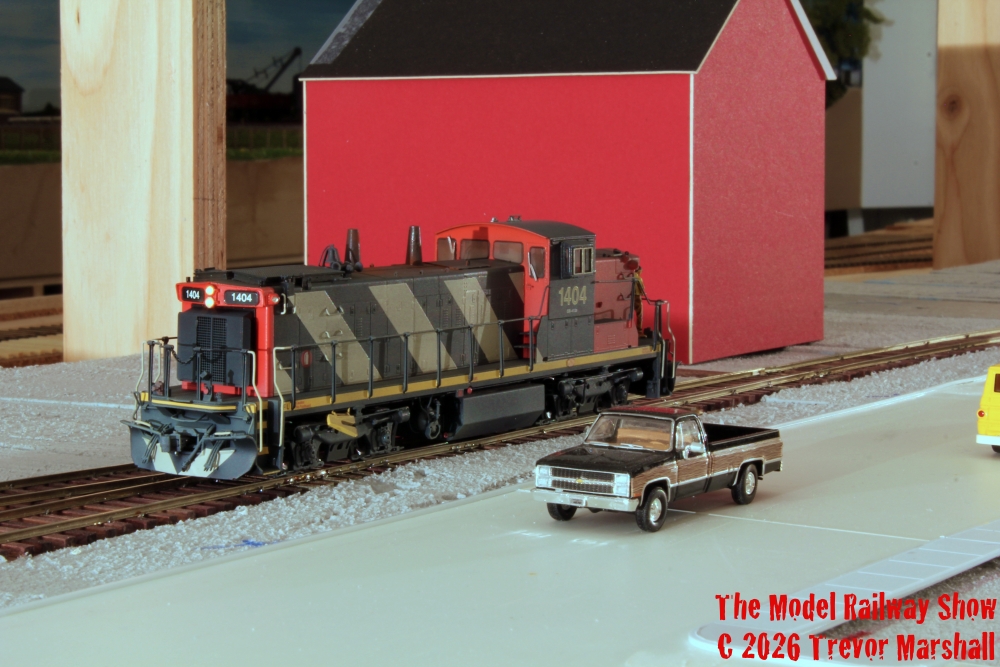
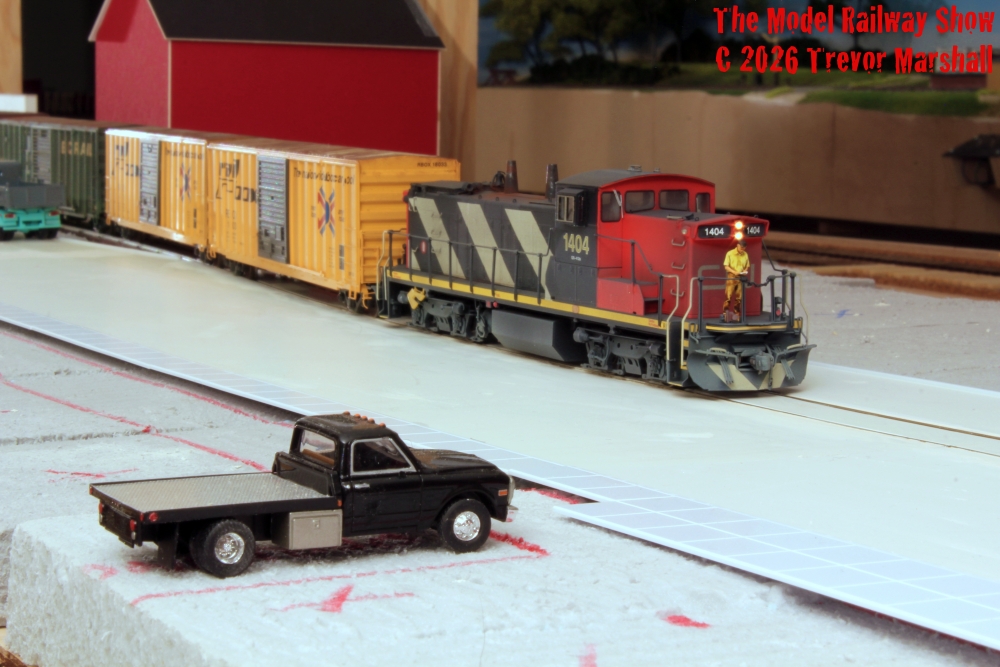
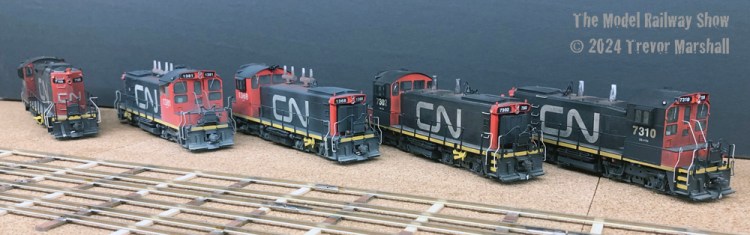
The GMD1 brings my Pine Street roster to six locomotives. Is that excessive for a three-turnout layout? I don’t think so (and you knew I would say that!) because this is intended to be an exhibition layout.
Having four different designs – all appropriate for the prototype – provides variety for show visitors.
At the same time, it gives me plenty of backup power in case one or more models fail during the rigours of exhibition. Even a pulled coupler could bring the layout to a halt, which is why I also have spare rolling stock.
Having a variety also means each diesel will engage in a short operating session with plenty of downtime – which should keep mechanical and electrical components happy.
Plus – and this is the most important point – I think it’s cool!

