It’s been several months since I completed laying cork roadbed for the final expansion of my version of the Niagara St. Catharines & Toronto Railway. To be honest, I was in a funk about the hobby in general. But a couple of weeks ago I decided to get out of the armchair and force myself to make some progress. The result is, I’m much closer to running trains the length of the main track.
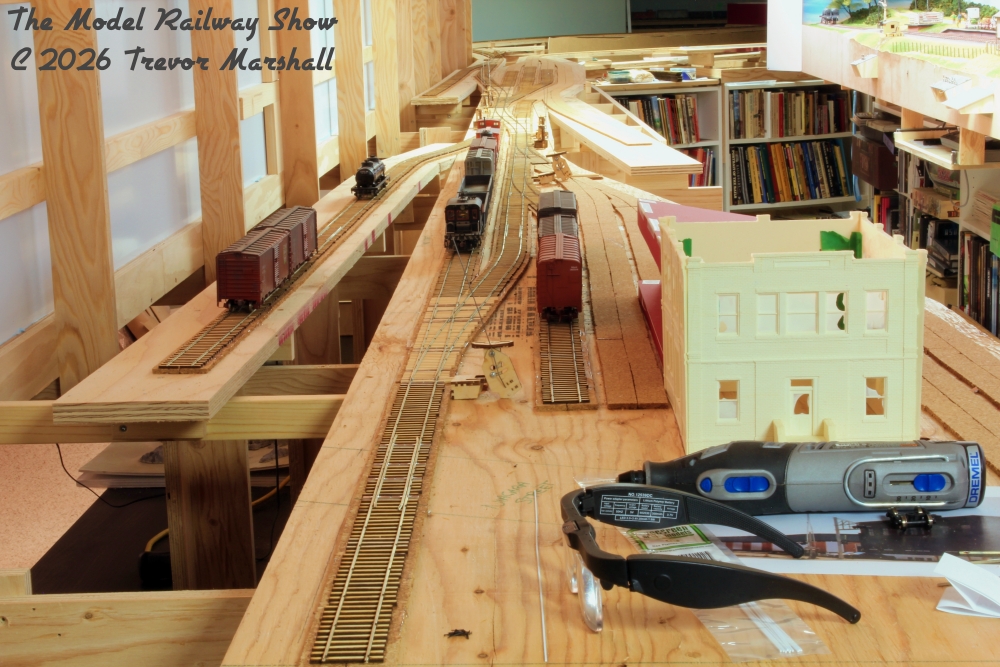
The view of the Niagara/Eastchester peninsula on my S scale Niagara St Catharines & Toronto Railway. I’m building the track in this area in two phases. The rail for the first phase is now spiked. The Niagara St freight house is mocked up at right.
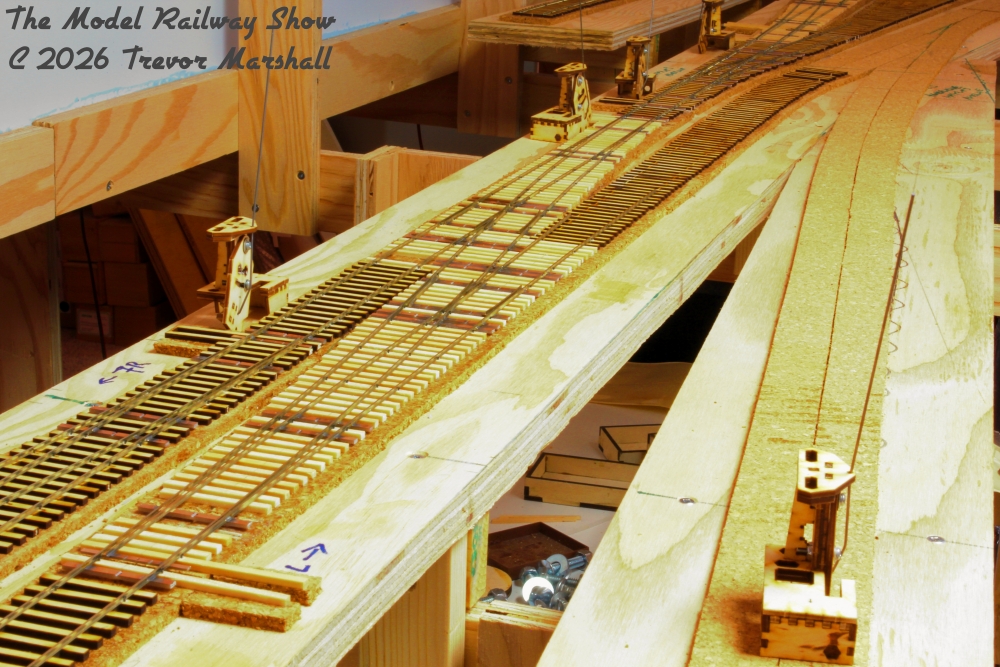
A number 10 crossover marks the entrance to the Niagara Street freight shed and team tracks (behind the camera). My next project is to mount the Fast Tracks Bull Frog turnout controls shown here.
The train is on the main track, heading towards Niagara Street. The track at right is a spur serving a couple of industries. The three boxcars at left are on one of the two tracks serving the freight shed. The team tracks are at extreme left.
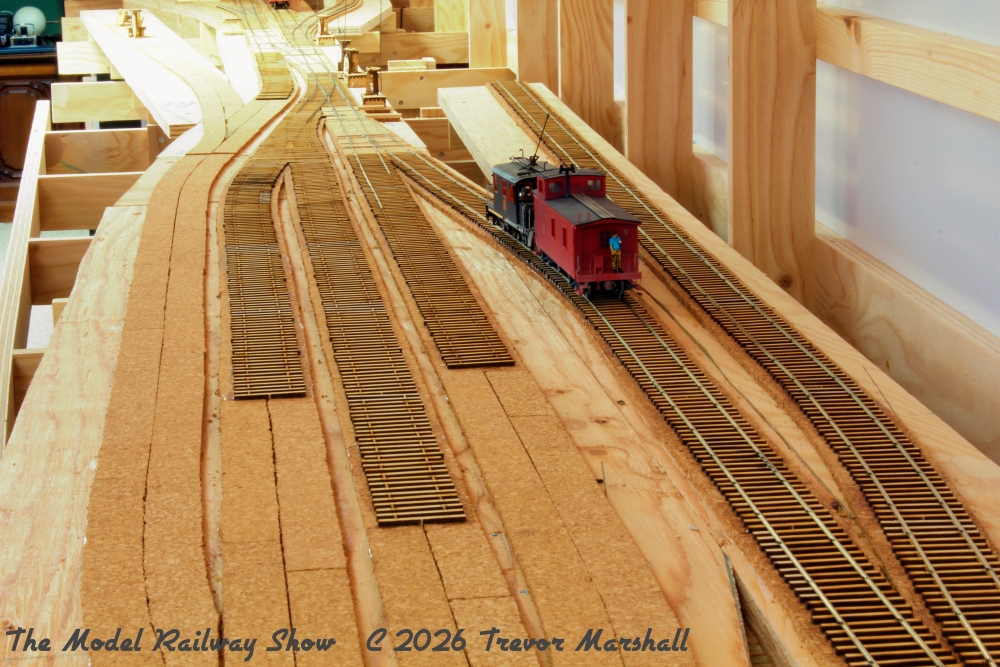
NS&T 21 and a van are on the main track, about to arrive at Eastchester. The spur at right is a staging track, representing one of the many industrial branch lines/subdivisions within St. Catharines. The three tracks with ties but no rail are the Eastchester yard, where short trains can be built to serve the various industrial tracks. The roadbed with no ties at left is the yard bypass, headed towards the interchange yard at Merritton. Niagara Street is near the top of the photo.
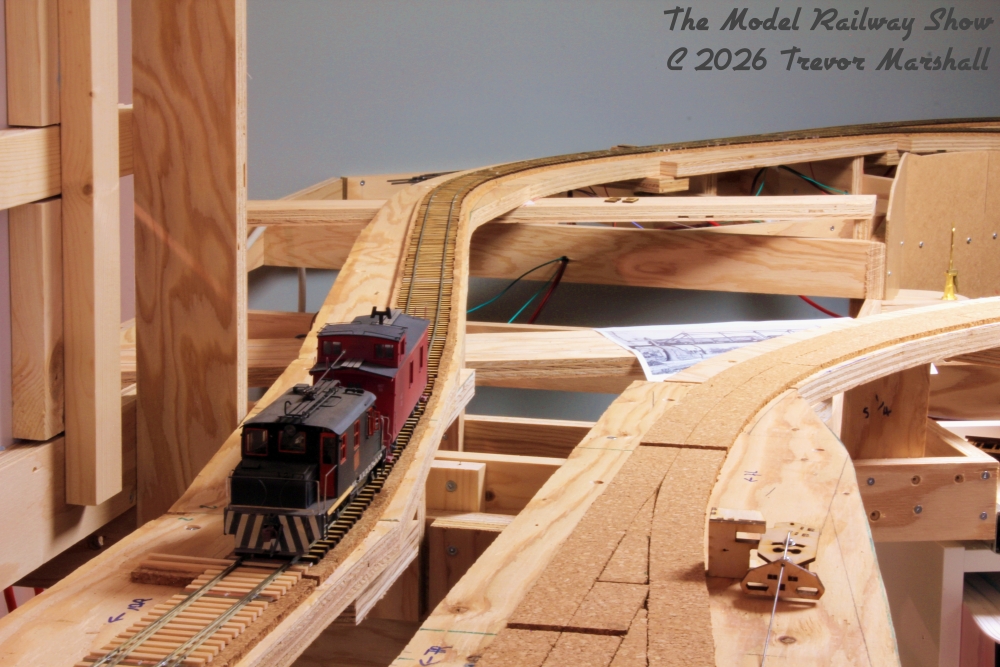
Looking the other direction from the previous photo, the train is on the main track that connects the peninsula to the rest of the layout – including Geneva Street, Ontario Street, and the Welland Avenue car barn. The cork roadbed at right is the lead to the interchange yard at Meritton.
Compared to most of my previous layout projects, the peninsula that represents Niagara Street and Eastchester Avenue represents a lot of railroading. I therefore decided to tackle the track laying and wiring in two phases. I’ve just finished the first phase of track laying, and can now move on to installing switch controls (using garden scale switch stands), adding drop feeders, and tying it all into the previous phases of the layout.
Lifelong model railway enthusiast and retired amateur shepherd who trained a border collie to work sheep. Professional writer and editor, with some podcasting and Internet TV presenting work thrown in for good measure.
View more posts