
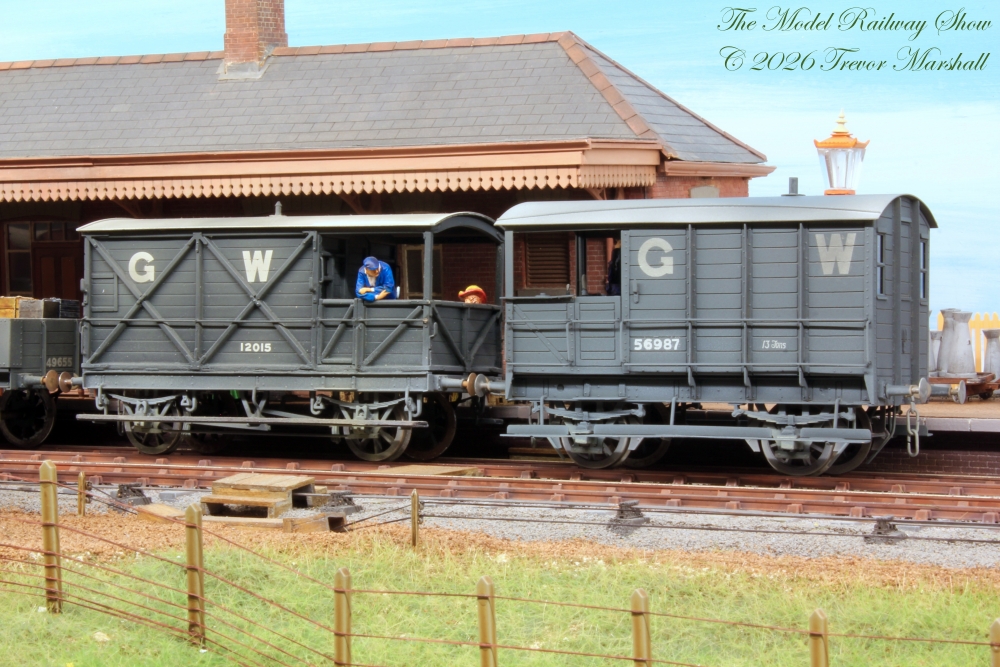
A visit last month from an Ontario friend, and the chance to meet a new friend here in Saskatchewan, inspired me to get back to the workbench and the result is GWR 56987 – the second brake van (“Toad”) for Bydemill.
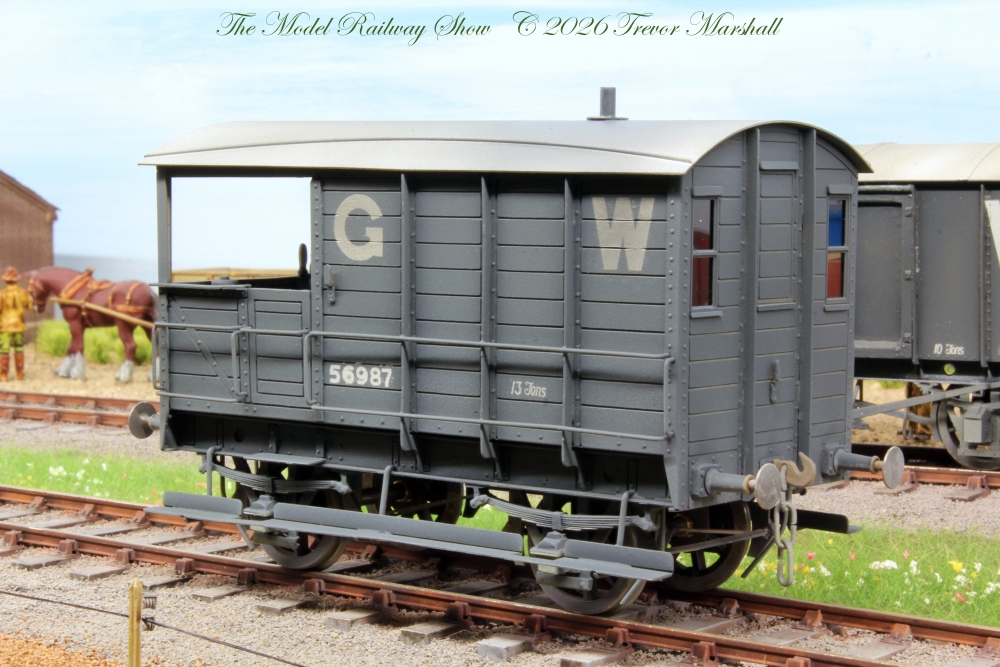
I built this model (a short-wheelbase, GWR Diagram AA7) from a Connoisseur Models kit. Like most of the equipment I’m running on Bydemill, this kit consists primarily of photo-etched brass sheets, with some white metal castings.
(According to the info etched on the fret, this kit has been offered since 1996. I’m always surprised by how well British photo-etched kits tend to stand up to the test of time. By contrast, most North American kits from 1996 look positively ancient compared to today’s offerings.)
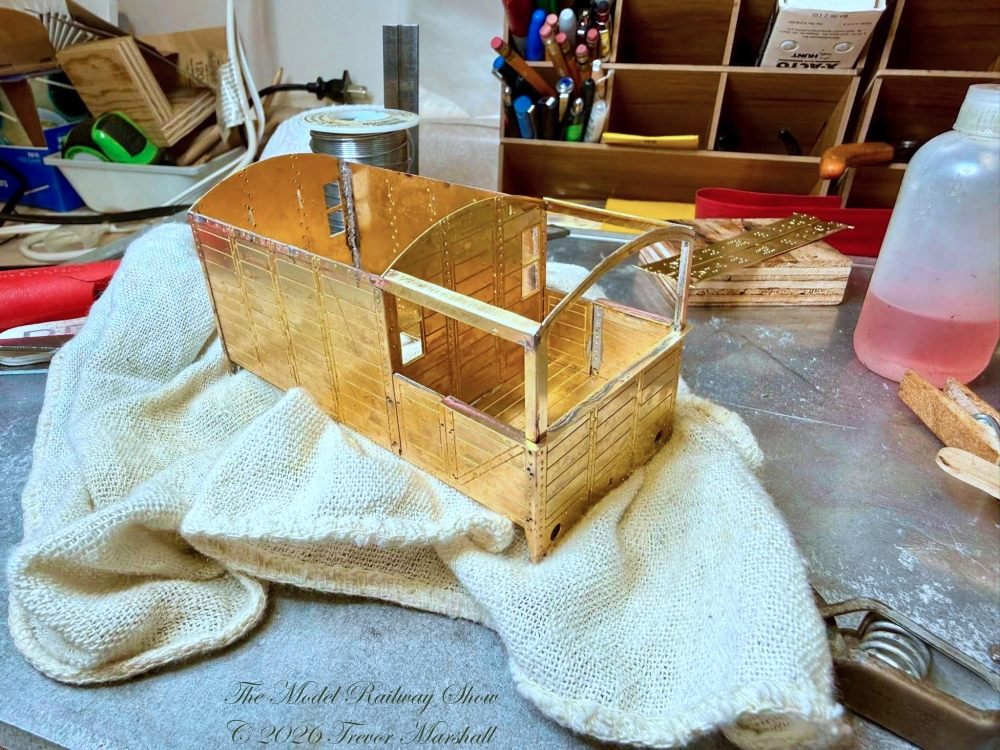
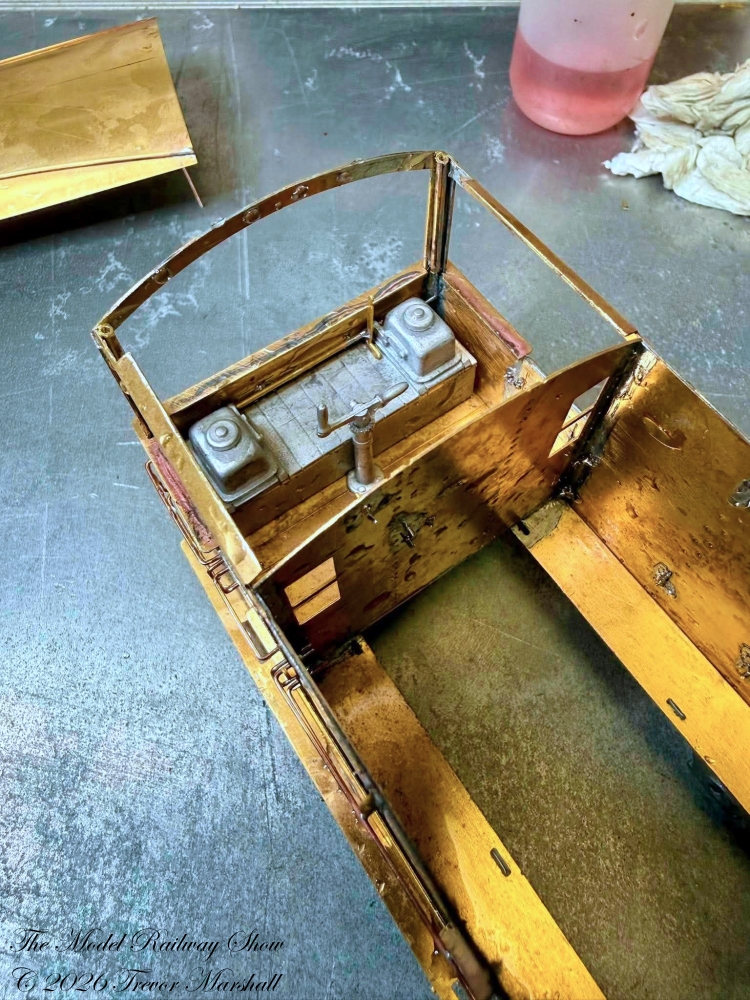
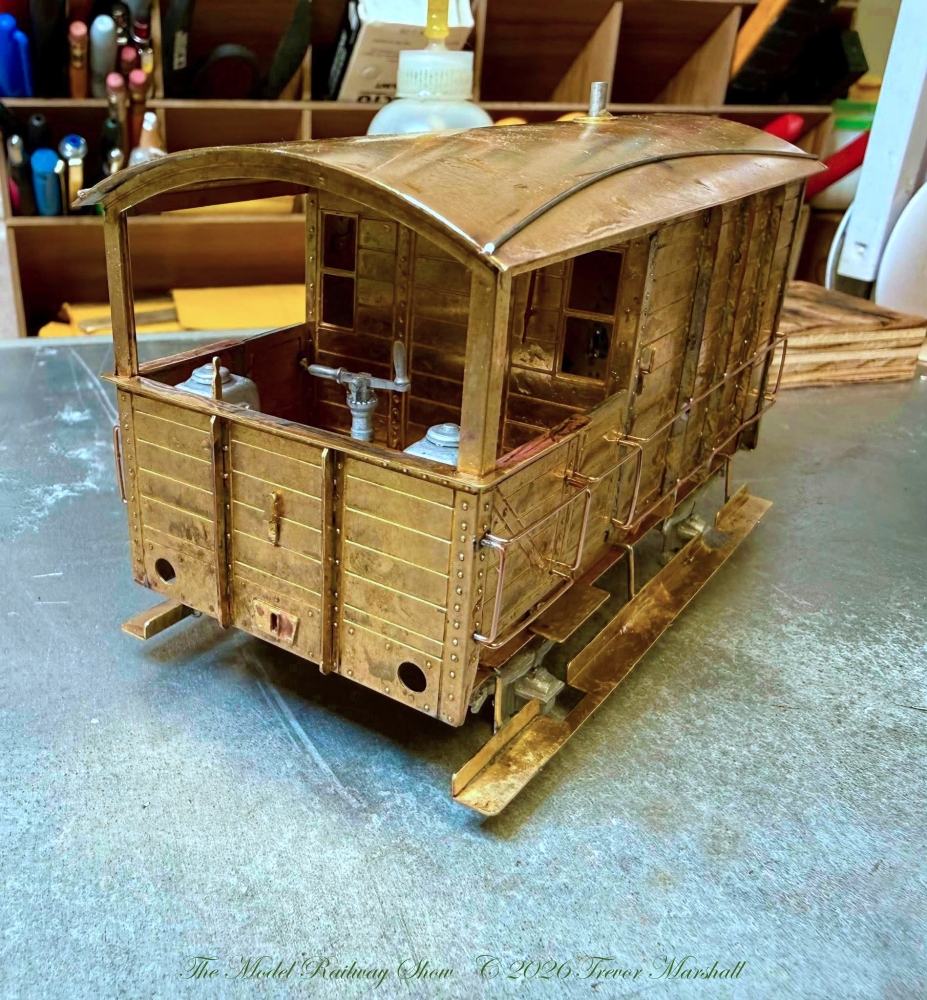
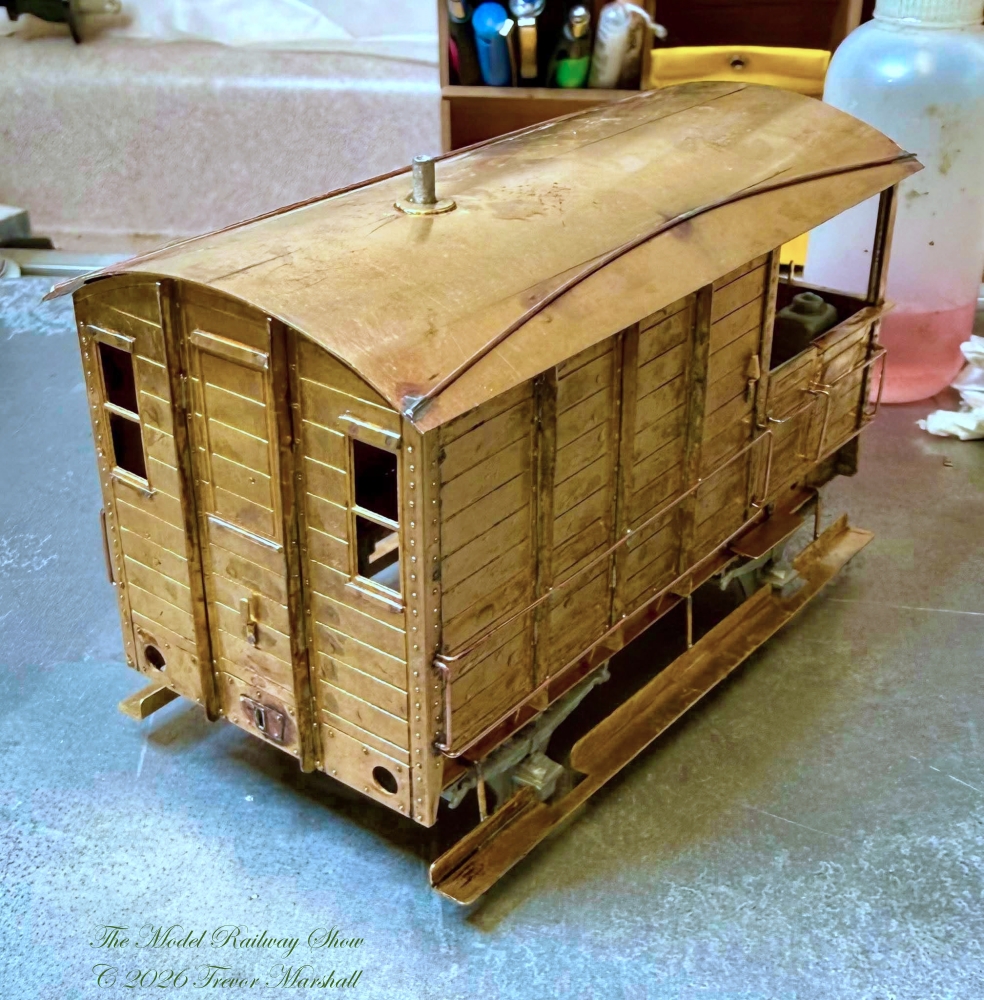
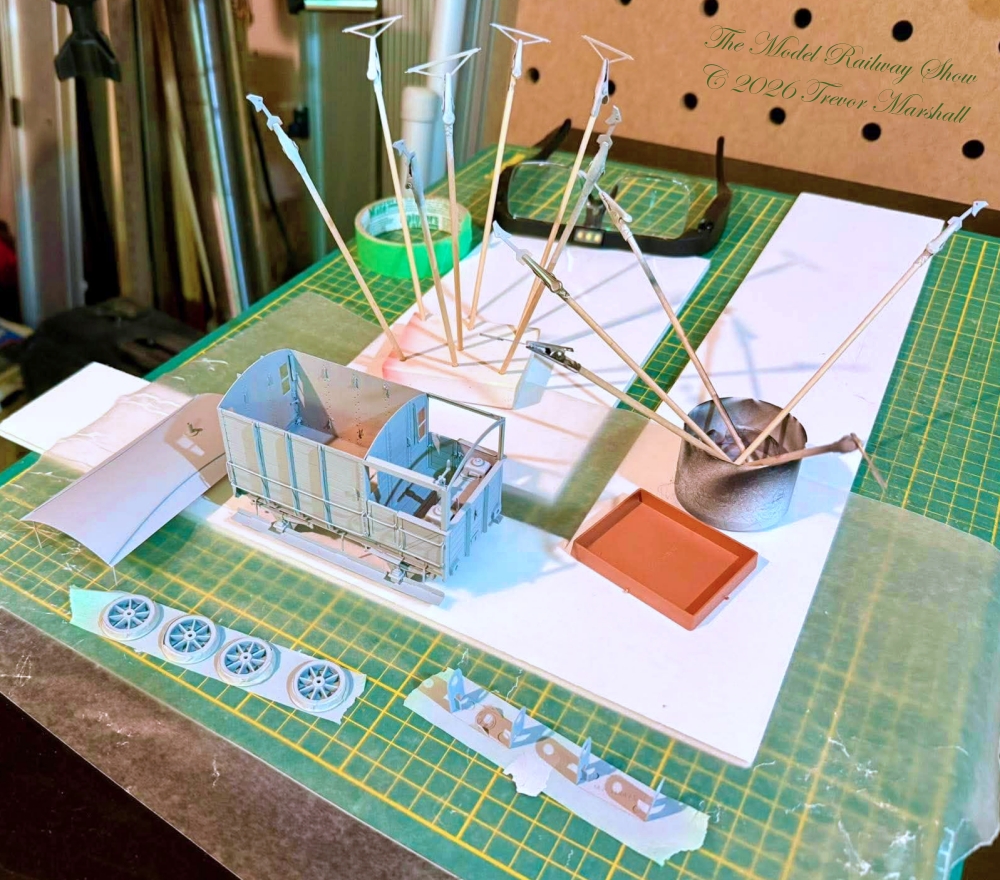
I upgraded the kit with Slaters sprung buffers and three-link couplings – my standard on the layout, for reliable operation – plus the recommended Slaters wheels. Since the kit does not come with a compensated chassis, I upgraded it by adding the necessary components – offered as a stand-alone kit from Walsall Model Industries. (Compensation holds one axle rigid while letting the other axle rock slightly, to improve the model’s reliability over uneven track work.) I finished the van with lettering from Walsall plus a Modelu 3D printed figure, which I painted.
Finishing this kit does more than add variety to my goods trains: It also enables more prototypical operation at Bydemill.
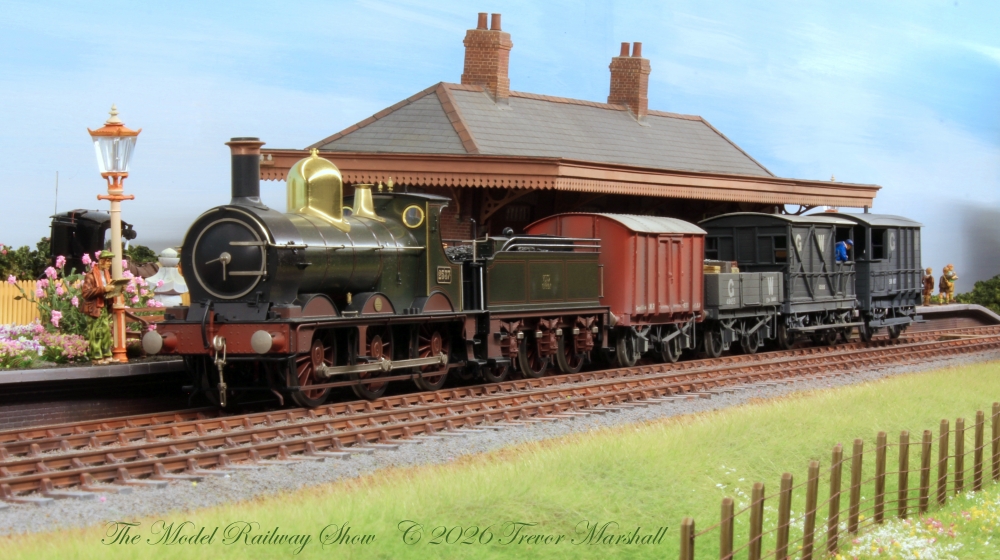
As I noted when I started building this layout, Bydemill is based on Highworth – a terminal on a short branch out of Swindon. In addition to adopting the track arrangement (although straightened to fit on a shelf) I also represented a key feature of Highworth: The steep upgrade as one approached the station. Highworth was reached via a half-mile of 1-in-44 uphill grade (about 2.27%).
As recounted in The Highworth Branch by TM Smith and GS Heathcliffe (Wild Swan Publications, 1979), two guards were typically employed on goods trains. The the junior guard would stay with the brake van, which would be detached some 50 yards from the terminal, on the main track. With rails sanded for traction and handbrake firmly applied, this van would act as a “buffer stop of last resort” should a wagon accidentally roll down the incline while sorting the goods yard. Hitting the brake van would be less traumatic than a runaway wagon (or wagons) resulting in a derailment further down the main track.
I decided to represent this not just with a second guard – but a second brake van. This lets the senior guard still take advantage of having a van while shunting.
I thoroughly enjoyed building this model: It made for a pleasant week. I look forward to building more wagons – including more brake vans – to add further variety to Bydemill’s operations.

