
My calendar app reminded me that on this day in August, 2011, I embarked on what would be my most successful layout-building project.
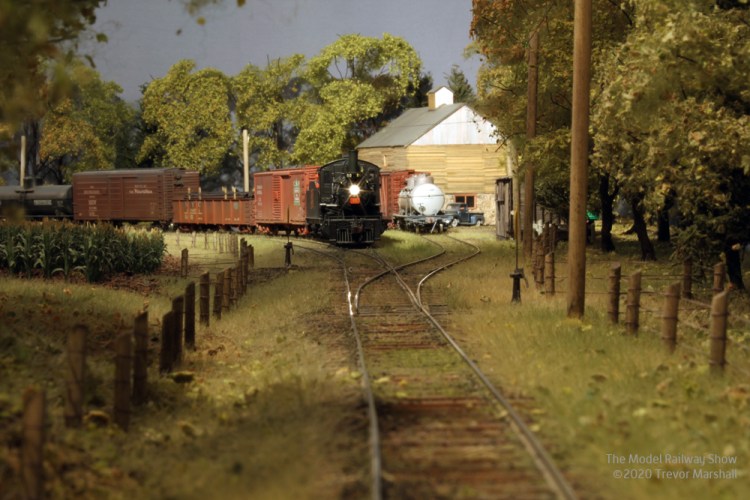
That layout was Port Rowan in 1:64 – an S scale interpretation of a CNR branch line in its final years.
On paper, the layout was simple: It filled an odd-shaped space roughly 14 by 35 feet, but featured just two towns (plus staging) and a grand total of eight turnouts. The layout supported one train at a time operation, with enough work to keep a two-person crew entertained for an hour or so. It’s the very definition of what I came to call an Achievable Layout.
But there was a lot more to Port Rowan than that description suggests.
I have hovered around the prototype modelling sphere for decades and have built (well, started) a number of prototype-based layouts. But Port Rowan marked the first time I had built a layout that looked like a model of a railway, rather than a model railway. By exercising restraint during track planning, I ended up with plenty of room to present the railway in context with its surroundings.
I loved that about it.
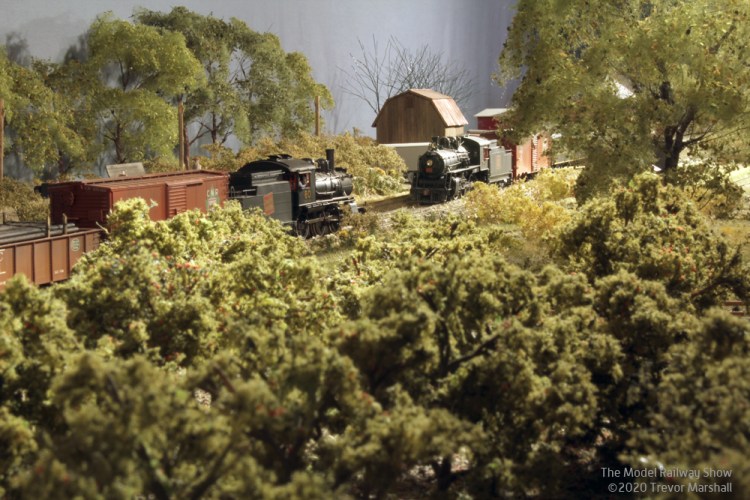
Port Rowan’s appearance encouraged me to put the railway in context operationally, too. I embraced what I call “finescale operations”, with prototypically-designed paperwork, a working telegraph system, turnouts controlled by switch stands, and other features. It was very satisfying.

As I reflect on what made it such a success – for me, anyway – I’m considering what lessons from Port Rowan I can apply to my current layouts. Overall, I’m pleased with GWR Bydemill and CNR Pine Street. But I think some improvements are in order for my main layout – based on the Niagara St. Catharines & Toronto Railway.
The NS&T is the project that is closest to my heart, and as a consequence it’s the subject on which I have placed the greatest demands. As I look at it today, I realize the layout I’m building is not measuring up. Changes are in order, and Port Rowan provides me with important insights into what those should be.


